AI in Marketing: Transforming Automation for Enhanced Customer Engagement
AI in Marketing: Revolutionizing Automation
Introduction
Artificial Intelligence (AI) in marketing refers to the use of advanced algorithms and technologies to analyze data, enhance customer interactions, and automate various marketing processes. In a world where consumer behavior shifts rapidly, the importance of AI automation in modern marketing strategies cannot be overstated. By leveraging AI, businesses can streamline operations, improve efficiency, and deliver personalized experiences, leading to increased customer satisfaction and loyalty.
The Role of AI in Marketing Automation
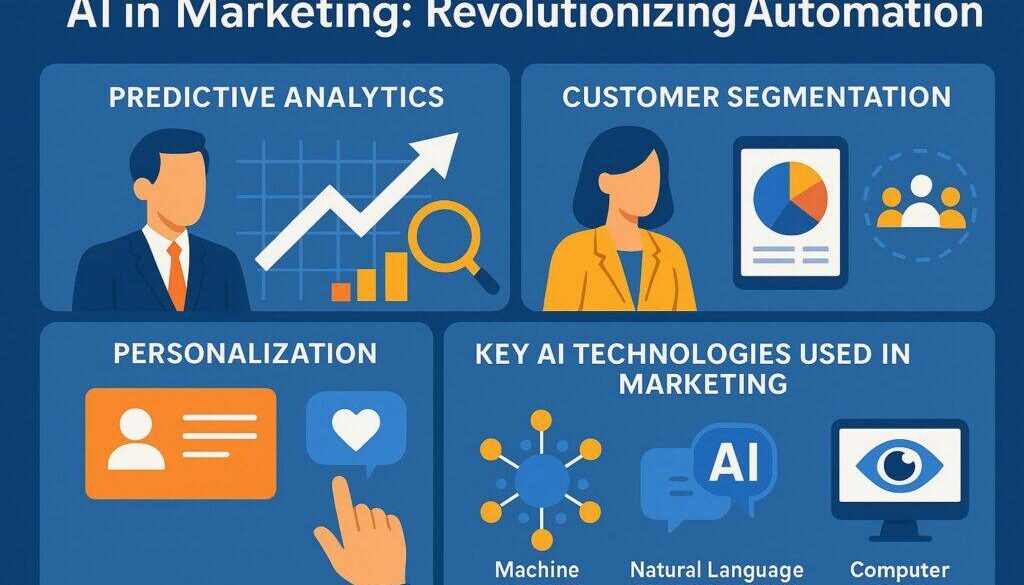
Marketing automation encompasses the use of software to automate repetitive marketing tasks, allowing marketers to focus on strategy and analysis. AI significantly enhances marketing automation by introducing sophisticated techniques that analyze large data sets and provide actionable insights. Notably, AI contributes to predictive analytics, customer segmentation, and personalization, creating tailored marketing campaigns that resonate with individual consumers.
Predictive Analytics
Predictive analytics utilizes AI to analyze historical data and predict future consumer behaviors. This allows businesses to anticipate customer needs and preferences, ultimately driving more effective marketing strategies.
Customer Segmentation
AI facilitates precise customer segmentation, enabling marketers to categorize consumers based on their behaviors and preferences. This targeted approach ensures that marketing messages are relevant and engaging, leading to higher conversion rates.
Personalization
Personalized marketing experiences, powered by AI, create deeper connections with customers. By delivering tailored content and product recommendations, businesses can increase user engagement and retention.
Key AI Technologies Used in Marketing
AI marketing technologies include machine learning, natural language processing (NLP), and computer vision, each serving distinct functions that enhance marketing effectiveness.
Machine Learning
Machine learning employs algorithms for pattern recognition, allowing marketers to identify trends and insights within large datasets. Additionally, real-time decision-making capabilities enable brands to respond promptly to market changes.
Natural Language Processing (NLP)
NLP powers chatbots and virtual assistants, which enhance customer interactions and provide instant support. Through sentiment analysis, NLP also helps brands understand consumer opinions and feelings, allowing for more responsive marketing strategies.
Computer Vision
Computer vision technology facilitates visual recognition, enhancing user engagement through image and video content. Marketers can analyze visual data to better understand consumer needs and preferences, thus driving creative campaigns.
Practical Applications of AI in Marketing
AI can be effectively integrated into various marketing processes, offering practical solutions that yield measurable results.
Content Creation and Curation
AI-driven tools can automate content generation, providing marketers with a steady stream of relevant materials. Additionally, dynamic content personalization ensures that users receive tailored information, increasing engagement rates.
Campaign Optimization
Automated A/B testing enabled by AI allows marketers to assess multiple campaign variables quickly, streamlining the optimization process. Moreover, AI can manage budget allocation and performance tracking, ensuring that resources are utilized efficiently.
Customer Relationship Management (CRM)
AI enhances customer interactions by predicting customer behavior and preferences. This proactive approach not only improves customer satisfaction but also fosters long-term brand loyalty.
Case Studies Demonstrating AI in Marketing Automation
Leading brands have successfully implemented AI in their marketing automation strategies, showcasing tangible benefits. For example, the retail giant Starbucks uses AI to optimize customer interactions through personalized orders and tailored offers. Such applications have resulted in significant metrics improvement, demonstrating the potential of AI-driven marketing.
Challenges and Considerations
Despite its benefits, integrating AI into marketing automation comes with challenges. Data privacy and ethical concerns must be addressed to maintain consumer trust. Additionally, businesses may face implementation barriers, including costs and the need for specialized skills. It is crucial to emphasize human oversight in AI-driven systems to ensure ethical practices and decision-making.
Future Trends of AI in Marketing Automation
The landscape of AI in marketing automation is evolving, with emerging technologies and trends shaping its future. Increased integration of AI with other business functions is anticipated, leading to a more holistic approach to marketing strategies. Predictions suggest that over the next 5-10 years, AI will become even more integral to marketing, driving innovation and transforming customer experiences.
Conclusion
In summary, AI's impact on marketing automation is profound, as it revolutionizes how businesses engage with consumers. Embracing AI technologies is essential for brands looking to adapt and innovate in a competitive marketplace. Businesses are encouraged to leverage AI's capabilities to stay ahead of the curve and deliver exceptional value to their customers.