Harnessing AI Automation in Marketing: Transforming Strategies for Success
AI in Marketing Within the Niche of AI Automation
Introduction
AI in marketing refers to the application of artificial intelligence technologies to optimize marketing strategies and processes. As a subset of AI, AI automation enhances marketing efficiency by automating repetitive tasks and leveraging data analysis to improve decision-making. In modern marketing, the integration of AI tools is not just beneficial but essential for businesses aiming to stay competitive in a data-driven environment.
The Role of AI in Enhancing Marketing Automation
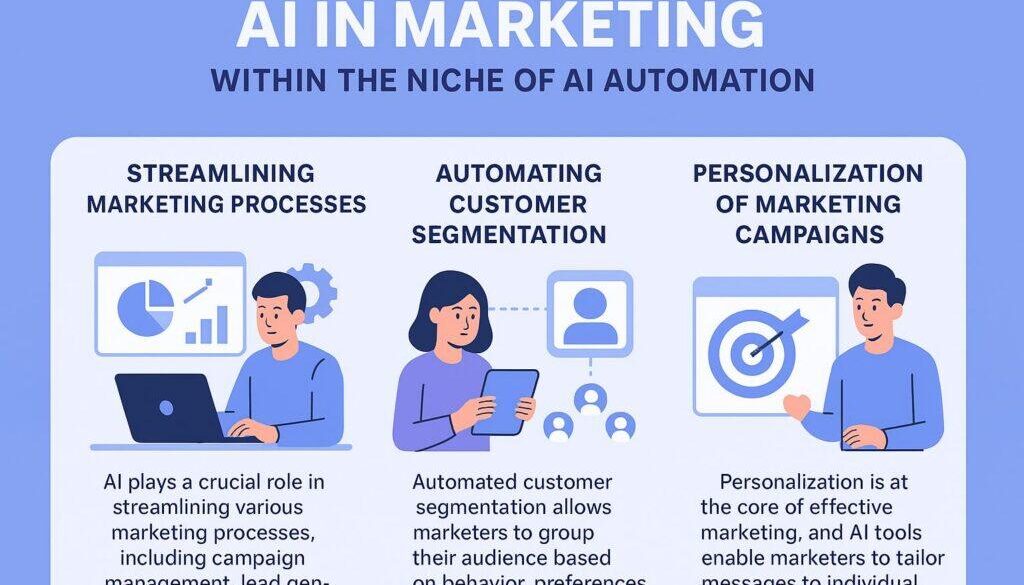
Streamlining Marketing Processes
AI plays a crucial role in streamlining various marketing processes, including campaign management, lead generation, and performance tracking. By automating these tasks, businesses can allocate their resources more effectively, allowing marketers to focus on strategic planning and creative development. This efficiency not only reduces operational costs but also improves the overall speed of executing marketing strategies.
Automating Customer Segmentation
Automated customer segmentation allows marketers to group their audience based on behavior, preferences, and demographics without manual effort. AI algorithms analyze vast amounts of data to identify patterns that human analysts may overlook. This capability ensures that marketing messages are more relevant and targeted, leading to improved engagement rates.
Personalization of Marketing Campaigns
Personalization is at the core of effective marketing, and AI tools enable marketers to tailor messages to individual consumer behaviors and preferences. By leveraging data from various sources, AI can create highly customized marketing campaigns that resonate with target segments. This level of personalization enhances customer experience and drives greater brand loyalty.
Key AI Technologies Transforming Marketing
Machine Learning and Predictive Analytics
Machine learning algorithms analyze historical data to predict future consumer behaviors and trends. These insights empower marketers to optimize their strategies by anticipating customer needs and preferences, leading to more informed decision-making. Predictive analytics can significantly improve campaign outcomes by enabling proactive rather than reactive marketing approaches.
Natural Language Processing (NLP)
Natural Language Processing (NLP) allows machines to understand and interpret human language, making it essential for analyzing customer sentiments and preferences. NLP is vital for voice search optimization, social listening, and creating conversational marketing experiences. By utilizing NLP, businesses can enhance customer interactions and gain meaningful insights from user-generated content.
Chatbots and Virtual Assistants
Chatbots and virtual assistants use AI to provide immediate responses to customer inquiries and simplify user interactions. This technology improves customer service efficiency by handling queries round-the-clock and reducing the need for human intervention. Chatbots can personalize conversations, enabling businesses to foster stronger customer relationships over time.
Robotic Process Automation (RPA)
Robotic Process Automation (RPA) enables businesses to automate repetitive tasks across various marketing functions. RPA can significantly reduce human errors and improve productivity by executing tasks such as data entry, reporting, and monitoring campaigns. By freeing up marketing teams from mundane tasks, RPA allows for a greater focus on innovation and creativity.
Benefits of Incorporating AI Automation in Marketing
Increased Efficiency and Cost-Effectiveness
One of the most significant benefits of incorporating AI automation in marketing is the increase in efficiency and cost-effectiveness it brings. Automating routine tasks reduces the workload on marketing teams, minimizing delay and errors, while ultimately lowering costs. This efficiency leads to quicker campaign execution and a better allocation of resources.
Improved Customer Experience and Engagement
Utilizing AI enhances the customer experience by providing personalized interactions and faster service. Advanced analytics tools allow marketers to create targeted content and offers that resonate with specific audience segments. By fostering deeper customer engagement, businesses can cultivate loyalty and retain customers more effectively.
Data-Driven Decision Making
AI offers unparalleled data analysis capabilities, enabling marketers to make informed decisions based on actionable insights. Access to real-time analytics allows businesses to adapt strategies swiftly in response to market changes. This data-driven approach enhances the overall effectiveness of marketing campaigns, resulting in improved outcomes.
Enhanced Targeting and ROI
With AI, marketers can enhance targeting to ensure that their message reaches the right audience at the right time. Improved targeting boosts the efficiency of marketing spend and increases return on investment (ROI). By focusing on the most promising leads and optimizing campaign elements, businesses can enjoy greater financial success.
Challenges and Considerations
Data Privacy and Ethical Concerns
While incorporating AI in marketing offers numerous advantages, it also raises significant data privacy and ethical concerns. Businesses must ensure compliance with regulations like GDPR and be transparent about how customer data is being used. Ethical considerations surrounding data usage and the potential for bias in AI algorithms are critical for maintaining consumer trust.
Integration with Existing Systems
Integrating AI technologies with existing marketing systems can pose technical challenges. Businesses must invest in necessary infrastructure and ensure that new tools align seamlessly with current workflows. This integration can require significant time and resources but is vital for reaping the full benefits of AI.
Skills Gap and Workforce Training
The rapid advancement of AI technologies often creates a skills gap within marketing teams. Businesses must prioritize training and workforce development to equip employees with the necessary skills to harness AI effectively. By investing in continuous learning opportunities, organizations can foster a culture of innovation and adaptation to new technologies.
Case Studies
Successful Implementation of AI in Marketing Campaigns
Several companies have successfully harnessed AI to transform their marketing efforts. For example, a leading retail brand utilized predictive analytics to create personalized shopping experiences, resulting in a significant increase in customer engagement and sales. Other notable success stories include businesses that deployed chatbots for customer service, which dramatically improved response times and customer satisfaction.
Lessons Learned from AI Automation in Marketing
Analyzing successful case studies offers valuable insights into best practices and potential pitfalls in AI marketing automation. Businesses must adopt a clear implementation strategy, monitor results closely, and be willing to pivot their approaches based on emerging data. Learning from the experiences of others can guide companies in navigating their AI journeys effectively.
Future Trends in AI and Marketing Automation
Growth of Hyper-Personalization
The future of marketing automation lies in hyper-personalization, fueled by AI's ability to analyze vast data sets. By leveraging real-time information, businesses can deliver tailored experiences at an unprecedented scale. This trend will redefine customer interactions, leading to stronger brand loyalty and increased customer satisfaction.
Expansion of AI-Driven Analytics
As AI technologies continue to evolve, AI-driven analytics will become increasingly sophisticated, enabling deeper insights into consumer behavior. Enhanced analytics tools will allow marketers to predict trends, optimize campaigns in real-time, and identify new opportunities. This evolution will empower businesses to stay ahead of the competition and respond proactively to market changes.
The Role of AI in Omnichannel Marketing
AI will play a pivotal role in enhancing omnichannel marketing strategies, ensuring consistent messaging and experiences across all platforms. By integrating data from various channels, businesses can create cohesive customer journeys that maximize engagement. As consumers continue to navigate multiple touchpoints, the need for effective omnichannel strategies will only grow.
Conclusion
In summary, the integration of AI automation in marketing unlocks incredible potential for businesses. The ability to streamline processes, enhance customer experience, and make data-driven decisions offers significant advantages in today’s competitive landscape. As AI technologies continue to evolve, businesses must embrace these innovations to remain relevant and thrive in the future marketplace. Now is the time for companies to invest in AI technologies and capitalize on the myriad benefits they offer.