The Transformative Impact of AI Automation on Modern Marketing Strategies
The Impact of AI Automation on Modern Marketing Strategies
Introduction
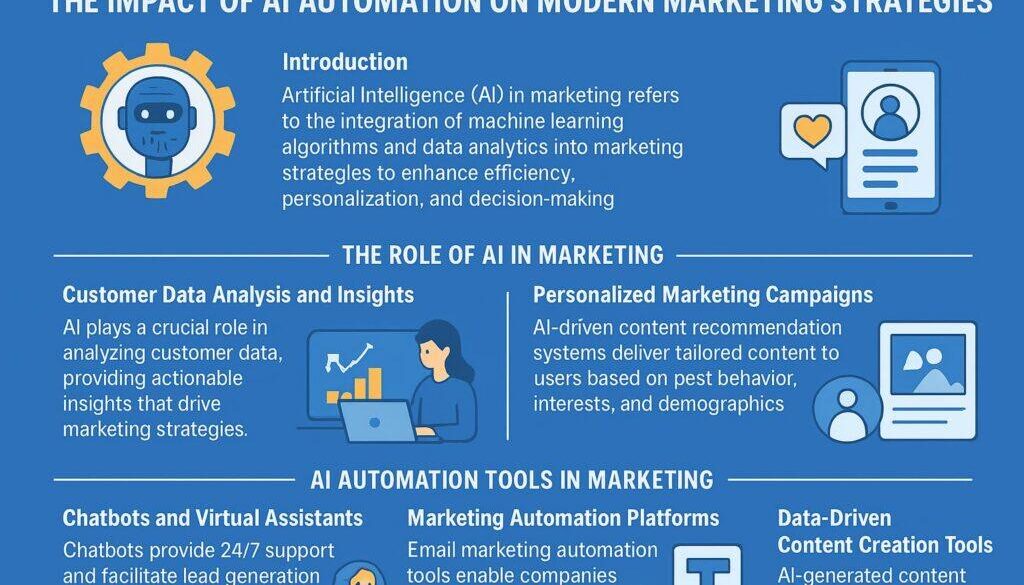
Artificial Intelligence (AI) in marketing refers to the integration of machine learning algorithms and data analytics into marketing strategies to enhance efficiency, personalization, and decision-making. In today's digital landscape, AI automation is not just a trend; it has become vital for marketers aiming to stay competitive. This article explores key trends and advancements in AI-driven marketing, highlighting how businesses can leverage these innovations to optimize their marketing efforts.
The Role of AI in Marketing
Customer Data Analysis and Insights
AI plays a crucial role in analyzing customer data, providing actionable insights that drive marketing strategies. Predictive analytics, powered by AI, allows marketers to anticipate customer behavior and preferences, enabling them to tailor their campaigns accordingly. Furthermore, behavioral segmentation helps businesses categorize users based on their interactions and habits, leading to more effective targeting.
Personalized Marketing Campaigns
Personalized marketing has transformed significantly thanks to AI. With content recommendation systems, businesses can deliver tailored content to users based on their past behavior, interests, and demographics. Additionally, dynamic pricing strategies leverage real-time market conditions and customer data to optimize pricing, ensuring companies remain competitive while maximizing sales.
AI Automation Tools in Marketing
Chatbots and Virtual Assistants
Chatbots and virtual assistants have revolutionized customer interactions by providing 24/7 support. These AI tools can handle a wide range of inquiries, ensuring that customers receive immediate responses, which enhances user satisfaction. Moreover, chatbots facilitate lead generation and qualification, allowing marketers to prioritize high-value leads effectively.
Marketing Automation Platforms
Marketing automation platforms have streamlined processes like email marketing and social media management. Email marketing automation tools enable companies to send personalized messages to segments of their audience at scale, fostering engagement and retention. Social media management tools equipped with AI can analyze audience behavior and optimize post timings, further enhancing brand visibility.
Data-Driven Content Creation Tools
AI is also making waves in content creation. AI-generated content can produce high-quality articles, blogs, and social media posts with minimal human intervention, saving time and resources. Additionally, visual content creation tools powered by AI can generate images and graphics that resonate with target audiences, enhancing overall marketing efforts.
Benefits of Integrating AI in Marketing Automation
Improved Efficiency and Productivity
Embracing AI in marketing automation leads to improved efficiency and productivity. By automating repetitive tasks, marketers can focus on strategic initiatives and creative aspects of campaigns. This shift not only reduces human error but also accelerates campaign rollout times.
Enhanced Customer Experience
AI tools significantly improve customer experience by providing personalized interactions and instant responses. Customers appreciate tailored recommendations, and AI-driven solutions ensure that businesses can meet these expectations. A positive customer experience translates into increased loyalty and higher conversion rates.
Better ROI through Targeted Campaigns
AI facilitates better return on investment (ROI) through targeted marketing campaigns. By analyzing data and identifying trends, businesses can allocate resources to high-performing channels and strategies, minimizing wastage. Increased accuracy in targeting leads to higher conversion rates, ultimately boosting profitability.
Real-Time Performance Tracking and Optimization
One of the standout features of AI in marketing automation is real-time performance tracking. Marketers can monitor campaign effectiveness instantly and make data-driven adjustments on the fly, ensuring campaigns remain relevant and effective. This ability to pivot quickly enhances overall campaign success.
Challenges and Considerations
Data Privacy and Ethical Implications
While AI offers numerous advantages, challenges like data privacy and ethical implications cannot be overlooked. With rising concerns about how data is collected, stored, and used, businesses must ensure compliance with regulations like GDPR. Ethical marketing practices are essential to build trust with consumers.
Integration with Existing Systems
Integrating AI solutions with existing marketing systems can pose challenges for businesses. Incompatibilities between technology stacks can hinder the effectiveness of AI tools. Companies need to invest time and resources to ensure seamless integration to maximize the benefits of AI.
Dependence on Technology and Potential Risks
Over-reliance on technology can introduce risks, such as system failures or inaccuracies in AI decision-making. Businesses must maintain a human touch in their marketing strategies, balancing automation with personal engagement. Continuous training and updating of AI systems are necessary to mitigate these risks.
Future Trends in AI and Marketing Automation
AI Advancements in Machine Learning and Natural Language Processing
The future of AI in marketing automation lies in advancements in machine learning and natural language processing (NLP). These technologies will enable more sophisticated analysis and understanding of consumer behavior, creating even more personalized marketing experiences. As machine learning algorithms evolve, they will improve predictive capabilities and insights.
The Growth of Voice Search and AI Assistants
As voice search becomes more prevalent, AI assistants are set to play an increasingly significant role in marketing. Businesses will need to optimize their content for voice search queries, which differ from traditional text searches. This trend will shift marketing strategies to focus more on conversational keywords and voice-friendly content.
The Increasing Importance of Omni-Channel Marketing Strategies
Omni-channel marketing strategies, integrating multiple platforms for a seamless customer experience, will become increasingly important. AI can facilitate this by providing insights across different channels, helping marketers create cohesive campaigns that resonate with consumers regardless of where they engage.
Conclusion
Integrating AI into marketing automation offers myriad benefits, including improved efficiency, enhanced customer experiences, and better ROI. As businesses navigate the complexities of modern marketing, adopting AI solutions is essential for maintaining a competitive edge. Looking ahead, the future of AI in marketing promises exciting advancements that will continue to transform the industry, making it crucial for businesses to stay informed and adaptable.