AI in Marketing: How Automation is Shaping the Future of Customer Engagement
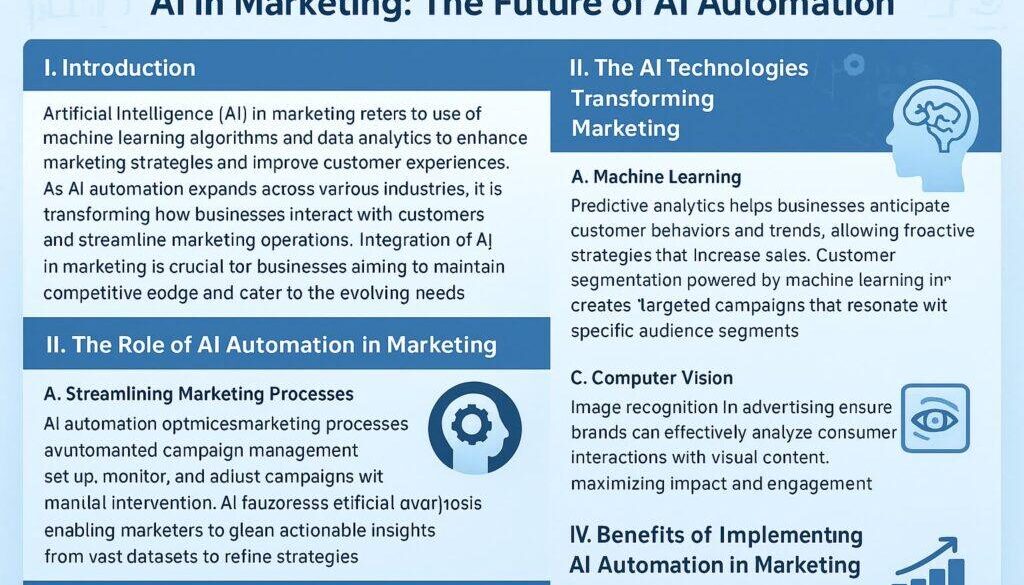
AI in Marketing: The Future of AI Automation
I. Introduction
Artificial Intelligence (AI) in marketing refers to the use of machine learning algorithms and data analytics to enhance marketing strategies and improve customer experiences. As AI automation expands across various industries, it is transforming how businesses interact with customers and streamline marketing operations. The integration of AI in marketing is crucial for businesses aiming to maintain a competitive edge and cater to the evolving needs of their audience.
II. The Role of AI Automation in Marketing
A. Streamlining Marketing Processes
AI automation plays a pivotal role in optimizing marketing processes. With automated campaign management, marketers can set up, monitor, and adjust campaigns without manual intervention, saving time and resources. Additionally, AI facilitates efficient data analysis, enabling marketers to glean actionable insights from vast datasets to refine their strategies.
B. Enhancing Customer Engagement
Improving customer engagement is another significant advantage of AI in marketing. Through personalized content delivery, businesses can create tailored messages based on customer preferences and behaviors, leading to higher conversion rates. Furthermore, chatbots and virtual assistants are revolutionizing customer interactions by providing instant support and information, significantly enhancing the user experience.
III. Key AI Technologies Transforming Marketing
A. Machine Learning
Machine learning is at the forefront of AI-driven marketing transformation. Predictive analytics helps businesses anticipate customer behaviors and trends, allowing for proactive strategies that increase sales. Moreover, customer segmentation powered by machine learning enables marketers to create targeted campaigns that resonate with specific audience segments.
B. Natural Language Processing (NLP)
Natural Language Processing (NLP) is another essential technology reshaping marketing methods. Sentiment analysis tools leverage NLP to determine customer opinions about products or brands, providing valuable insights for improving offerings. Additionally, automated content creation utilizing NLP allows marketers to generate relevant content quickly and efficiently.
C. Computer Vision
Computer vision offers innovative approaches to visual marketing. Image recognition in advertising ensures that brands can effectively analyze consumer interactions with visual content, maximizing impact and engagement. Visual search capabilities further enhance the consumer journey by enabling users to search for products using images, streamlining the discovery process.
IV. Benefits of Implementing AI Automation in Marketing
A. Improved Efficiency and Cost Reduction
Implementing AI automation in marketing leads to improved efficiency and significant cost reductions. By automating repetitive tasks, businesses can allocate resources more effectively and focus on strategic initiatives that drive growth. This efficiency translates to lower operational costs and heightened productivity across the marketing team.
B. Enhanced Customer Experience
AI also plays a crucial role in enhancing customer experiences. Through personalized interactions and quick response times, brands can build stronger relationships with their customers. A seamless experience not only boosts customer satisfaction but also fosters loyalty and repeat business.
C. Data-Driven Decision Making
With AI, marketers can make informed, data-driven decisions. Real-time insights and analytics allow companies to adapt quickly to changing market conditions, customer preferences, and campaign performance. This agility in decision-making helps businesses stay relevant and competitive in their industries.
V. Challenges of Integrating AI in Marketing
A. Data Privacy Concerns
Despite numerous benefits, integrating AI in marketing brings challenges, particularly regarding data privacy. As businesses collect and analyze vast amounts of customer data, they must navigate complex regulations to ensure compliance and protect consumer trust. Addressing these concerns is essential to maintaining a positive brand reputation.
B. Implementation Costs and Resources
The initial implementation costs of AI technologies can be a significant barrier for some organizations. Investments in AI infrastructure often require substantial financial resources and time. Businesses must carefully evaluate their budgets and long-term strategy to justify these upfront costs against potential ROI.
C. Skill Gap in Workforce
A notable challenge in AI adoption is the skill gap present in the workforce. Many marketing professionals lack the technical expertise necessary to effectively implement and leverage AI tools. Organizations must invest in training and development to equip their teams with the skills needed to harness the full potential of AI in marketing.
VI. Real-World Examples of AI in Marketing
A. Case Studies of Successful AI Implementation
Numerous brands have successfully leveraged AI automation to revolutionize their marketing strategies. For instance, companies such as Netflix utilize AI-powered recommendation algorithms to deliver personalized viewing suggestions, significantly enhancing user engagement. This contrasts with traditional marketing strategies that rely on generalized messaging.
B. Lessons Learned from Leading Companies
Leading companies have demonstrated that integrating AI into marketing can yield significant rewards. A common lesson among these organizations is the importance of aligning AI strategies with business objectives. Successful implementation often involves iterative testing and learning to refine AI tools and deliver real value.
VII. Future Trends of AI in Marketing
A. Increasing Personalization Through AI
As AI technologies continue to evolve, increasing personalization will remain a significant trend in marketing. Businesses that leverage AI to understand customer behavior will be able to create tailored experiences that resonate deeply with their audience, driving loyalty and engagement.
B. The Rise of AI Ethics in Marketing
As the use of AI in marketing expands, so does the conversation around AI ethics. Companies will increasingly need to establish guidelines to ensure ethical AI use, protecting consumer rights while driving innovation. This focus on ethics will influence how businesses approach AI solutions in the future.
C. Predictions for Upcoming Technologies and Tools
Looking ahead, emerging technologies such as augmented reality (AR) and advanced AI-driven analytics will further impact marketing strategies. These innovations will provide marketers with new ways to engage with consumers and create immersive brand experiences that capture attention.
VIII. Conclusion
In conclusion, AI in marketing represents a transformative force for businesses aiming to enhance their strategies and customer engagement. The integration of AI automation offers numerous benefits, from improved efficiency to data-driven insights. As technology continues to advance, businesses must embrace these changes and adapt to remain competitive in an increasingly AI-driven marketplace. Embracing AI automation today is not just an option; it’s a necessity for future success.