Unlocking the Future of Marketing: Harnessing AI Automation for Enhanced Customer Engagement and ROI
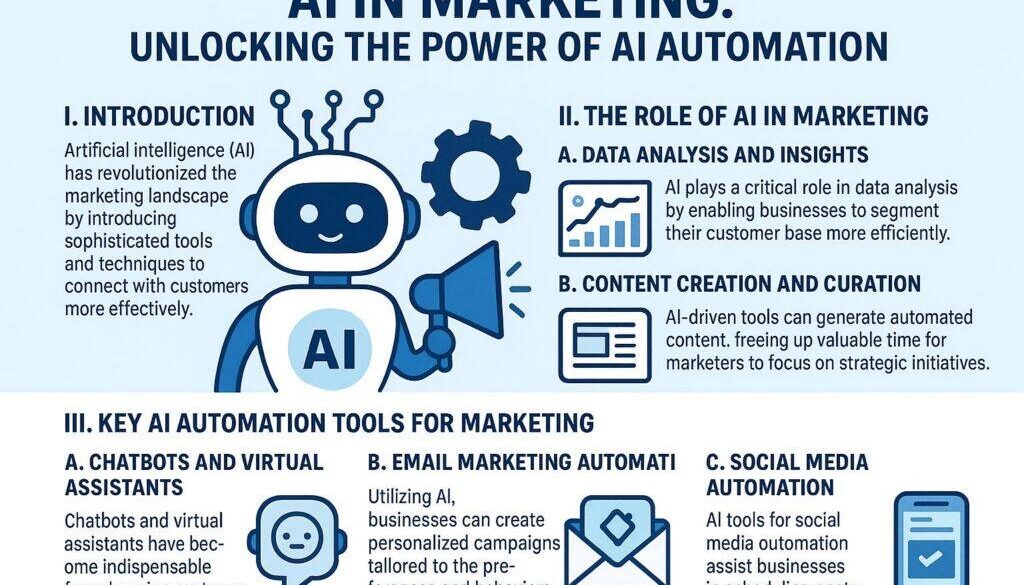
AI in Marketing: Unlocking the Power of AI Automation
I. Introduction
Artificial Intelligence (AI) has revolutionized the marketing landscape by introducing sophisticated tools and techniques to connect with customers more effectively. In the context of AI automation, marketing encompasses the use of AI technologies to streamline processes, analyze vast amounts of data, and personalize customer interactions. Integrating AI into marketing strategies is becoming essential for businesses aiming to stay competitive, enhance customer satisfaction, and drive sales.
II. The Role of AI in Marketing
A. Data Analysis and Insights
AI plays a critical role in data analysis by enabling businesses to segment their customer base more efficiently. Through advanced algorithms, companies can identify distinct groups within their audience, allowing for targeted marketing strategies. Predictive analytics, another powerful feature of AI, helps businesses anticipate customer behavior and preferences, enhancing their decision-making processes.
B. Content Creation and Curation
In the digital age, creating engaging content is paramount for attracting and retaining customers. AI-driven tools can generate automated content, freeing up valuable time for marketers to focus on strategic initiatives. Additionally, these tools facilitate the personalization of marketing messages, ensuring that communication resonates with individual consumer needs and interests.
III. Key AI Automation Tools for Marketing
A. Chatbots and Virtual Assistants
Chatbots and virtual assistants have become indispensable for enhancing customer engagement. These AI-powered tools provide instant responses to customer inquiries, fostering a more interactive user experience. Their ability to offer 24/7 support ensures that businesses can address customer needs at any time, improving overall satisfaction.
B. Email Marketing Automation
Automated email marketing campaigns are a vital component of modern marketing strategies. Utilizing AI, businesses can create personalized campaigns tailored to the preferences and behaviors of their audience. Moreover, automated follow-up processes ensure that no lead is left unanswered, increasing the likelihood of conversions.
C. Social Media Automation
Social media has become a crucial platform for brand visibility. AI tools for social media automation assist businesses in scheduling posts, ensuring consistent engagement with their audience. Sentiment analysis tools also help marketers gauge public perception, allowing for real-time adjustments to their strategies.
IV. Benefits of AI Automation in Marketing
A. Increased Efficiency
The integration of AI in marketing significantly boosts operational efficiency. By automating repetitive tasks, marketers can redirect their focus towards creativity and strategy, ultimately driving better results. This efficiency also leads to cost savings for businesses, allowing them to allocate resources more effectively.
B. Enhanced Customer Experience
Personalization powered by AI transforms the customer experience by making interactions more relevant and engaging. Customers appreciate tailored experiences that meet their specific needs, leading to increased satisfaction and loyalty. This enhanced experience not only encourages repeat business but also drives customer referrals.
C. Improved ROI
AI automation can lead to a notable increase in return on investment (ROI) for marketing initiatives. By optimizing campaigns through data-driven insights, businesses can reduce wasteful spending and focus their efforts on high-impact strategies. Moreover, the ability to swiftly analyze campaign performance ensures continuous improvement.
D. Real-time Decision Making
One of the standout advantages of AI automation is the ability to make real-time decisions based on data analysis. Marketers can respond to trends and customer feedback immediately, adjusting their strategies without delays. This agility is crucial in today’s fast-paced market environment, allowing businesses to stay ahead of their competitors.
V. Challenges in Implementing AI in Marketing
A. Data Privacy Concerns
While AI brings various benefits, it also raises significant data privacy concerns. Businesses must navigate complex regulations to ensure they handle customer data responsibly. Protecting consumer privacy is vital for maintaining trust and compliance with legal standards.
B. Cost of Implementation
The initial investment required for AI implementation can be a barrier for many businesses. Costs associated with technology acquisition, integration, and ongoing maintenance can add up quickly. However, the long-term benefits often outweigh the upfront expenses, positioning AI as a worthwhile investment.
C. Skills Gap and Training Needs
There exists a notable skills gap in the workforce regarding AI technologies. Many marketing professionals may need additional training to effectively utilize AI tools. To fully harness AI’s potential, companies must invest in training and development programs to equip their teams with the necessary skills.
VI. Future Trends in AI and Marketing Automation
A. Evolution of AI Technologies
AI technologies are evolving rapidly, presenting new opportunities for marketers. As machine learning algorithms become more sophisticated, they will unlock deeper insights and enhance automation. Staying updated with these advancements will be crucial for businesses to adapt their strategies accordingly.
B. Emergence of New Marketing Channels
With AI integration, new marketing channels are constantly emerging. Innovations such as voice search and augmented reality are changing how brands interact with consumers. Marketers must remain agile and open to exploring these channels to reach their audience effectively.
C. Integration with IoT and Other Technologies
The integration of AI with the Internet of Things (IoT) presents exciting possibilities for marketing automation. Smart devices generating data can provide marketers with real-time insights into consumer behavior. This connectivity enhances the ability to tailor marketing messages and creates a more dynamic engagement environment.
VII. Case Studies
A. Successful AI Automation in Marketing Examples
1. Case Study 1: Company A
Company A successfully implemented AI automation by utilizing predictive analytics to tailor its marketing efforts. By segmenting its audience and delivering personalized messages, it saw a significant increase in engagement and conversion rates.
2. Case Study 2: Company B
Company B adopted chatbots to enhance its customer service experience. With 24/7 support and timely responses, customer satisfaction ratings improved substantially, resulting in higher customer retention and loyalty.
VIII. Conclusion
Incorporating AI automation into marketing strategies is no longer optional; it is essential for businesses wanting to thrive in today’s competitive landscape. The benefits are clear: increased efficiency, enhanced customer experiences, and improved ROI. Businesses must embrace AI automation strategies now to stay ahead and meet the evolving expectations of their customers.