Harnessing AI Automation: Revolutionizing Marketing Efficiency and Customer Engagement
AI in Marketing within AI Automation
Introduction
AI in marketing refers to the use of artificial intelligence technologies and strategies to enhance marketing efforts. This integration of AI allows businesses to automate processes, analyze data, and improve customer engagement. As marketing landscapes evolve, the need for integrating AI in marketing strategies has become critically important, enabling organizations to stay competitive and responsive to consumer demands.
The Role of AI Automation in Marketing
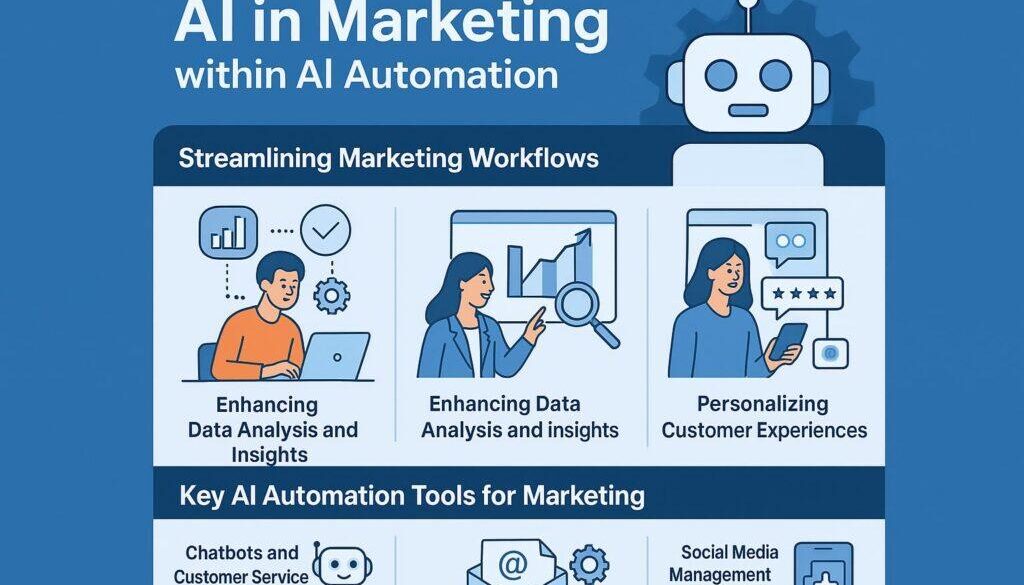
Streamlining Marketing Workflows
AI automation plays a crucial role in streamlining marketing workflows. By automating repetitive tasks such as data entry, reporting, and campaign management, marketers can focus on strategic planning and creative initiatives. This increased efficiency not only speeds up processes but also allows teams to allocate resources more effectively.
Enhancing Data Analysis and Insights
One of the standout benefits of AI automation in marketing is its capability to analyze vast datasets quickly. AI algorithms can uncover trends and patterns that human analysts may miss, resulting in deeper insights into customer behavior and marketing performance. Armed with this information, businesses can make data-driven decisions that align with consumer preferences and drive better results.
Personalizing Customer Experiences
Personalization is key in today’s marketing environment, and AI automation enables businesses to tailor experiences to individual customers. By leveraging customer data, AI can help create personalized content, product recommendations, and targeted ads that resonate more profoundly with audiences. This tailored approach not only enhances customer satisfaction but also fosters brand loyalty.
Key AI Automation Tools for Marketing
Chatbots and Customer Service Automation
Chatbots are one of the most widely adopted AI automation tools in marketing. These virtual assistants can handle common customer inquiries, providing instant responses and improving user engagement. By freeing up human resources, chatbots ensure that customers receive 24/7 support, significantly enhancing the overall customer experience.
Email Marketing Automation Tools
Email marketing automation tools utilize AI to personalize messages and optimize send times, improving open and click-through rates. These tools can segment audiences and create targeted campaigns based on user behavior, ensuring that recipients receive the most relevant content. Such capabilities lead to elevated customer engagement and higher conversion rates.
Social Media Management and Scheduling Platforms
AI-driven social media management tools enable marketers to schedule posts, analyze engagement metrics, and respond to customers efficiently. By automating these functions, teams can maintain a consistent online presence without consuming excessive resources. Additionally, machine learning can enhance content strategies by identifying trending topics and optimal posting times.
Predictive Analytics Tools
Predictive analytics tools utilize AI to forecast future trends based on existing data. By analyzing past behaviors, these tools can help marketers anticipate customer needs and tailor campaigns accordingly. This proactive approach allows businesses to stay ahead of the curve, adapting strategies in real-time to maximize effectiveness.
Benefits of AI in Marketing Automation
Increased Efficiency and Productivity
Implementing AI in marketing automation significantly boosts operational efficiency and productivity. With routine tasks handled by AI systems, marketing teams can concentrate on developing innovative strategies and creative initiatives. This shift not only enhances output quality but also accelerates campaign execution.
Cost Savings Over Traditional Marketing Methods
AI automation can lead to substantial cost savings compared to traditional marketing practices. By reducing the need for extensive manpower in areas like customer service and data management, businesses can allocate budgets more effectively. These savings can then be reinvested into growth-oriented projects, fueling further business success.
Improved Targeting and Conversion Rates
AI enhances targeting accuracy, allowing marketers to reach the right audiences with the right messages. By analyzing data, AI can identify and segment customer groups based on nuanced behaviors and preferences. This precision in targeting translates to higher conversion rates, as customers are more likely to respond to personalized communications.
Challenges of Implementing AI in Marketing
Data Privacy and Security Concerns
The use of AI in marketing raises significant data privacy and security challenges. Organizations must be cautious about how they collect, store, and utilize customer data, complying with local regulations such as GDPR. Failing to uphold data security can lead to consumer distrust and potential legal issues.
Integration Issues with Existing Systems
Integrating AI into existing marketing systems can be complex and challenging. Companies often face difficulties in ensuring that new AI tools work seamlessly with their current technology stack. Proper planning and investment in robust IT infrastructure are essential to overcome these hurdles.
Dependence on Quality Data for Effective Outcomes
The effectiveness of AI automation is heavily reliant on the quality of data fed into the systems. Poor-quality or biased data can lead to inaccurate insights and ineffective marketing strategies. Therefore, organizations must prioritize data collection practices and maintain high standards for data quality to achieve desirable outcomes.
Case Studies of Successful AI Marketing Automation
Company A: Chatbot Implementation Results
Company A successfully implemented a chatbot for customer service and saw a significant reduction in response times. The chatbot answered frequently asked questions, allowing human agents to handle more complex inquiries. As a result, customer satisfaction scores increased, demonstrating the effectiveness of AI in enhancing service delivery.
Company B: Predictive Analytics Driving Sales
Company B utilized predictive analytics tools to identify purchasing trends among its customer base. This data-driven approach allowed them to tailor their marketing strategies, leading to a substantial increase in sales figures. Their success illustrates the power of AI in shaping effective marketing campaigns based on consumer behavior patterns.
Company C: Personalized Email Marketing Achievements
Company C adopted AI technologies to automate its email marketing efforts, resulting in highly personalized communications. The company segmented its audience and crafted targeted messages that resonated with specific consumer interests. This strategy led to a marked improvement in engagement rates and overall ROI from their email campaigns.
Future Trends in AI and Marketing Automation
The Rise of Voice Search and AI
As voice search technology continues to gain popularity, AI will play a pivotal role in optimizing marketing strategies for voice-activated platforms. Businesses will need to adapt content and SEO strategies to cater to voice queries, ensuring they remain visible in this evolving digital landscape.
Evolving Customer Expectations and AI Adaptation
Consumer expectations are rapidly changing, driven by advancements in technology. Brands will need to leverage AI to adapt quickly to these evolving preferences, offering seamless and personalized experiences. Staying competitive will require constant innovation and responsiveness to emerging trends.
Innovations in Machine Learning Algorithms
The future of AI in marketing will see continual advancements in machine learning algorithms. As these technologies evolve, they will provide even more sophisticated insights and predictive capabilities. Marketers who embrace these innovations will be better equipped to navigate the complexities of consumer behavior.
Practical Tips for Integrating AI Automation in Marketing Strategies
Start Small with Pilot Projects
To effectively integrate AI, organizations should consider starting with small pilot projects. This strategy allows teams to test the waters, evaluate performance, and gradually expand successful initiatives. Starting small minimizes risk while building confidence in AI capabilities.
Focus on Data Collection and Management
Robust data collection and management practices are critical for effective AI implementation. Marketers must ensure that they gather relevant, high-quality data that can support AI algorithms. Developing a systematic approach to data handling will enhance the effectiveness of AI marketing automation efforts.
Continuously Monitor and Adjust AI Applications
AI applications in marketing require ongoing monitoring and adjustment to maintain optimal performance. Regularly evaluating the effectiveness of AI tools and making necessary adjustments ensures that marketing strategies remain relevant and effective. This proactive approach will lead to sustained success in AI-driven marketing efforts.
Conclusion
In summary, AI plays a transformative role in marketing, offering businesses tools and strategies to enhance efficiency and improve customer engagement. Embracing AI automation is crucial for organizations wishing to remain competitive in the rapidly changing marketing landscape. Companies are encouraged to adopt AI strategies in their marketing campaigns—transforming how they connect with and serve their customers.