The Transformative Impact of AI Automation in Marketing: Key Trends and Benefits
The Impact of AI Automation in Marketing: Transforming the Landscape
I. Introduction
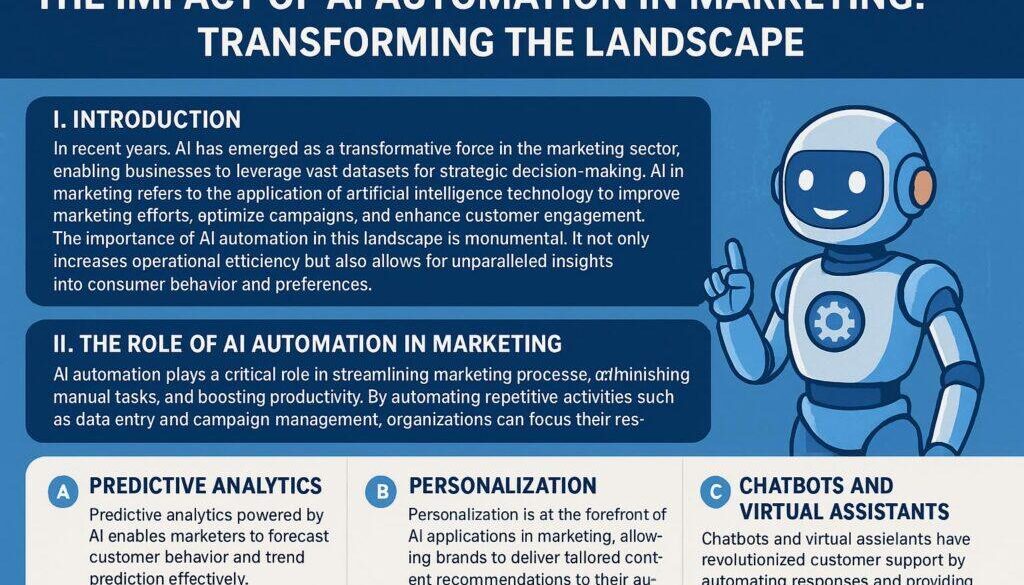
In recent years, AI has emerged as a transformative force in the marketing sector, enabling businesses to leverage vast datasets for strategic decision-making. AI in marketing refers to the application of artificial intelligence technology to improve marketing efforts, optimize campaigns, and enhance customer engagement. The importance of AI automation in this landscape is monumental; it not only increases operational efficiency but also allows for unparalleled insights into consumer behavior and preferences.
With the rapid advancements in technology, several key trends are reshaping how businesses approach marketing and customer interactions. Organizations that harness these trends can gain a competitive edge in an increasingly digital marketplace.
II. The Role of AI Automation in Marketing
AI automation plays a critical role in streamlining marketing processes, diminishing manual tasks, and boosting productivity. By automating repetitive activities such as data entry and campaign management, organizations can focus their resources on strategic initiatives. Additionally, AI technology enhances the customer experience through personalized interactions and timely responses, fostering stronger relationships between brands and consumers.
Furthermore, AI tools offer powerful data analysis capabilities that unravel valuable insights. By processing vast amounts of data in real time, businesses can identify trends, gauge customer sentiment, and make informed decisions, ultimately driving growth and engagement.
III. Key Applications of AI in Marketing
A. Predictive Analytics
Predictive analytics powered by AI enables marketers to forecast customer behavior and trend prediction effectively. By analyzing historical data, businesses can identify patterns and anticipate future actions, allowing for proactive marketing strategies that resonate with customers. This capability not only enhances targeting but also helps in resource allocation for maximum impact.
B. Personalization
Personalization is at the forefront of AI applications in marketing, allowing brands to deliver tailored content recommendations to their audiences. By leveraging AI algorithms, businesses can refine their messaging and offerings based on user preferences and behaviors. Dynamic pricing strategies also enhance the buying experience, as AI can adjust prices in real time based on demand, inventory levels, and customer profiles.
C. Chatbots and Virtual Assistants
Chatbots and virtual assistants have revolutionized customer support by automating responses and providing immediate assistance to consumers. These AI-driven tools use natural language processing to engage with users, answer queries, and guide them through the purchasing process. By implementing effective engagement strategies via chatbots, brands can keep customers satisfied while reducing operational costs.
IV. Benefits of Implementing AI Automation in Marketing
The benefits of AI automation are substantial, with increased efficiency and cost savings being top among them. By streamlining tasks and optimizing processes, organizations can reallocate their resources to more strategic endeavors, enhancing overall productivity. Moreover, AI-driven insights lead to improved decision-making, equipping marketing teams with the information they need to create impactful campaigns.
Another significant advantage is enhanced targeting and engagement. With AI's ability to analyze customer data, brands can hone in on specific demographics, tailoring their marketing efforts to resonate with target audiences. This degree of personalization fosters deeper connections with customers and encourages brand loyalty.
V. Challenges of AI in Marketing
Despite the clear advantages, the adoption of AI in marketing is not without its challenges. Data privacy concerns loom large as consumers become increasingly aware of how their data is being utilized. Companies must navigate regulations and ensure that their AI systems uphold privacy standards to maintain customer trust.
Integration with existing systems can also prove to be a complex task. Migrating data and aligning AI platforms with current tools requires substantial investment and training. Lastly, there is a notable skills gap in the workforce, as many marketing professionals may not possess the technical expertise needed to fully harness AI technology.
VI. Future Trends in AI Automation in Marketing
As we look ahead, several trends indicate the future trajectory of AI automation in marketing. Advanced machine learning algorithms will continue to evolve, offering even more sophisticated analytical capabilities. Voice and visual search functionalities are also on the rise, driven by the growing use of smart devices and visual content, necessitating marketers to adapt their strategies accordingly.
Additionally, ethical considerations and regulations surrounding AI usage will become increasingly important. As technology advances, ensuring compliance with ethical standards will be crucial for maintaining consumer trust and brand integrity.
VII. Case Studies
Successful implementation of AI in marketing campaigns serves as a testament to its potential. Many leading brands have effectively utilized AI-driven strategies to enhance customer engagement and drive sales. For example, a personal care brand utilized predictive analytics to tailor their product recommendations, resulting in a significant increase in conversion rates.
Conversely, some failures highlight the importance of careful strategy execution. Brands that rushed AI implementation without adequate training or alignment with business objectives faced challenges, showcasing the need for a well-planned approach.
VIII. Conclusion
In conclusion, AI automation is reshaping the marketing landscape, offering numerous advantages such as increased efficiency, improved decision-making, and enhanced customer targeting. As organizations navigate the complexities of implementation, it is essential to embrace the potential of AI technology to stay ahead in a competitive environment. Marketers must take action now to integrate AI into their strategies, ensuring they are positioned for success in the rapidly evolving digital marketplace.