Revolutionizing Marketing: The Impact of AI Automation on Efficiency, Personalization, and Cost Reduction
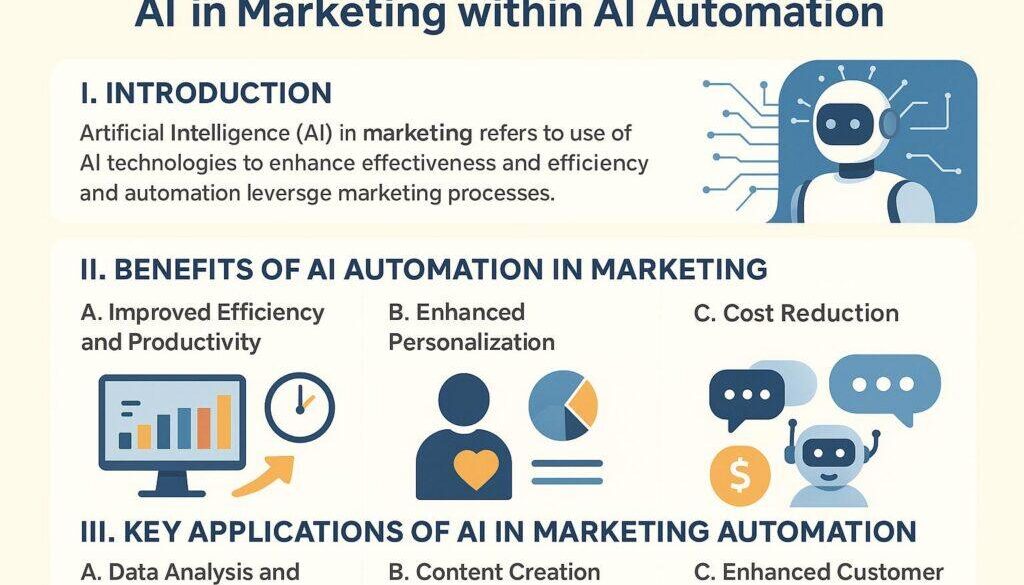
AI in Marketing within AI Automation
I. Introduction
Artificial Intelligence (AI) in marketing refers to the use of AI technologies to enhance the effectiveness and efficiency of marketing efforts. AI automation leverages these technologies to streamline various marketing processes, allowing businesses to operate more productively. As the digital landscape continues to evolve, integrating AI into marketing strategies is crucial to staying competitive and meeting the rising demands of consumers.
II. Benefits of AI Automation in Marketing
A. Improved Efficiency and Productivity
AI automation significantly enhances efficiency and productivity by automating repetitive tasks, such as data entry and reporting. This frees up valuable human resources, allowing marketing teams to focus on strategic initiatives and creative projects. As a result, organizations can accelerate their innovation processes and adapt more quickly to market changes.
B. Enhanced Personalization
With AI, marketers can gain data-driven insights into customer behavior and preferences, leading to improved personalization. By analyzing vast amounts of customer data, businesses can create tailored marketing campaigns that resonate with individual consumers. This level of personalization not only improves customer engagement but also fosters stronger brand loyalty and increases conversion rates.
C. Cost Reduction
Integrating AI automation can lead to significant cost reductions within marketing departments. By minimizing operational costs through automation, businesses can allocate resources more effectively, resulting in a better return on investment (ROI) on marketing spending. Companies utilizing AI tools can often achieve their marketing goals while operating on a leaner budget, making it a smart financial strategy.
III. Key Applications of AI in Marketing Automation
A. Data Analysis and Insights
AI technologies excel in data analysis, providing marketers with predictive analytics that forecast trends and customer behavior. Advanced customer segmentation allows businesses to identify and target specific audience groups with personalized messages. This strategic focus enhances the overall effectiveness of marketing campaigns and drives better results.
B. Content Creation and Curation
The rise of AI-generated content is transforming how marketing teams create and curate material. AI tools can generate high-quality content quickly and efficiently, alleviating the burden on content creators. Additionally, AI-driven content recommendation systems can suggest relevant pieces to customers, enhancing user experience and engagement.
C. Enhanced Customer Engagement
Innovations like chatbots and virtual assistants powered by AI are revolutionizing customer engagement. These tools provide instant responses to customer inquiries, improving service levels and customer satisfaction. Furthermore, automated email marketing campaigns can be personalized based on user behavior, increasing the likelihood of conversions.
D. Social Media Management
AI technology plays a pivotal role in social media management by enabling AI-driven social listening and analysis. Businesses can monitor online conversations about their brand and industry, gaining insights to inform marketing strategies. Automated posting and scheduling tools also streamline content distribution, ensuring brands maintain a consistent presence across platforms.
IV. Tools and Technologies for AI Automation in Marketing
A. AI-Powered Marketing Platforms
Several leading AI-powered marketing platforms, such as HubSpot and Marketo, offer a suite of tools designed to enhance marketing automation. These platforms provide features like lead scoring, campaign management, and performance analytics. By leveraging these tools, businesses can optimize their marketing strategies and achieve better outcomes.
B. Machine Learning Algorithms
Machine learning algorithms are at the heart of many AI applications in marketing automation. These algorithms analyze patterns in consumer behavior, allowing marketers to refine their strategies and improve targeting. The integration of machine learning can significantly enhance the effectiveness of marketing campaigns, driving better engagement and conversions.
C. Natural Language Processing (NLP)
Natural Language Processing (NLP) is another critical technology in AI marketing automation, enabling machines to understand and respond to human language. NLP applications enhance customer interactions through chatbots and virtual assistants, making them more natural and intuitive. This technology can also analyze consumer sentiment in feedback or social media interactions, aiding businesses in adjusting their marketing strategies.
V. Challenges and Considerations
A. Data Privacy and Compliance
As AI becomes more prevalent in marketing, data privacy and compliance issues cannot be overlooked. Regulations such as GDPR impose strict guidelines on how businesses collect and utilize customer data. Marketers must navigate these regulations carefully to maintain customer trust and avoid legal repercussions.
B. Integration with Existing Systems
Integrating AI solutions with existing marketing systems can present compatibility challenges. Many organizations face hurdles when trying to combine new AI tools with legacy systems that may not be equipped to handle advanced technologies. Successful integration is crucial for reaping the full benefits of AI automation.
C. Skills Gap
The rapid evolution of AI technologies has created a skills gap within many marketing teams. There is an increasing demand for training and upskilling to ensure marketing professionals are equipped to leverage AI effectively. Investing in education and training programs is essential for organizations looking to stay ahead in the competitive landscape.
VI. Future Trends of AI in Marketing Automation
A. Evolution of AI Technologies
As AI technologies continue to evolve, marketers can expect more sophisticated tools that offer enhanced capabilities. Innovations in machine learning and neural networks will allow for deeper insights and more effective campaign strategies. Keeping abreast of these developments will be crucial for marketers aiming to maintain a competitive edge.
B. Increasing Role of AI in Consumer Behavior Analysis
The role of AI in analyzing consumer behavior is expected to grow significantly in the coming years. With advancements in data handling and analytical techniques, marketers can gain even more precise insights into customer preferences. This will empower businesses to create even more effective and targeted marketing campaigns.
C. Predictions for the Next 5-10 Years
In the next 5-10 years, we can expect AI to become an integral part of marketing strategies across all industries. The proliferation of AI technologies will lead to innovations in customer interaction, predictive analytics, and campaign optimization. Organizations that embrace AI-driven automation will likely gain a significant advantage in understanding and meeting customer needs.
VII. Conclusion
In summary, AI has the potential to transform marketing through automation, driving improved efficiency, personalization, and cost-effectiveness. Businesses that adopt AI-driven automation strategies will be better equipped to navigate the complexities of modern marketing. Embracing the future of AI in marketing is essential for staying competitive in an ever-evolving landscape.