Harnessing AI Automation: Transforming Marketing Strategies for Enhanced Customer Engagement
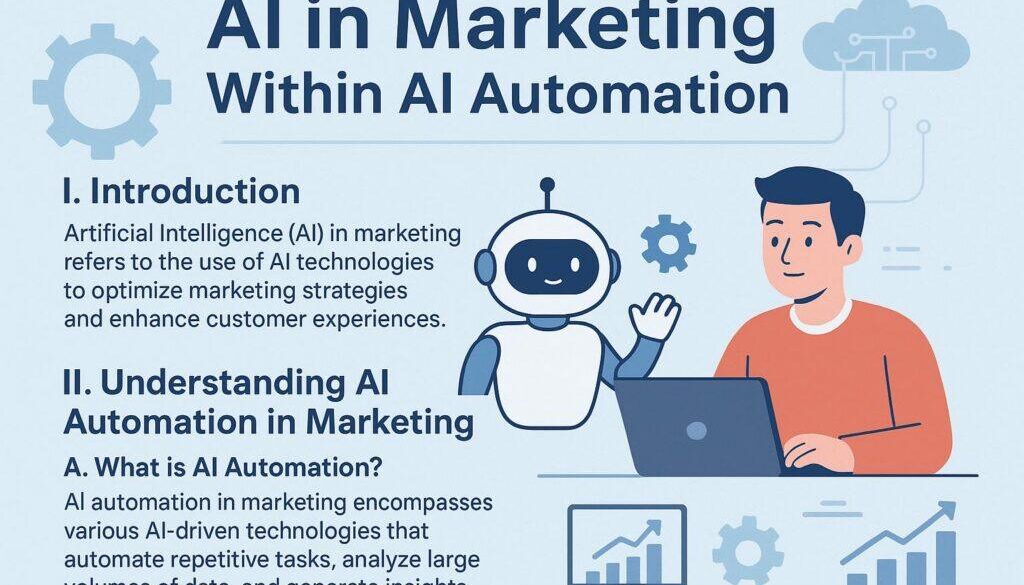
AI in Marketing Within AI Automation
I. Introduction
Artificial Intelligence (AI) in marketing refers to the use of AI technologies to optimize marketing strategies and enhance customer experiences. As businesses face increasing competition and customer expectations, AI automation has become essential for streamlining processes, analyzing data, and personalizing marketing efforts. This article explores AI automation's role in transforming marketing, outlining its applications, benefits, challenges, and future trends.
II. Understanding AI Automation in Marketing
A. What is AI Automation?
AI automation in marketing encompasses various AI-driven technologies that automate repetitive tasks, analyze large volumes of data, and generate insights to optimize marketing efforts. This automation allows marketers to focus on strategic initiatives by minimizing manual interventions. Additionally, it enables organizations to respond more quickly to market changes and customer demands.
B. How AI Automation Transforms Marketing
AI automation significantly enhances marketing by increasing efficiency and improving data analysis capabilities.
1. Increased efficiency
With AI automation, marketing processes such as data entry, campaign management, and lead generation can be executed faster and with fewer errors. This efficiency allows marketing teams to allocate their time and resources more effectively, improving overall productivity and enabling a more agile approach to market demands.
2. Enhanced data analysis and insights
AI-powered tools can analyze vast amounts of data at unprecedented speeds, providing insights that human analysts may overlook. Marketers can leverage these insights for superior decision-making and to understand customer behavior patterns, preferences, and trends, ultimately shaping more effective marketing strategies.
III. Key Applications of AI in Marketing Automation
A. Customer Segmentation and Targeting
AI excels in customer segmentation and targeting, leveraging predictive analytics to glean audience insights.
1. Predictive analytics for audience insights
By analyzing past purchase behaviors, online interactions, and demographic data, AI can identify segments of customers who are most likely to convert. This targeted approach ensures that marketing resources are focused on the right audiences at optimal moments, leading to higher engagement rates.
2. Customized marketing campaigns
With AI’s ability to analyze data in real-time, marketers can create personalized campaigns tailored to individual customer preferences and behaviors. This customization fosters deeper connections and boosts the effectiveness of marketing messages, driving higher conversion rates.
B. Content Creation and Curation
AI technology plays a pivotal role in content creation and curation, enhancing marketing efficiency and creativity.
1. AI-generated content tools
AI writing tools can generate high-quality content, such as blog posts and product descriptions, at a fraction of the time it takes human writers. This capability allows businesses to maintain a consistent online presence and engage audiences through varied content effortlessly.
2. Automating social media posts
Automation tools can manage social media posting schedules, ensuring that content reaches audiences at peak engagement times. By using AI to analyze past performance, marketers can optimize their posting strategies and curate content that resonates with their followers.
C. Customer Interaction and Chatbots
AI revolutionizes customer interaction through tools like chatbots, which provide instant assistance and personalized communication.
1. AI-driven chatbots for customer service
Chatbots powered by AI can handle customer inquiries seamlessly, providing instant responses and assistance 24/7. This availability not only enhances customer satisfaction but also frees up human agents to concentrate on complex queries that require a personal touch.
2. Personalized communication strategies
AI enables businesses to create tailored communication strategies based on customer data. By analyzing interaction histories and preferences, companies can send personalized messages that significantly enhance customer experiences and drive engagement.
IV. Benefits of AI in Marketing Automation
A. Time and Cost Efficiency
Implementing AI in marketing automation can dramatically reduce the time spent on routine tasks, allowing teams to focus on strategic efforts. Consequently, companies can allocate their budgets more wisely, maximizing ROI while minimizing operational costs.
B. Improved Conversion Rates
With data-driven insights and targeted campaigns, businesses utilizing AI-driven marketing automation experience improved conversion rates. Personalized marketing efforts resonate more effectively with consumers, leading to higher sales and customer retention.
C. Enhanced Customer Experiences
AI automation allows for tailored customer experiences that align with individual preferences and behaviors. By delivering relevant content and timely responses, companies can foster stronger relationships, resulting in heightened customer loyalty.
D. Data-Driven Decision Making
AI provides marketers with valuable insights that drive informed decision-making. By leveraging analytics, businesses can pivot strategies based on real-time data, ensuring they remain competitive in an ever-evolving market landscape.
V. Challenges of Implementing AI in Marketing
A. High Initial Investment
While AI automation offers numerous benefits, the initial investment can be high. Businesses must invest not only in technology but also in training employees to effectively use these new tools.
B. Data Privacy Concerns
As AI relies heavily on data, concerns regarding data privacy and security cannot be overlooked. Marketers must navigate regulations like GDPR and ensure that customer data is handled responsibly to maintain trust and comply with legal standards.
C. Need for Continuous Learning and Adaptation
The rapidly evolving nature of AI technology necessitates ongoing learning and adaptation. Marketers must keep abreast of the latest advancements and be flexible enough to integrate new tools and practices effectively into their strategies.
VI. Case Studies of Successful AI Automation in Marketing
A. Company A: Implementing AI for Customer Insights
Company A successfully integrated AI to analyze customer patterns, leading to refined marketing strategies that increased engagement and sales. By utilizing predictive analytics, they were able to forecast customer behaviors accurately.
B. Company B: Automating Content Marketing
Company B utilized AI tools to automate their content marketing efforts, enabling the production of high-quality content. This allowed them to maintain a robust online presence while cutting down on operating costs associated with content creation.
C. Company C: Enhancing Customer Engagement with Chatbots
Company C deployed AI-driven chatbots for customer service, dramatically increasing response times and customer satisfaction. This initiative not only improved engagement but also streamlined their customer support processes.
VII. Future Trends of AI in Marketing Automation
A. Growth of Personalization
The trend towards hyper-personalization in marketing is set to grow as AI technologies advance. Marketers will leverage AI insights to create more tailored experiences that resonate deeply with individual consumers.
B. Advanced Predictive Analytics
AI's capability to find patterns in data will lead to more sophisticated predictive analytics tools. Marketers will harness these tools to better forecast customer needs and behaviors, enabling proactive marketing strategies.
C. Integration with Other Technologies (e.g., IoT)
As technologies like the Internet of Things (IoT) gain traction, AI marketing automation will increasingly integrate with these innovations. This convergence will provide deeper insights and enhance customer interactions across multiple channels and devices.
VIII. Conclusion
AI is revolutionizing marketing automation by enhancing efficiency, driving insights, and personalizing customer experiences. Businesses that embrace AI technologies will be better positioned to thrive in competitive environments and adapt to changing consumer needs. Embracing AI is no longer an option; it’s a strategic necessity for successful marketing.
IX. Call to Action
Explore the myriad of AI tools available to enhance your marketing strategies today. Dive deeper into our resources on AI in marketing automation, and discover how you can stay ahead in this dynamic industry.