Harnessing AI Automation in Marketing: Transforming Strategies for Growth and Customer Engagement
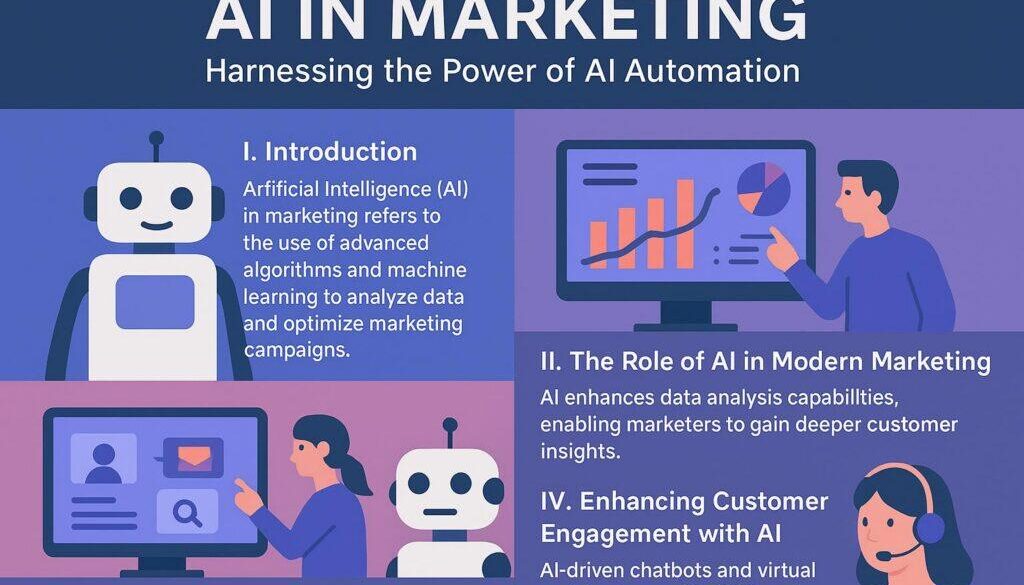
AI in Marketing: Harnessing the Power of AI Automation
I. Introduction
Artificial Intelligence (AI) in marketing refers to the use of advanced algorithms and machine learning to analyze data and optimize marketing campaigns. AI Automation, a subset of this technology, streamlines various marketing processes, allowing companies to operate more efficiently and effectively. Integrating AI into marketing strategies is crucial for staying competitive, enhancing customer experiences, and driving business growth.
II. The Role of AI in Modern Marketing
A. Data Analysis and Customer Insights
AI enhances data analysis capabilities, enabling marketers to gain deeper customer insights. Predictive analytics, powered by AI, allows businesses to anticipate customer behaviors and trends, facilitating more informed decision-making. Moreover, market segmentation becomes more precise as AI processes vast amounts of data to identify unique customer groups and tailor strategies accordingly.
B. Personalized Marketing
One of the standout applications of AI in marketing is personalized marketing. Through dynamic content creation, AI can tailor messages based on individual user behaviors and preferences, significantly improving engagement rates. Additionally, AI optimizes the customer journey by analyzing touchpoints and adjusting interactions to foster a smoother path toward conversion.
III. AI Automation Tools in Marketing
A. Overview of Popular AI Automation Tools
Numerous AI automation tools are transforming the marketing landscape. Tools like HubSpot, Marketo, and Hootsuite leverage AI to facilitate better campaign management and performance tracking. By utilizing these tools, businesses can save time and optimize their marketing efforts, giving them a competitive edge.
B. How AI Tools Improve Efficiency
AI tools revolutionize processes such as email marketing automation and social media scheduling. Email marketing automation ensures timely communication with customers while utilizing AI-driven insights to personalize content for various segments. Additionally, AI-powered social media tools analyze user engagement and post-performance, allowing marketers to refine their strategies effectively.
C. Case Studies of Businesses Using AI Tools
Several companies have successfully integrated AI automation tools into their marketing strategies. For instance, Coca-Cola employs AI to analyze social media trends and customer sentiment, which informs their advertising campaigns. Similarly, Starbucks uses AI to personalize offers for customers based on their purchase history, resulting in increased satisfaction and loyalty.
IV. Enhancing Customer Engagement with AI
A. Chatbots and Virtual Assistants
AI-driven chatbots and virtual assistants provide 24/7 customer service, offering quick responses to inquiries and enhancing user experience. These tools efficiently handle frequently asked questions, freeing up human agents to address more complex issues. The implementation of chatbots not only improves customer engagement but also significantly reduces operational costs.
B. AI-driven Content Creation
AI plays a notable role in content creation, offering tools that generate high-quality blogs, videos, and social media posts. Businesses can leverage AI algorithms to create engaging content tailored to their audience's preferences. This advancement allows marketers to maintain a consistent flow of relevant content, ultimately boosting brand visibility and engagement.
V. Challenges and Considerations
A. Data Privacy Concerns
As AI becomes increasingly integrated into marketing, data privacy emerges as a significant concern. Brands must navigate complex regulations and ensure they handle customer data responsibly. Building trust with consumers requires transparency about data usage, and businesses must prioritize compliance with security standards.
B. Integration with Existing Systems
Integrating AI tools with existing marketing systems can prove challenging. Companies may face hurdles in ensuring compatibility between new AI technologies and traditional platforms. A well-thought-out integration strategy is essential to maximize the benefits of AI automation while minimizing disruptions.
C. Balancing Automation with Human Touch
While automation enhances efficiency, there's a risk of losing the personal touch in customer interactions. Striking a balance between automated solutions and human engagement is vital for maintaining a meaningful connection with customers. Businesses should consider leveraging AI to support their teams rather than replace the human element in marketing.
VI. Future Trends of AI in Marketing
A. Emerging Technologies
Emerging technologies such as machine learning and natural language processing are set to define the future of AI in marketing. These advancements will enable even more sophisticated data analysis and customer engagement strategies, pushing the boundaries of personalization. Businesses that adapt to these technologies will likely lead the way in their industries.
B. Predictions for AI Marketing Automation
As AI marketing automation continues to evolve, we can expect increasingly refined targeting and more effective campaign management. Moreover, predictive capabilities will grow, allowing marketers to make real-time adjustments to improve performance continually. This shift promises to revolutionize how businesses connect with their customers.
C. The Potential Impact on Marketing Jobs
While AI automation will create new job opportunities in tech and data analysis, it may also disrupt traditional marketing roles. Marketers will need to adapt by acquiring new skills relevant to AI technology and data interpretation. As the industry evolves, professionals must be prepared to embrace change and leverage AI to enhance their marketing strategies.
VII. Conclusion
AI is reshaping the marketing landscape, providing businesses with new tools and insights that drive growth and improve customer experiences. Embracing AI automation offers organizations the potential to enhance their marketing strategies and engage customers more effectively. As technology advances, the future of marketing will undoubtedly be influenced by AI, making it essential for businesses to adapt and innovate.