AI in Marketing: Unlocking Competitive Advantage with Automation and Innovation
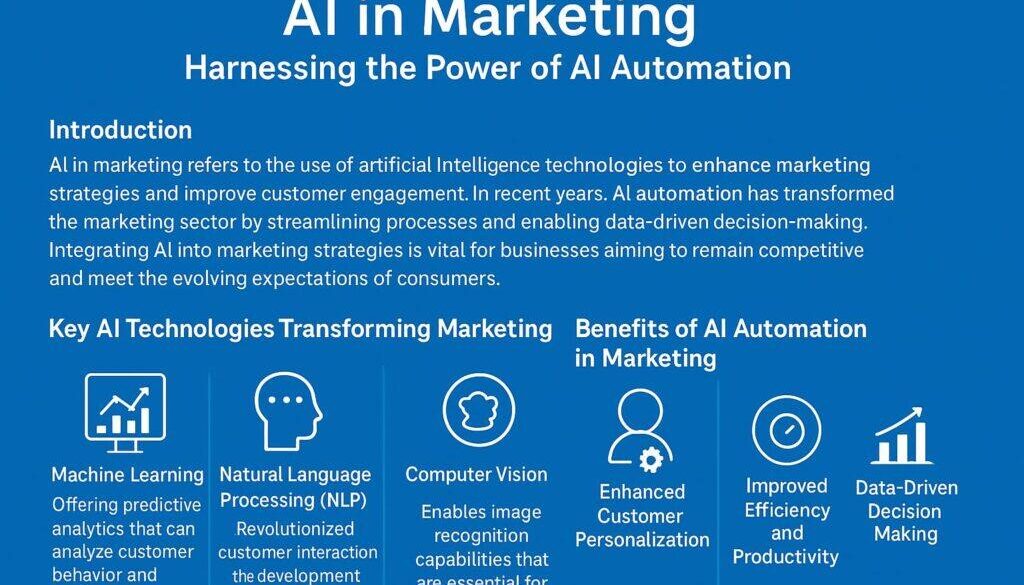
AI in Marketing: Harnessing the Power of AI Automation
Introduction
AI in marketing refers to the use of artificial intelligence technologies to enhance marketing strategies and improve customer engagement. In recent years, AI automation has transformed the marketing sector by streamlining processes and enabling data-driven decision-making. Integrating AI into marketing strategies is vital for businesses aiming to remain competitive and meet the evolving expectations of consumers.
Key AI Technologies Transforming Marketing
Machine Learning
Machine learning is at the forefront of AI innovation in marketing, offering predictive analytics that can analyze customer behavior and preferences. By leveraging past data, machine learning algorithms can forecast future purchasing patterns, allowing marketers to tailor their strategies accordingly. This not only enhances customer satisfaction but also drives sales by anticipating customer needs.
Natural Language Processing (NLP)
Natural Language Processing (NLP) has revolutionized customer interaction through the development of chatbots and virtual assistants. These AI-powered tools can engage customers in real-time, answering queries and providing support 24/7. By automating customer service, businesses can enhance user experience while reducing the workload on human agents.
Computer Vision
Computer vision technology enables image recognition capabilities that are essential for targeted advertising. By analyzing visual content, AI can identify products and demographics, creating more personalized ad experiences. For example, brands can serve specific ads based on customers' previous interactions with similar products, leading to higher conversion rates.
Benefits of AI Automation in Marketing
Enhanced Customer Personalization
One of the most significant advantages of AI automation in marketing is the ability to provide enhanced customer personalization. Through tailored recommendations and customized content, businesses can cultivate stronger relationships with their customers. This level of personalization fosters customer loyalty and can lead to increased lifetime value.
Improved Efficiency and Productivity
AI technologies can automate repetitive tasks that typically consume time and resources, significantly improving efficiency and productivity. By minimizing human intervention in routine tasks such as data entry or scheduling, marketers can focus on more strategic initiatives. This shift not only maximizes resource utilization but also accelerates campaign rollout times.
Data-Driven Decision Making
AI equips marketers with the tools to analyze vast amounts of data, delivering valuable insights that inform decision-making. With advanced analytics, businesses can identify trends, monitor campaign performance, and adjust strategies in real-time. This data-driven approach enhances the precision of marketing efforts, leading to better results and higher returns on investment.
Applications of AI in Marketing
Content Creation
AI has made substantial inroads in content creation, with automated writing tools simplifying the generation of articles, social media posts, and marketing copy. These tools can analyze industry trends and draft relevant content in a fraction of the time it would take a human. This not only saves time but allows for rapid scaling of content marketing initiatives.
Social Media Management
Social media is a vital channel for modern marketing, and AI automation aids in efficiently managing this space. AI-driven tools help schedule posts, analyze engagement metrics, and even interact with audiences via bots. This enhances a brand's social media presence while allowing marketers to focus on strategy rather than manual tasks.
Email Marketing
AI optimizes email marketing strategies by personalizing content and timing for individual recipients. By analyzing user behaviors and preferences, AI can predict the best times to send emails and suggest tailored content. This leads to higher open rates and better engagement, which are crucial for successful email campaigns.
Challenges and Considerations
Ethical Concerns
Despite its advantages, the use of AI in marketing raises ethical concerns that businesses must address. Issues such as bias in algorithms and the potential for manipulative marketing practices necessitate a careful approach to implementation. Upholding ethical standards is critical for maintaining consumer trust.
Data Privacy Regulations
Compliance with data privacy regulations, such as GDPR and CCPA, is essential when deploying AI technologies in marketing. As businesses collect and utilize customer data, they must ensure that they do so transparently and with consent. Failure to comply can result in significant legal repercussions and damage to brand reputation.
Balancing Automation with Human Touch
While AI can enhance efficiency, striking a balance between automation and the human touch is crucial for effective marketing. Customers still value authentic interactions and relationships, which technology cannot fully replicate. Businesses should integrate AI strategically while preserving the personal elements that foster loyalty and connection.
Future Trends in AI Automation for Marketing
Rise of Conversational Marketing
Conversational marketing is emerging as a prominent trend, enabling real-time communication between brands and customers. AI-driven chatbots are becoming increasingly sophisticated, facilitating personalized interactions that drive engagement. This trend highlights the shift toward customer-centric marketing strategies.
Integration with Augmented Reality (AR)
The integration of AI with augmented reality (AR) is set to create immersive marketing experiences. Brands can leverage AR to provide virtual try-ons or interactive product demonstrations, engaging customers in unique ways. This convergence of technologies is likely to reshape how consumers interact with products and brands.
Evolving Analytics Capabilities
The capabilities of AI in analytics continue to evolve, providing deeper insights into consumer behavior. Enhanced predictive analytics and machine learning models will offer marketers even greater precision in targeting and segmentation. Staying ahead of these developments will be key for businesses aiming to leverage AI successfully.
Case Studies
Several leading brands have successfully implemented AI in their marketing strategies, yielding impressive results. For instance, Netflix uses machine learning algorithms to recommend content based on viewing history, significantly increasing user engagement. Additionally, companies that have embraced automation in customer service have reported increased customer satisfaction and reduced response times. These case studies exemplify the transformative potential of AI in marketing.
Conclusion
In summary, AI automation in marketing represents a paradigm shift that businesses cannot afford to ignore. As the landscape evolves, integrating AI technologies into marketing strategies will be essential for gaining a competitive advantage. Companies should actively explore and implement these technologies to enhance their marketing efforts and align with the future of consumer expectations.