AI in Marketing: How Automation is Revolutionizing Strategies for Success
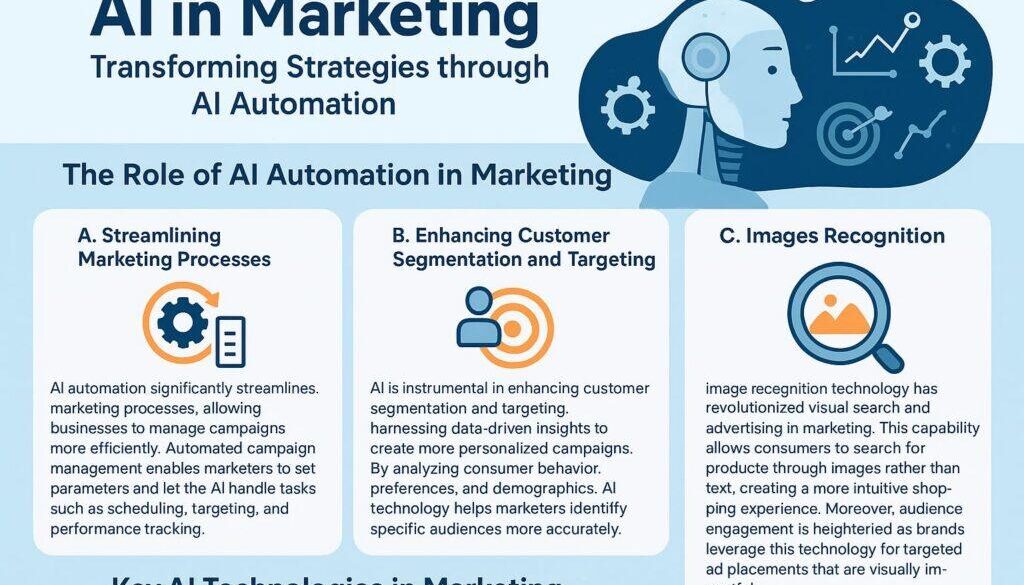
AI in Marketing: Transforming Strategies through AI Automation
I. Introduction
Artificial Intelligence (AI) in marketing refers to the application of advanced algorithms and technology to analyze data and automate decision-making processes. The importance of AI automation lies in its ability to enhance marketing strategies, making them more efficient, targeted, and effective. This article will explore the transformative role of AI in marketing, key technologies, benefits, challenges, and future trends, ultimately highlighting the necessity for businesses to integrate AI solutions.
II. The Role of AI Automation in Marketing
A. Streamlining Marketing Processes
AI automation significantly streamlines marketing processes, allowing businesses to manage campaigns more efficiently. Automated campaign management enables marketers to set parameters and let the AI handle tasks such as scheduling, targeting, and performance tracking. This results in seamless workflow optimization, freeing up precious time for creative strategy development instead of mundane administrative tasks.
B. Enhancing Customer Segmentation and Targeting
AI is instrumental in enhancing customer segmentation and targeting, harnessing data-driven insights to create more personalized campaigns. By analyzing consumer behavior, preferences, and demographics, AI technology helps marketers identify specific audiences more accurately. This level of targeting ensures that marketing initiatives resonate with the right consumers at the right time, significantly improving engagement rates and conversions.
III. Key AI Technologies in Marketing
A. Machine Learning Algorithms
Machine learning algorithms are at the forefront of AI technologies used in marketing, enabling predictive analytics that foresee customer behavior and trends. This capability allows brands to tailor their offerings proactively. Additionally, behavioral targeting, powered by machine learning, provides insights that guide marketing strategies with precision, ensuring relevant messaging reaches the intended audience.
B. Natural Language Processing (NLP)
Natural Language Processing (NLP) enhances customer interaction through chatbots and virtual assistants, streamlining communication and providing real-time support. These AI tools improve user experience by addressing inquiries 24/7, significantly elevating satisfaction and brand loyalty. Furthermore, sentiment analysis through NLP aids brands in gauging public opinion and sentiment towards their offerings, shaping responses and strategies accordingly.
C. Image Recognition
Image recognition technology has revolutionized visual search and advertising in marketing. This capability allows consumers to search for products through images rather than text, creating a more intuitive shopping experience. Moreover, audience engagement is heightened as brands leverage this technology for targeted ad placements that are visually impactful, capturing consumer attention effectively.
IV. Benefits of AI Automation in Marketing
A. Increased Efficiency and Productivity
The integration of AI automation into marketing workflows leads to increased efficiency and productivity, as repetitive tasks are handled automatically. This enables marketing teams to focus on strategy and creative processes rather than mundane analytics. For instance, real-time data analysis driven by AI allows marketers to make informed decisions on the fly, resulting in quicker adaptations to changing market dynamics.
B. Improved Customer Experience
AI automation significantly enhances customer experience by offering personalized interactions and quicker service. With AI algorithms analyzing customer data, brands can craft personalized recommendations and communications that suit individual preferences. Such tailored experiences foster deeper connections with consumers, leading to higher satisfaction and loyalty rates.
C. Enhanced ROI and Cost Savings
The adoption of AI automation culminates in enhanced return on investment (ROI) and substantial cost savings for marketing campaigns. Automation reduces the need for explicit manual intervention, which can be time-consuming and costly. By optimizing budgets based on real-time data and performance metrics, businesses can allocate resources more effectively and maximize the impact of each marketing dollar spent.
V. Challenges and Considerations
A. Data Privacy and Ethical Concerns
Despite its benefits, the use of AI in marketing raises significant data privacy and ethical concerns. Companies must navigate regulations like GDPR and ensure that consumer data is collected and used responsibly. Maintaining transparency with consumers about how their data is utilized is crucial for building trust and preventing potential backlash against perceived invasions of privacy.
B. Integration with Existing Marketing Tools
Another challenge lies in the integration of AI solutions with existing marketing tools. Companies often face compatibility issues that require significant adjustments to their technological frameworks. Successful integration is imperative to ensure that AI tools work harmoniously with current systems, maximizing their potential in enhancing marketing efforts.
C. Dependence on Quality Data
The effectiveness of AI automation is heavily reliant on the quality of data fed into the systems. Poor quality data can lead to inaccurate insights and ineffective marketing strategies, undermining the benefits of AI. Businesses must prioritize data management and integrity, ensuring they have robust data collection and analysis initiatives in place to support their AI tools.
VI. Case Studies of Successful AI in Marketing
A. Brand A: AI-Driven Email Campaigns
Brand A successfully implemented AI-driven email campaigns that increased open rates and conversions significantly. By utilizing machine learning algorithms, Brand A was able to segment its audience based on behavior and preferences, leading to personalized email content tailored specifically to each recipient. This strategic application of AI not only enhanced engagement but also drove sales growth.
B. Brand B: Personalized Social Media Advertising
Brand B leveraged AI to deliver personalized social media advertisements that resonated deeply with their target audience. By employing data analytics, they optimized ad placements and messaging based on user interactions and preferences, resulting in a notable improvement in click-through rates. This case exemplifies how AI can transform traditional advertising approaches into more effective, impactful campaigns.
C. Brand C: Improved Customer Support through AI Chatbots
Brand C integrated AI chatbots into their customer support channels, drastically improving response times and service efficiency. The chatbots handled frequently asked questions and common concerns, reducing the load on human agents. As a result, Brand C achieved higher customer satisfaction levels while allowing their support team to focus on resolving more complex issues.
VII. Future Trends in AI Automation for Marketing
A. Evolving AI Technologies
The future of AI in marketing promises evolving technologies that will push boundaries further, enabling even more sophisticated data analyses and consumer interactions. Innovations in machine learning and cognitive computing will make it possible for marketers to utilize AI in ways we have yet to fully imagine. Staying ahead of these trends is essential for businesses to remain competitive.
B. The Role of Big Data in Marketing Automation
Big Data will play an integral role in the future of marketing automation as companies seek deeper insights and smarter decision-making capabilities. The convergence of AI and Big Data will allow for richer analytics, facilitating better customer understanding and more effective marketing strategies. This synergy will be crucial for brands looking to thrive in an increasingly data-driven marketplace.
C. Predictions for 2025 and Beyond
As we look towards 2025 and beyond, we can predict that AI automation will become an integral aspect of all marketing functions. The continual advancements in technology will likely result in hyper-personalized experiences where consumers will expect brands to know them intimately. Businesses that embrace these changes will likely dominate the future marketplace.
VIII. Conclusion
In conclusion, AI has a profound impact on marketing strategies, improving efficiency, enhancing customer experiences, and driving ROI. As businesses navigate this transformative landscape, the adoption of AI automation is no longer optional but essential for sustained growth and competitiveness. Companies are urged to embrace AI solutions today, ensuring they harness the full potential of advanced technology in their marketing efforts.