
AI in Marketing Automation: Transforming Strategies for Effective Customer Engagement
AI in Marketing: Revolutionizing Automation
Introduction
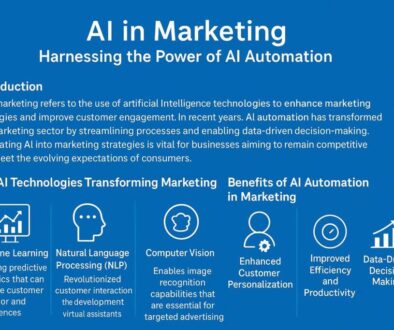
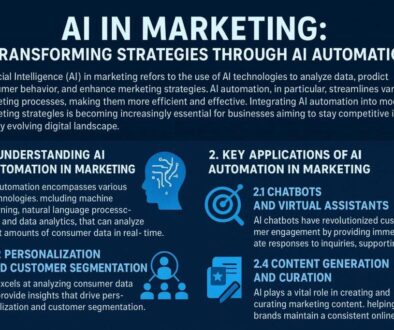
Artificial Intelligence (AI) in marketing refers to the use of advanced technologies that enable brands to automate processes and enhance their marketing strategies. The integration of AI into marketing automation is transforming how businesses engage with their customers, making it a pivotal aspect of today’s digital landscape. In a world where consumer preferences are constantly evolving, understanding AI’s role in marketing is essential for businesses looking to stay relevant.
1. Understanding AI in Marketing
AI technologies such as machine learning and natural language processing have become increasingly valuable in the marketing domain. Machine learning allows algorithms to learn from data and improve their predictions over time, while natural language processing enables machines to understand and interpret human language. Unlike traditional marketing methods, which often rely on broad assumptions and generic strategies, AI leverages data-driven insights to create highly targeted marketing campaigns.
2. Benefits of AI Automation in Marketing
The benefits of AI automation in marketing are substantial and far-reaching. Firstly, it enhances targeting and personalization by analyzing customer data to tailor marketing messages to individual preferences. Secondly, AI helps increase efficiency and reduce costs by streamlining repetitive tasks, allowing marketers to focus on strategic initiatives. Additionally, it improves data analysis and insights, enabling real-time customer engagement that keeps pace with consumer behavior.
3. Key Applications of AI in Marketing Automation
3.1 Predictive Analytics
Predictive analytics involves using historical data to forecast future outcomes, significantly aiding marketing strategy development. Tools like Google Analytics and IBM Watson Analytics offer marketers valuable insights that help predict customer behavior and optimize marketing efforts. By leveraging predictive modeling, businesses can proactively address customer needs and preferences.
3.2 Chatbots and Customer Service Automation
AI chatbots have transformed customer interaction by providing instant responses and assisting with inquiries 24/7. They improve customer service by ensuring quick resolution of issues and qualifying leads through automated conversations. Implementing chatbots not only enhances user experience but also allows businesses to gather data on customer interactions for ongoing improvement.
3.3 Content Creation and Curation
AI-powered content creation tools, such as copywriting software, revolutionize how businesses generate written content. These tools assist marketers in developing relevant content swiftly, optimizing it for SEO, and ensuring it aligns with audience interests. Furthermore, automated content distribution strategies streamline sharing across various platforms, ensuring consistent messaging.
3.4 Email Marketing Optimization
AI is increasingly used to enhance email marketing effectiveness through segmentation and targeting. By analyzing user behavior, AI can personalize email content and schedule delivery times for maximum engagement. This level of personalization leads to higher open rates and improved conversion rates, making email campaigns significantly more effective.
4. Case Studies
4.1 Successful AI Implementation in Marketing
One notable example of successful AI integration in marketing is that of Netflix, which uses AI to provide personalized content recommendations. By analyzing user viewing habits, they increased customer retention and satisfaction significantly. The success of Netflix illustrates how effective AI-driven strategies can enhance customer relationships and drive business growth.
4.2 Lessons Learned from Failed Campaigns
On the other hand, there have been instances where AI automation has not yielded the desired results. For example, an e-commerce company’s overly aggressive automated email campaign led to customer frustration and increased unsubscribe rates. The key takeaway here is the importance of balancing automation with human insight to avoid alienating customers.
5. Challenges and Considerations
While AI presents many advantages, several challenges persist, particularly surrounding ethical concerns. The use of AI in marketing raises questions about data privacy and the potential misuse of customer information. Moreover, human oversight is critical to ensure that AI-driven campaigns align with brand values and customer expectations.
6. Future Trends of AI in Marketing Automation
Looking ahead, several exciting advancements in AI for marketing automation are on the horizon. Emerging technologies such as voice recognition and augmented reality are expected to gain traction, offering new ways for brands to engage with consumers. Staying informed about these trends will be crucial for marketers aiming to harness AI’s full potential.
Conclusion
The significance of AI in marketing automation cannot be overstated, as it represents a transformative shift in how businesses connect with their audiences. Embracing AI technologies provides a competitive edge, enabling marketers to deliver personalized experiences and optimize strategies. As the digital landscape continues to evolve, adopting AI tools will be vital for staying ahead of the curve.
Call to Action
Explore the various AI tools available to enhance your marketing strategies. Dive deeper into the world of AI in marketing with further reading and resources to unlock new opportunities for your brand. Stay informed, innovate, and leverage AI to transform your marketing approach today!