AI Automation in Marketing: Unlocking Optimal Results Through Intelligent Strategies
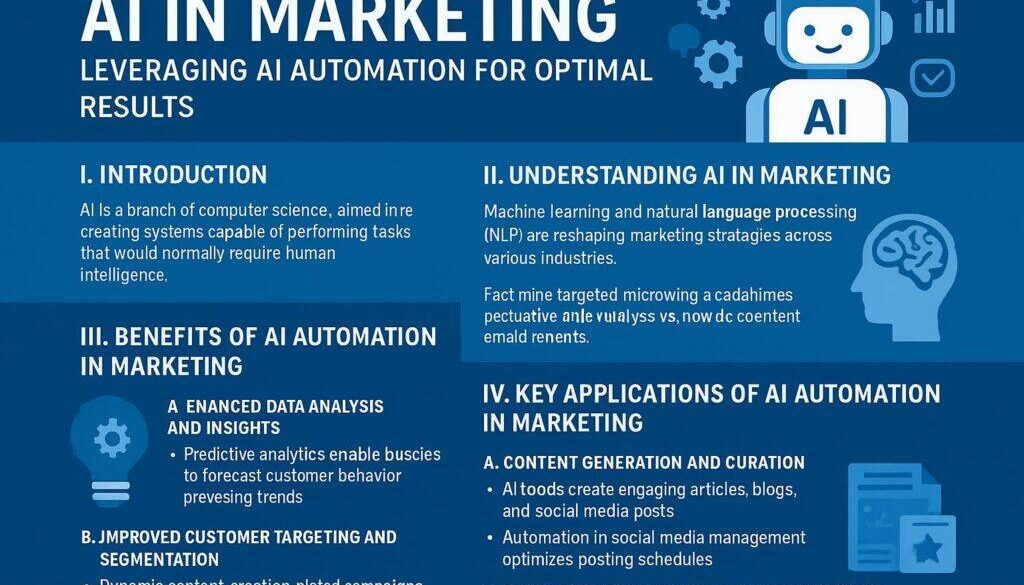
AI in Marketing: Leveraging AI Automation for Optimal Results
I. Introduction
Artificial Intelligence (AI), a branch of computer science, aims to create systems capable of performing tasks that would normally require human intelligence. In the marketing realm, AI has become increasingly relevant as it transforms how businesses interact with consumers. This article explores the pivotal role of AI automation in marketing, highlighting its significance for achieving optimal results.
II. Understanding AI in Marketing
AI technologies, such as machine learning and natural language processing (NLP), are reshaping marketing strategies across various industries. Machine learning algorithms analyze vast datasets to discern patterns, while NLP enables machines to understand human language nuances. Historically, AI has evolved from rudimentary data analysis tools to advanced systems that facilitate predictive analytics, personalized outreach, and real-time market response. Recent research indicates a surge in AI adoption, with 61% of marketers stating they use AI tools on a regular basis, underlining how vital these technologies have become in today’s marketing landscape.
III. Benefits of AI Automation in Marketing
A. Enhanced Data Analysis and Insights
AI automation significantly improves data analysis, allowing marketers to derive actionable insights from extensive datasets. Predictive analytics enable businesses to forecast customer behavior, revealing trends that guide campaign strategies. Moreover, real-time data processing enhances decision-making capabilities, ensuring marketing efforts remain current and relevant.
B. Improved Customer Targeting and Segmentation
AI facilitates remarkable advancements in customer targeting and segmentation. By utilizing AI-driven analytics, brands can create personalized marketing campaigns tailored to individual consumer preferences and behaviors. Furthermore, dynamic content creation powered by AI adjusts messages and visuals based on real-time user engagement, enhancing the overall customer experience.
C. Efficient Resource Management and Time-Saving
Automation tools streamline marketing operations, reducing manual workloads and enhancing productivity. Automated email campaigns allow businesses to deliver timely updates and offers without human intervention. Additionally, chatbots serve as cost-effective customer service solutions, providing instant responses to inquiries and freeing up human agents for more complex issues.
IV. Key Applications of AI Automation in Marketing
A. Content Generation and Curation
AI has revolutionized content generation and curation, with tools that can create engaging articles, blogs, and social media posts. These AI-driven content creation tools analyze trending topics and audience preferences, ensuring content relevance. In addition, automation in social media management optimizes posting schedules, maximizing audience engagement.
B. Customer Relationship Management (CRM) Enhancements
AI-powered CRM systems play a crucial role in improving customer relationship management. These systems leverage AI for lead scoring, assessing prospects based on behavior patterns and engagement levels. Additionally, AI enhances lead nurturing, enabling more personalized communications that foster stronger customer relationships over time.
C. Predictive Customer Engagement
Predictive customer engagement is another vital application of AI in marketing. By employing behavioral targeting, marketers can anticipate consumer needs, delivering tailored messages that resonate with individual preferences. Dynamic pricing strategies further enhance customer engagement by adjusting prices based on demand and user behavior, improving conversion rates.
V. Challenges and Considerations in Implementing AI Automation
While AI automation offers numerous advantages, it also presents several challenges. Data privacy and security concerns are paramount, as businesses must ensure compliance with regulations like GDPR when handling sensitive consumer information. Furthermore, understanding AI limitations is crucial to avoid over-reliance on technology, which can lead to strategic gaps. Finally, incorporating human oversight remains essential for maintaining a balanced approach to AI integration in marketing strategies.
VI. Future of AI in Marketing Automation
The future of AI in marketing automation is bright, with emerging technologies poised to further enhance marketing effectiveness. Innovations such as augmented reality (AR), advanced predictive algorithms, and improved NLP capabilities will transform how consumers interact with brands. As consumer expectations evolve, businesses must prepare for these changes by staying informed and adaptable to new AI-driven marketing strategies.
VII. Conclusion
In conclusion, the power of AI automation in marketing is undeniable, offering significant advantages that can elevate business performance and consumer engagement. By embracing AI solutions, companies can gain a competitive edge in an ever-evolving landscape. Businesses are encouraged to explore the integration of AI in their marketing strategies to stay ahead of industry trends and consumer demands.
VIII. Additional Resources
To further explore the potential of AI in marketing, consider reviewing case studies of successful AI marketing campaigns that demonstrate practical applications. Additionally, check out recommended tools and software like HubSpot, Marketo, and Salesforce that can facilitate AI automation in marketing. For those interested in deepening their understanding, further reading on AI technology trends in marketing is also available online.