
AI Automation in Marketing: Boosting Efficiency and Enhancing Strategies for Success
AI in Marketing: Transforming Strategies through AI Automation
Introduction
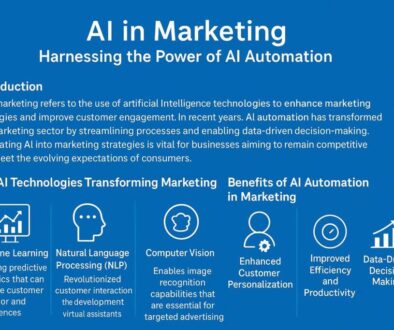
Artificial Intelligence (AI) in marketing refers to the use of AI technologies to analyze data, predict consumer behavior, and enhance marketing strategies. AI automation, in particular, streamlines various marketing processes, making them more efficient and effective. Integrating AI automation into modern marketing strategies is becoming increasingly essential for businesses aiming to stay competitive in a rapidly evolving digital landscape.
1. Understanding AI Automation in Marketing
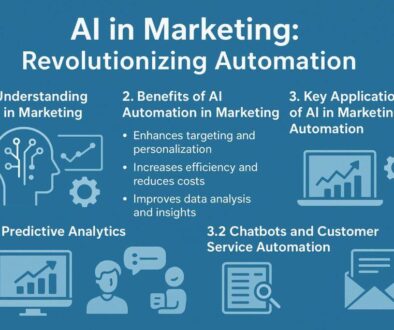
AI automation encompasses various technologies, including machine learning, natural language processing, and data analytics, that can analyze vast amounts of consumer data in real-time. Traditional marketing typically relies on manual data analysis and straightforward techniques, which can be time-consuming and less effective. In contrast, AI-driven marketing leverages predictive algorithms and consumer insights to create more targeted and successful marketing campaigns.
2. Key Applications of AI Automation in Marketing
2.1 Personalization and Customer Segmentation
AI excels at analyzing consumer data to provide insights that drive personalization and customer segmentation. By parsing through behavioral data, AI can identify distinct customer segments and tailor marketing messages to resonate with these groups. Campaigns like personalized email marketing, which utilize AI to send tailored messages based on individual preferences, have demonstrated significant increases in engagement and conversion rates.
2.2 Predictive Analytics and Market Insights
Predictive analytics uses machine learning algorithms to forecast customer behavior and market trends, allowing marketers to make informed decisions. AI tools can analyze historical data to identify patterns that predict future actions, helping businesses anticipate customer needs. For instance, tools like Google Analytics and HubSpot provide marketers with invaluable insights into customer journeys and behavior, enabling proactive marketing strategies.
2.3 Chatbots and Virtual Assistants
AI chatbots have revolutionized customer engagement by providing immediate responses to inquiries, supporting customers 24/7, and enhancing user experience. These virtual assistants can handle a variety of tasks from answering FAQs to guiding users through purchase processes. Companies like Sephora and H&M have successfully implemented chatbots, witnessing increased customer satisfaction and reduced operational costs.
2.4 Content Generation and Curation
AI plays a vital role in creating and curating marketing content, helping brands maintain a consistent online presence. Tools such as GPT-based content generators can produce high-quality written materials, including blog posts and social media updates, with minimal human intervention. These advancements enable marketers to focus on strategy and creative elements rather than getting bogged down in content production.
2.5 Automated Campaign Management
AI-driven automated campaign management platforms can optimize the execution of marketing campaigns from start to finish. These tools allow marketers to streamline workflows, schedule posts across multiple channels, and analyze campaign performance in real-time. Automation not only enhances efficiency but also enables teams to allocate resources more effectively, thereby boosting overall marketing effectiveness.
3. Benefits of Implementing AI Automation in Marketing
Incorporating AI automation into marketing strategies offers multiple benefits, including increased efficiency and reduced operational costs. By automating repetitive tasks, marketers can focus on strategic initiatives, leading to improved productivity. Additionally, AI-enhanced customer experiences foster higher satisfaction, while data-driven insights enable better decision-making and the ability to scale marketing efforts seamlessly.
4. Challenges and Considerations
Despite its advantages, there are common misconceptions about AI in marketing that can lead to unrealistic expectations. One potential pitfall is the over-reliance on data, which can inhibit creativity and innovation. Furthermore, ethical considerations regarding data privacy must be addressed to build and maintain customer trust, ensuring compliance with regulations like GDPR.
5. Future Trends in AI Automation and Marketing
Emerging technologies such as augmented reality (AR), voice search optimization, and deeper integration of AI into marketing will significantly impact strategies in the coming years. As AI technologies continue to advance, marketers can expect more sophisticated tools that will allow for even greater levels of personalization and engagement. Predictions for the next 5-10 years include the widespread adoption of AI-driven insights, leading to more adaptive and responsive marketing environments.
Conclusion
AI automation is transforming how marketing strategies are developed and executed, offering businesses the opportunity to enhance efficiency and drive better results. To thrive in a competitive landscape, companies must embrace AI technologies and continually adapt to changing market dynamics. By investing in AI-driven solutions, marketers can position themselves for future success and improved customer relationships.