Unlocking Marketing Success: The Transformative Role of AI Automation
AI in Marketing within the Niche of AI Automation
Introduction
AI in marketing refers to the use of artificial intelligence technologies to enhance marketing efforts and improve decision-making processes. With the growing capabilities of AI automation, businesses can streamline their marketing campaigns and achieve greater efficiency. This article delves into the pivotal role of AI automation in marketing, its benefits, challenges, and future trends.
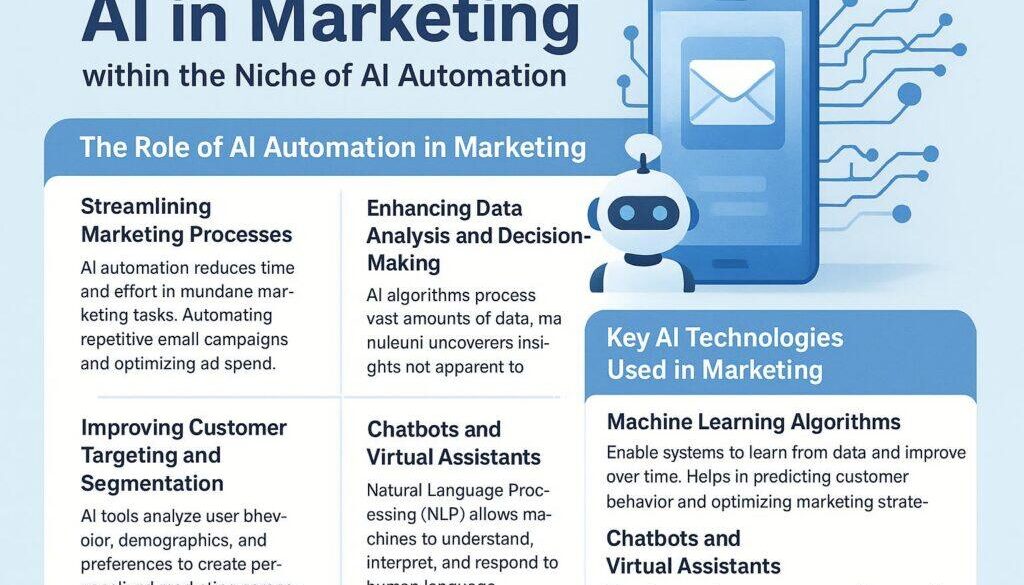
The Role of AI Automation in Marketing
Streamlining Marketing Processes
AI automation significantly reduces the time and effort involved in mundane marketing tasks. From automating repetitive email campaigns to optimizing ad spend, AI tools can handle various processes autonomously. This allows marketing teams to focus on strategic initiatives, ultimately improving the overall efficiency of marketing efforts.
Enhancing Data Analysis and Decision-Making
Data analysis is a cornerstone of effective marketing strategy, and AI excels in this area. By processing vast amounts of data, AI algorithms can uncover insights that may not be apparent through manual analysis. This leads to improved decision-making, enabling marketers to anticipate trends and adjust strategies in real-time.
Improving Customer Targeting and Segmentation
AI tools enhance customer targeting by analyzing user behavior, demographics, and preferences. This improved segmentation allows businesses to create personalized marketing campaigns tailored to specific audience segments. As a result, brands can effectively engage potential customers, leading to higher conversion rates.
Key AI Technologies Used in Marketing
Machine Learning Algorithms
Machine learning algorithms are at the forefront of AI in marketing, enabling systems to learn from data and improve over time. These algorithms help in predicting customer behavior and optimizing marketing strategies by refining targeting approaches. As more data is collected, machine learning models become increasingly accurate and effective.
Natural Language Processing (NLP)
Natural Language Processing allows machines to understand, interpret, and respond to human language in a meaningful way. In marketing, NLP is used for sentiment analysis, enhancing customer interactions, and improving content strategy. The integration of NLP in marketing tools streamlines communication and fosters better customer relationships.
Chatbots and Virtual Assistants
Chatbots and virtual assistants have transformed customer service in marketing by providing instant support and engagement. These AI-driven tools can answer common customer inquiries, provide product recommendations, and ensure a seamless experience around the clock. By automating these interactions, businesses can enhance customer satisfaction and operational efficiency.
Predictive Analytics
Predictive analytics utilizes historical data to forecast future outcomes, which is invaluable for effective marketing strategies. By predicting customer behavior and purchase patterns, marketers can tailor their tactics to meet the evolving needs of their audience. This proactive approach leads to better resource allocation and more effective campaigns.
Benefits of Implementing AI in Marketing Automation
Increased Efficiency and Productivity
One of the most significant advantages of AI in marketing is the enhancement of efficiency and productivity. Automated workflows free up human resources, allowing teams to concentrate on high-value tasks such as creative strategy and customer engagement. Consequently, businesses can achieve more with less effort.
Cost-Effectiveness and Resource Optimization
Implementing AI tools in marketing can lead to substantial cost savings by optimizing resource allocation. Automated processes reduce the need for extensive manpower, and organizations can reallocate budgets toward more productive areas. This results in a more competitive marketing strategy that drives ROI.
Personalization of Customer Experiences
AI enables brands to deliver highly personalized experiences tailored to individual customer preferences. By leveraging data-driven insights, businesses can create targeted messages and offers that resonate with customers on a personal level. This level of personalization fosters customer loyalty and increases the likelihood of repeat purchases.
Real-Time Analytics and Insights
Real-time analytics provided by AI tools equip marketers with up-to-date performance metrics. This allows teams to promptly adjust campaigns based on current data rather than relying on historical outcomes. By making timely decisions, businesses can enhance their marketing effectiveness and respond quickly to market changes.
Use Cases of AI in Marketing Automation
Automated Email Marketing Campaigns
AI-driven automation in email marketing streamlines the process of creating and sending personalized emails. By segmenting audiences and curating content based on user behavior, marketers can achieve higher engagement rates. This approach ensures more meaningful interactions with customers and drives conversions.
Social Media Management and Scheduling
AI tools have revolutionized social media management by automating post scheduling and performance analysis. Marketers can analyze engagement metrics to identify the most effective times and content types for their audience. This data-driven strategy leads to improved reach and engagement across various platforms.
Customer Relationship Management (CRM) Enhancements
AI enhances CRM systems by automating data entry, lead scoring, and customer interaction tracking. This results in more efficient management of customer relationships and better-targeted communication. By utilizing AI, businesses can nurture leads effectively and drive higher sales results.
Content Generation and Optimization
AI content generation tools can assist marketers in creating high-quality content efficiently. From blog posts to social media updates, AI can suggest topic ideas and even generate text that aligns with brand voice. This capability not only saves time but also allows for continuous optimization based on audience feedback.
Challenges of Integrating AI in Marketing Automation
Data Privacy Concerns
As businesses adopt AI in marketing, data privacy emerges as a significant concern. With stringent regulations like GDPR, companies must ensure they handle customer data responsibly and transparently. Ensuring compliance while leveraging AI capabilities can be a challenging balancing act for marketers.
Resistance to Change within Organizations
Integrating AI technologies often meets resistance from employees who may fear job displacement or disruption to established processes. Organizations must foster an adaptable culture and provide proper training to help employees understand the benefits of AI. Addressing these concerns is crucial for successful integration.
Dependence on Technology and Potential Pitfalls
While AI automation offers numerous advantages, an overreliance on technology can lead to pitfalls. Businesses must ensure they maintain a balance between human creativity and AI efficiency. Additionally, reliance on technology can lead to operational vulnerabilities if systems fail or data is compromised.
Future Trends of AI in Marketing
Increased Use of AI-Driven Personalization
The future of marketing will see an even greater emphasis on personalization driven by AI. As technology evolves, marketers will be able to dissect customer data more granularly and tailor communications with unprecedented specificity. This trend will be key in fostering deeper customer connections.
Development of More Sophisticated AI Tools
The continuous advancement of AI technology will lead to the development of more sophisticated tools that can analyze and interpret data with greater accuracy. As these capabilities expand, marketing strategies will become more predictive and insight-driven. This sophistication will empower marketers to anticipate needs and adapt strategies continually.
Greater Integration with Customer Journey Mapping
AI will play a critical role in enhancing customer journey mapping, facilitating a seamless flow of information across touchpoints. By integrating AI with customer journey frameworks, businesses can provide more consistent and relevant experiences. This holistic approach will result in higher customer satisfaction and loyalty.
Conclusion
AI has undoubtedly transformed the marketing landscape, providing businesses with tools to enhance efficiency, personalization, and insight-driven strategies. As AI automation continues to evolve, organizations are encouraged to adopt these technologies to stay competitive. By exploring and implementing AI in marketing, businesses can unlock new opportunities for growth and success.