Unlocking Marketing Success: How AI Automation is Transforming Strategies and Consumer Engagement
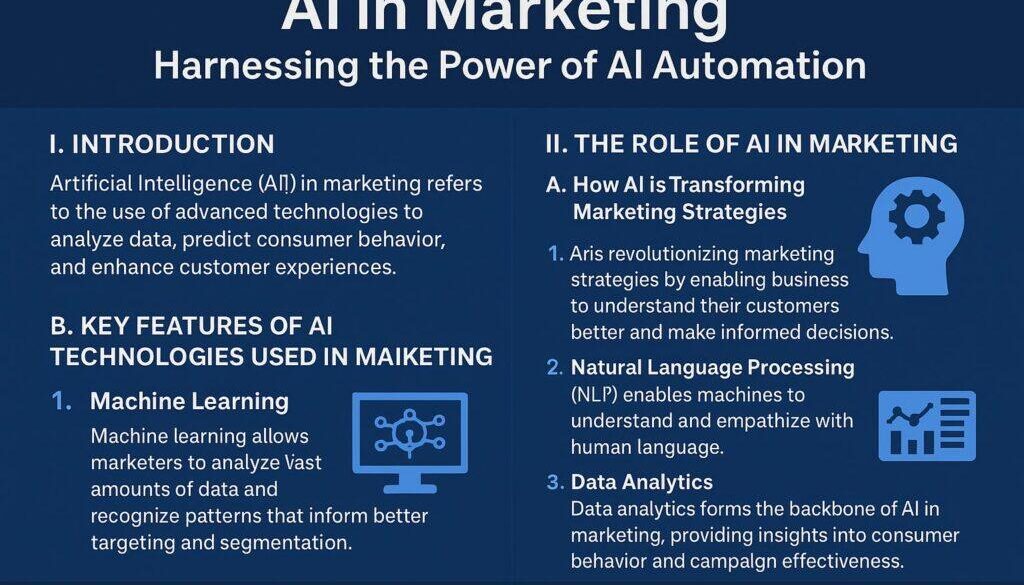
AI in Marketing: Harnessing the Power of AI Automation
I. Introduction
Artificial Intelligence (AI) in marketing refers to the use of advanced technologies to analyze data, predict consumer behavior, and enhance customer experiences. In today’s fast-paced digital landscape, AI automation is becoming indispensable for marketers looking to stay competitive. This article explores the transformative role of AI in marketing, its numerous benefits, key tools, challenges, and future trends.
II. The Role of AI in Marketing
A. How AI is Transforming Marketing Strategies
AI is revolutionizing marketing strategies by enabling businesses to understand their customers better and make informed decisions. Through sophisticated data analysis and machine learning algorithms, companies can create targeted campaigns that resonate with individual consumer preferences. This shift enhances brand loyalty and improves overall marketing efficacy.
B. Key Features of AI Technologies Used in Marketing
1. Machine Learning
Machine learning allows marketers to analyze vast amounts of data and recognize patterns that inform better targeting and segmentation. This technology continuously improves predictions and recommendations based on real-time data interactions. Consequently, marketing strategies are continually optimized to yield better results.
2. Natural Language Processing
Natural Language Processing (NLP) enables machines to understand and empathize with human language. This capability enhances customer service through chatbots and automated responses, ensuring customers receive timely and relevant assistance. NLP also aids in sentiment analysis, allowing brands to gauge public opinion about their products and services.
3. Data Analytics
Data analytics forms the backbone of AI in marketing, providing insights into consumer behavior and campaign effectiveness. Marketers can utilize data analytics tools to track customer interactions across various platforms, enabling more accurate forecasting and targeted marketing efforts. By translating complex data sets into actionable insights, businesses can refine their marketing approaches significantly.
III. Benefits of AI Automation in Marketing
A. Enhanced Personalization
1. Customer Segmentation
AI allows for precise customer segmentation, breaking down audiences based on demographics, behaviors, and preferences. This ensures that marketing messages are delivered to the right audience, increasing engagement and conversion rates. Tailoring content to specific groups fosters a deeper connection between the brand and its customers.
2. Tailored Recommendations
With AI-driven algorithms, businesses can provide tailored recommendations that enhance customer experiences. By analyzing past purchases or browsing behavior, AI can suggest products or services that meet individual needs, leading to increased sales. These personalized experiences not only drive revenue but also improve customer satisfaction.
B. Improved Efficiency
1. Time-saving Automation of Repetitive Tasks
AI automation helps streamline repetitive marketing tasks such as sending emails, managing social media posts, or analyzing data reports. By automating these processes, marketing teams can focus their efforts on strategy and creativity, rather than mundane tasks. This efficiency boosts productivity and allows for faster campaign execution.
2. Streamlined Campaign Management
AI tools enable marketers to manage and optimize campaigns effortlessly. With centralized dashboards and real-time performance data, businesses can adjust their strategies instantly. This agility ensures that marketing efforts remain aligned with market trends and consumer demands.
C. Real-time Analysis and Insights
1. Performance Tracking
AI offers real-time performance tracking, allowing marketers to gauge campaign success immediately. By continuously monitoring key performance indicators (KPIs), businesses can make data-driven decisions that enhance their overall strategies. This proactive approach minimizes risks and maximizes investment returns.
2. Predictive Analysis
AI's predictive analysis capabilities help businesses forecast future trends based on existing data. By understanding potential consumer behaviors, companies can craft campaigns that anticipate customer needs. This foresight can lead to competitive advantages in market positioning and resource allocation.
IV. AI Automation Tools in Marketing
A. Overview of Leading AI Automation Tools
1. Chatbots and Virtual Assistants
Chatbots are revolutionizing customer service by automating interactions and providing immediate support. These AI-driven tools engage customers in real-time, ensuring that inquiries are addressed promptly without human intervention. This not only saves time but also enhances customer satisfaction.
2. Email Marketing Automation
Email marketing automation platforms leverage AI to segment audiences and personalize content delivery. By automating this process, marketers can nurture leads efficiently while maintaining a personal touch. This strategic approach leads to higher open rates and improved conversion rates.
3. Social Media Management Tools
AI-infused social media management tools allow brands to schedule posts, analyze engagement, and even automate responses. These solutions help businesses maintain a consistent online presence while freeing up time for creative strategizing. The integration of AI ensures more relevant content reaches target audiences.
B. Case Studies of Successful Implementation
1. Brands Utilizing AI Tools
Many leading brands have effectively implemented AI tools to enhance their marketing strategies. For instance, major e-commerce platforms utilize AI algorithms for dynamic pricing and personalized recommendations, which significantly boost sales. These successful implementations demonstrate AI's potential to reshape traditional marketing approaches.
2. Results Achieved
The results of integrating AI in marketing are astonishing, with businesses reporting higher engagement, increased sales, and improved customer retention. Brands that harness AI automation have seen ROI surge as they tailor experiences tailored to consumer expectations, ultimately yielding lasting impacts on their bottom line.
V. Challenges and Considerations
A. Data Privacy and Ethical Concerns
As AI in marketing continues to grow, so do concerns related to data privacy and ethics. Companies must navigate complex regulations and maintain transparency when using customer data. Upholding ethical standards is crucial for building trust and fostering long-term relationships with consumers.
B. Integration with Existing Systems
Integrating AI tools with existing marketing infrastructures can pose challenges, particularly for businesses with outdated systems. It is essential to ensure seamless interaction between new AI technologies and legacy systems. Organizations must invest in proper planning and training to fully leverage AI capabilities.
C. Understanding AI Limitations
While AI boasts numerous advantages, it is important for marketers to recognize its limitations. AI lacks the emotional intelligence that human marketers possess and can sometimes misinterpret data. Understanding these limitations allows businesses to anticipate challenges and mitigate risks effectively.
VI. Future Trends in AI Automation for Marketing
A. Predictive Marketing
As AI technologies evolve, predictive marketing will become increasingly sophisticated, allowing for hyper-personalized campaigns based on consumer trends. With accurate data predictions, brands can stay ahead of the competition by delivering relevant content precisely when customers need it.
B. Voice Search Optimization
The rise of voice-activated technologies necessitates optimization for voice search in marketing campaigns. Companies must enhance their SEO strategies to capture voice queries effectively. Embracing this trend ensures that brands remain visible in a rapidly changing digital landscape.
C. Augmented Reality and AI
The fusion of augmented reality (AR) and AI will create immersive consumer experiences. Businesses can leverage this technology for virtual product trials, enabling customers to visualize products in their environments. This innovative marketing approach engages consumers on a deeper level and enhances brand loyalty.
VII. Conclusion
In conclusion, AI automation is reshaping the marketing landscape, providing businesses with enhanced personalization, improved efficiency, and real-time insights. Embracing AI strategies can significantly augment a brand's ability to connect with consumers, ultimately driving success. It is crucial for businesses to explore and adopt AI in marketing to thrive in the evolving digital world.