The Transformative Impact of AI Automation in Marketing: Enhancing Efficiency and Customer Engagement
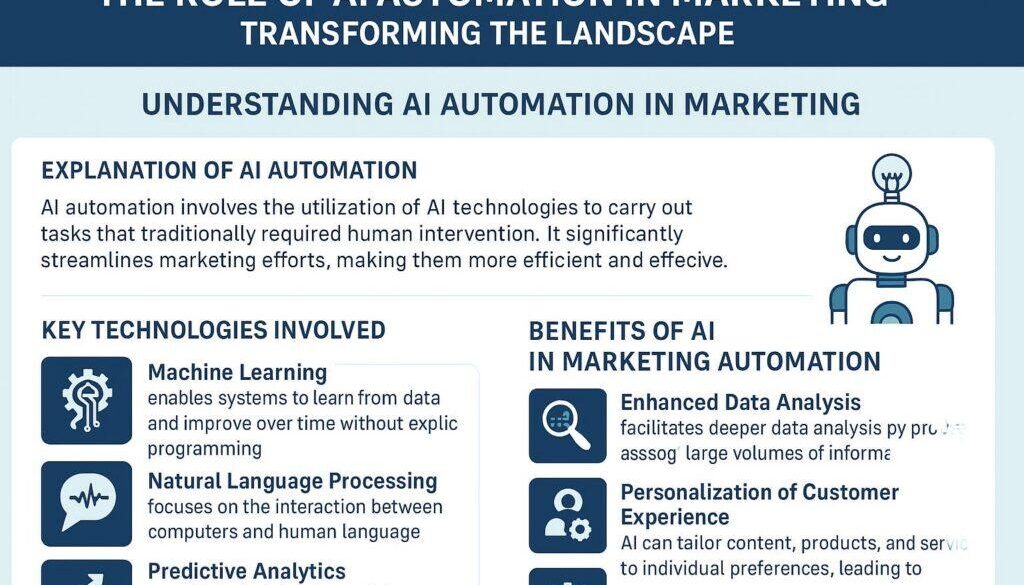
The Role of AI Automation in Marketing: Transforming the Landscape
Introduction
Artificial Intelligence (AI) in marketing refers to the use of algorithms and software to automate marketing processes, gain insights, and optimize customer interactions. In today's fast-paced digital world, AI automation is crucial for marketers seeking to enhance their reach and effectiveness. This article will delve into the intricacies of AI automation in marketing, exploring its technologies, benefits, applications, challenges, and future trends.
Understanding AI Automation in Marketing
Explanation of AI Automation
AI automation involves the utilization of AI technologies to carry out tasks that traditionally required human intervention. It significantly streamlines marketing efforts, making them more efficient and effective. By leveraging vast amounts of data, AI can automate repetitive tasks, allowing marketers to focus on strategic initiatives.
Key Technologies Involved
Machine Learning
Machine learning is an essential component of AI that enables systems to learn from data and improve over time without explicit programming. It helps marketers better understand customer behavior and predict trends, tailoring strategies accordingly.
Natural Language Processing
Natural Language Processing (NLP) is a branch of AI that focuses on the interaction between computers and human language. NLP allows marketers to analyze text data, optimize content, and engage customers through human-like interactions, enhancing overall communication.
Predictive Analytics
Predictive analytics uses historical data to predict future outcomes. This technology helps marketers make data-driven decisions, anticipate customer needs, and refine their marketing strategies to maximize effectiveness and ROI.
Benefits of AI in Marketing Automation
Enhanced Data Analysis
AI automation facilitates deeper data analysis by processing large volumes of information quickly and accurately. This capability allows marketers to glean valuable insights, identify trends, and make informed decisions tailored to their target audience.
Personalization of Customer Experience
One of the most significant advantages of AI in marketing is its ability to personalize the customer experience. By analyzing user data, AI can tailor content, products, and services to individual preferences, leading to improved customer satisfaction and loyalty.
Improved Campaign Performance
AI-driven marketing automation enhances campaign performance by optimizing targeting and timing. Marketers can reach the right audience with the right message at the right time, significantly increasing engagement and conversion rates.
Cost Efficiency
By automating routine tasks and enhancing efficiency, AI reduces operational costs. Marketing teams can allocate their resources more strategically, yielding higher returns on investment while minimizing unnecessary expenditures.
Practical Applications of AI in Marketing Automation
Automated Customer Segmentation
AI can segment customers based on behavior, preferences, and demographics automatically. This precise targeting enables businesses to deliver tailored marketing messages, enhancing customer interaction and boosting sales.
Predictive Lead Scoring
Using predictive analytics, AI can assess the likelihood of leads converting into customers. This scoring helps sales teams prioritize high-potential leads, increasing the efficiency of conversion efforts.
Chatbots for Customer Service
AI-powered chatbots provide 24/7 customer service, answering queries and guiding users through purchasing processes. This automation not only improves customer experience but also frees up human agents to focus on complex issues.
Content Creation and Curation
AI tools can assist in content generation and curation by providing insights on trending topics and automating content recommendations. This streamlines the content creation process, ensuring that marketing teams remain agile and relevant.
Dynamic Pricing Strategies
AI can analyze market conditions and competitor pricing in real-time to adjust pricing strategies dynamically. This approach allows businesses to remain competitive and maximize profit margins while catering to customer expectations.
Challenges in Implementing AI Automation in Marketing
Data Privacy Concerns
As marketers harness AI for automation, data privacy concerns become increasingly prominent. Organizations must navigate regulations like GDPR to ensure ethical data usage while maintaining customer trust.
Integration with Existing Systems
Implementing AI automation can pose significant integration challenges with existing marketing systems. Organizations must invest in technology and training to ensure seamless integration and maximum ROI.
Dependence on Data Quality
The effectiveness of AI automation largely depends on the quality of the data it processes. Inaccurate or incomplete data can result in misleading insights and decision-making, undermining marketing efforts.
Skills Gap in the Workforce
The rapid evolution of AI technologies has created a skills gap in the marketing workforce. Organizations may struggle to find talent with the necessary expertise to harness AI effectively, limiting their ability to fully implement automation.
Future Trends of AI in Marketing Automation
Growth in AI-driven Marketing Tools
The demand for AI-driven marketing tools is expected to surge, as businesses recognize the value of automation. Future tools will likely incorporate advanced features, making marketing processes even more efficient.
Increased Focus on Ethical AI
As AI plays a more significant role in marketing, the focus on ethical AI practices will grow. Companies will need to prioritize transparency and accountability in their AI implementations to preserve customer trust.
Evolution of Customer Interaction
AI will continue to evolve the way brands interact with customers. From personalized experiences to proactive engagement strategies, AI is set to redefine customer relationships, making them more meaningful and interactive.
Conclusion
In summary, AI automation in marketing is transforming how businesses strategize and engage with customers. With benefits such as enhanced data analysis, personalized experiences, and improved efficiency, marketers can leverage AI to stay competitive. It is essential for marketers to embrace these innovations actively, preparing for a future where AI will be pivotal in driving successful marketing strategies.