Harnessing AI Automation in Marketing: Transforming Strategies for the Future
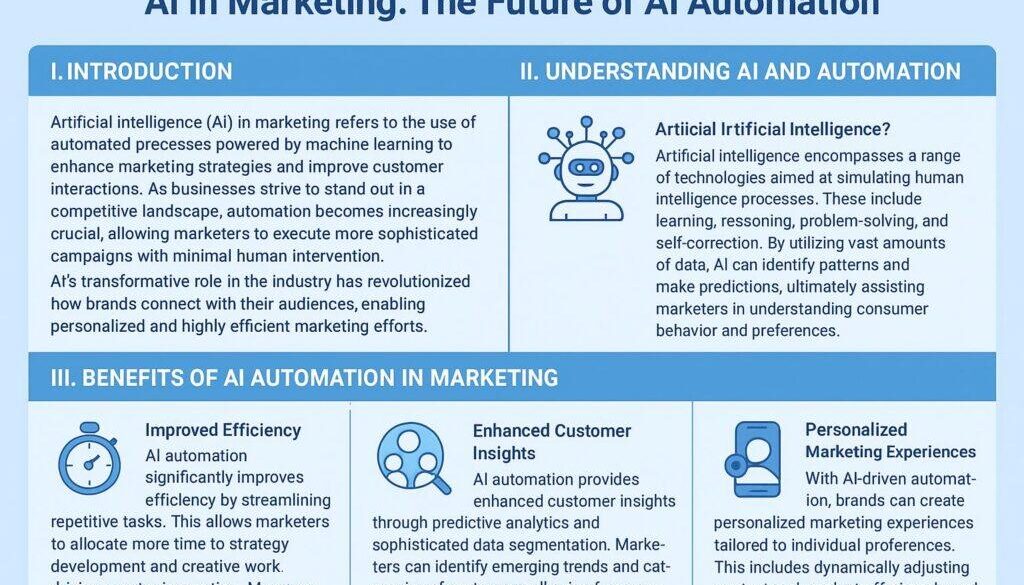
AI in Marketing: The Future of AI Automation
I. Introduction
Artificial Intelligence (AI) in marketing refers to the use of automated processes powered by machine learning to enhance marketing strategies and improve customer interactions. As businesses strive to stand out in a competitive landscape, automation becomes increasingly crucial, allowing marketers to execute more sophisticated campaigns with minimal human intervention. AI's transformative role in the industry has revolutionized how brands connect with their audiences, enabling personalized and highly efficient marketing efforts.
II. Understanding AI and Automation
What is Artificial Intelligence?
Artificial Intelligence encompasses a range of technologies aimed at simulating human intelligence processes. These include learning, reasoning, problem-solving, and self-correction. By utilizing vast amounts of data, AI can identify patterns and make predictions, ultimately assisting marketers in understanding consumer behavior and preferences.
Overview of Marketing Automation
Marketing automation involves the software-based processes that facilitate the execution of marketing tasks in a streamlined manner. This includes automated emailing, social media posting, and campaign management. By integrating marketing automation with AI, businesses can not only automate repetitive tasks but also enhance decision-making through data-driven insights.
How AI and Automation Work Together
The synergy between AI and automation creates a powerful tool for marketers. While automation handles routine tasks, AI adds intelligence to these processes by analyzing data, discovering trends, and predicting future outcomes. This collaborative effort enables businesses to optimize their marketing strategies and achieve better results efficiently.
III. Benefits of AI Automation in Marketing
Improved Efficiency
AI automation significantly improves efficiency by streamlining repetitive tasks. This allows marketers to allocate more time to strategy development and creative work, driving greater innovation. Moreover, real-time data analysis enables teams to make informed decisions quickly, responding proactively to market changes.
Enhanced Customer Insights
AI automation provides enhanced customer insights through predictive analytics and sophisticated data segmentation. Marketers can identify emerging trends and categories of customers, allowing for more focused campaigns that resonate with specific target audiences. This level of insight is invaluable for staying ahead in a fast-paced marketing environment.
Personalized Marketing Experiences
With AI-driven automation, brands can create personalized marketing experiences tailored to individual preferences. This includes dynamically adjusting content and product offerings based on user interactions. Additionally, dynamic pricing strategies facilitated by AI can optimize sales and improve customer satisfaction by offering personalized prices.
IV. Key AI Technologies in Marketing Automation
Machine Learning Algorithms
Machine learning algorithms analyze large datasets to uncover hidden patterns and trends, enabling marketers to make data-led decisions. By continuously learning from new data inputs, these algorithms enhance accuracy over time, allowing for better predictions and tailored marketing efforts.
Natural Language Processing (NLP)
Natural Language Processing plays a crucial role in understanding consumer sentiments and communication. By analyzing customer interactions, NLP enables brands to comprehend language nuances, improving engagement and ensuring that messaging aligns with the audience's expectations.
Chatbots and Virtual Assistants
Chatbots and virtual assistants are integral to AI marketing automation, offering instant communication with customers. These tools provide 24/7 support, answer queries, and guide users through the purchasing process, enhancing the overall customer experience while reducing the workload on human staff.
Predictive Analytics Tools
Predictive analytics tools leverage historical data to forecast future trends, customer behaviors, and market dynamics. By integrating these tools, marketers can develop proactive strategies that capitalize on predicted changes, positioning their brands for success in the marketplace.
V. Use Cases of AI in Marketing Automation
Email Marketing Campaigns
AI-powered email marketing campaigns can employ automated segmentation and targeting to deliver tailored content to specific audience segments. This personalization not only enhances engagement but also increases conversion rates by ensuring recipients receive relevant information at the right time.
Social Media Advertising
In social media advertising, AI helps optimize ad placements through real-time engagement analysis. By assessing user interactions and preferences, AI can suggest the best times to display ads and tailor content that resonates with the audience, ultimately improving ROI on advertising spend.
Content Creation and Curation
AI is also transforming content creation and curation. With AI-generated content, businesses can streamline their content marketing strategies while saving time. Additionally, content suggestion tools powered by AI analyze audience preferences, helping marketers deliver relevant and engaging material.
VI. Challenges and Considerations
Data Privacy and Ethical Concerns
The integration of AI in marketing automation raises significant data privacy and ethical concerns. As marketers collect and analyze vast amounts of consumer data, ensuring compliance with regulations and protecting user information becomes paramount to maintaining trust and brand integrity.
Dependence on Technology
While AI offers transformational benefits, there is a risk of becoming overly dependent on technology. Businesses must ensure that human oversight and creativity remain integral to marketing strategies, balancing AI insights with personal touch to cultivate genuine connections with consumers.
Implementation Costs and ROI
Investing in AI and marketing automation can be initially expensive, creating challenges for small and medium-sized enterprises. Companies must carefully evaluate implementation costs against potential ROI, conducting comprehensive analyses to ensure sustainable growth.
VII. Future Trends in AI and Marketing Automation
Increased Adoption of Voice Search
As voice-activated devices become prevalent, the adoption of voice search in marketing strategies is expected to rise. Marketers will need to adapt their SEO and content strategies to accommodate this shift, ensuring their offerings are easily discoverable through voice queries.
Greater Emphasis on Customer Experience
The focus on customer experience will continue to escalate as AI automation allows businesses to provide personalized service at scale. Going forward, brands that prioritize customer engagement and satisfaction through AI insights will gain a competitive edge in the market.
Integration of AI with Emerging Technologies
The future of marketing will likely see deeper integrations of AI with emerging technologies such as augmented reality and blockchain. This convergence will drive innovative marketing solutions that create immersive experiences and enhance trust through transparent interactions.
VIII. Conclusion
AI's impact on marketing is profound, transforming how brands engage with consumers and optimize their strategies. Embracing AI automation can help businesses increase efficiency, gain valuable customer insights, and personalize marketing experiences. As the marketing landscape evolves, companies must remain committed to continual learning and adaptation to harness the full potential of AI technologies.