Harnessing AI Automation in Marketing: Transforming Customer Engagement and Driving Efficiency
AI in Marketing within the Niche of AI Automation
I. Introduction
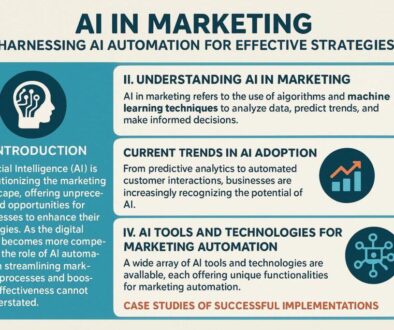
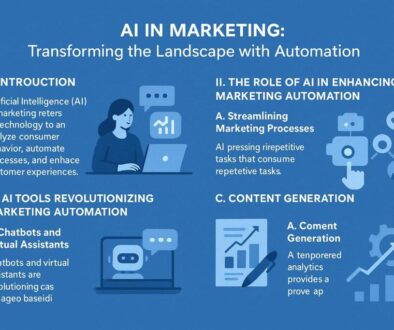
Artificial Intelligence (AI) in marketing refers to the use of algorithms and machine learning techniques to analyze data, automate tasks, and personalize customer interactions. AI automation encompasses processes that streamline marketing efforts, enhancing efficiency and accuracy. Integrating AI into marketing strategies is crucial for businesses aiming to remain competitive, as it leverages data to provide tailored experiences to consumers.
II. The Role of AI in Marketing
A. Personalization and Customer Experience
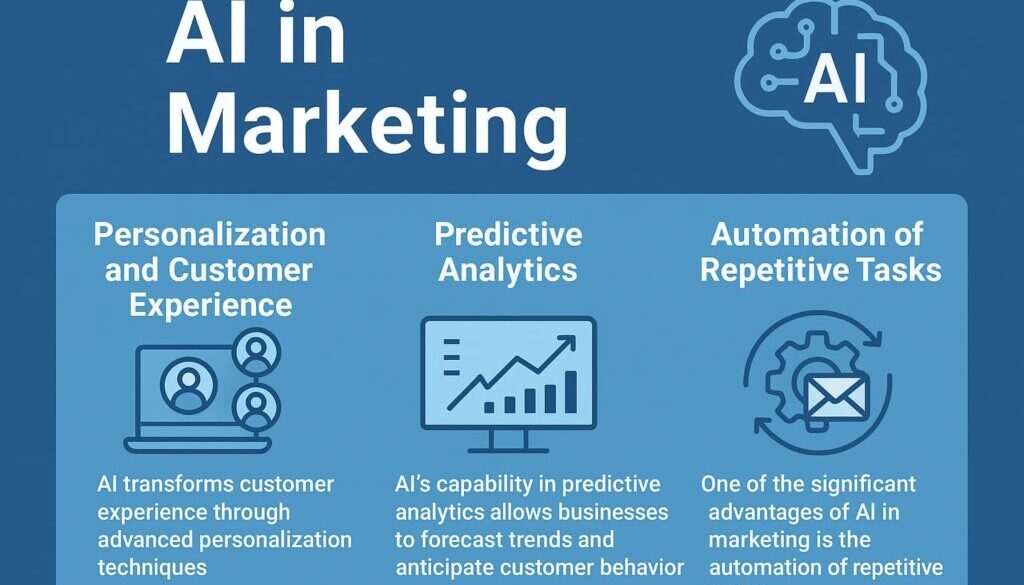
AI transforms customer experience through advanced personalization techniques. Customer segmentation enables businesses to categorize consumers based on preferences and behaviors, leading to targeted content delivery that resonates with different audience segments. As a result, companies can create highly personalized marketing messages that enhance engagement and satisfaction.
B. Predictive Analytics
AI's capability in predictive analytics allows businesses to forecast trends and anticipate customer behavior. By analyzing historical data, AI can identify patterns that help marketers make informed decisions about future campaigns and product development. This foresight not only optimizes marketing strategies but also strengthens customer relationship management by aligning offerings with anticipated needs.
C. Automation of Repetitive Tasks
One of the significant advantages of AI in marketing is the automation of repetitive tasks. Activities such as email marketing and social media scheduling can be streamlined through AI tools, freeing up marketers to focus on more strategic planning. This efficiency not only saves time but also maximizes touchpoints with customers, leading to improved engagement rates.
III. Benefits of AI Automation in Marketing
The implementation of AI automation in marketing yields numerous benefits. Increased efficiency and productivity result from the automation of mundane tasks, allowing marketing teams to concentrate on innovation. Enhanced data processing capabilities lead to faster insights and better decision-making, while improved ROI on marketing campaigns stems from data-driven strategies that target the right audience at the right time.
Moreover, real-time decision-making facilitated by AI allows marketers to adapt to changes in consumer behavior swiftly. This agility is essential for maintaining relevance in a fast-paced digital environment, enabling brands to respond promptly to market fluctuations and consumer demands.
IV. Key AI Tools for Marketing Automation
Several AI tools have emerged as game-changers in marketing automation. Chatbots and virtual assistants enhance customer service by providing immediate responses to inquiries, improving user experience while collecting valuable consumer data. Machine learning platforms like Google Cloud AI and Azure ML enable marketers to analyze vast datasets, deriving actionable insights that inform strategy.
AI-driven Customer Relationship Management (CRM) systems allow for more effective segmentation and targeting, while content generation tools such as Copy.ai and Jarvis automate the creation of compelling marketing copy. These tools not only save time but also ensure consistency in messaging across platforms.
V. Case Studies
A. Successful Implementation of AI in Marketing
Many companies have successfully integrated AI into their marketing strategies. For instance, Company X leveraged personalized email campaigns powered by AI, leading to a notable increase in open and conversion rates. Similarly, Company Y utilized predictive analytics to enhance their product recommendations, resulting in higher customer satisfaction and sales.
B. Lessons Learned from AI Marketing Initiatives
These examples underscore the importance of tailoring AI applications to specific marketing needs, highlighting that successful implementation involves continuous learning and adaptation. By analyzing results and gathering insights, businesses can refine their strategies, ensuring that AI technologies align with broader marketing goals.
VI. Challenges and Considerations
A. Data Privacy and Ethical Considerations
Despite the benefits, the integration of AI in marketing comes with challenges, notably around data privacy and ethical use. Marketers must navigate regulations such as GDPR to ensure they use consumer data responsibly while maintaining transparency. This ethical framework is vital for building trust with customers.
B. Integration with Existing Marketing Strategies
Integration of AI tools with existing marketing strategies can be complex. Businesses must evaluate their current systems and workflows to identify how AI can complement rather than complicate operations. A streamlined integration process is essential for maximizing the advantages of AI technologies.
C. Skill Gap and Training Requirements for Marketing Teams
Another challenge lies in the skill gap among marketing teams regarding AI technologies. To fully leverage these tools, organizations must invest in training and development, ensuring that teams are equipped to utilize AI effectively. Upskilling efforts will empower marketers to embrace innovative solutions confidently.
D. Dependence on Technology and Potential Downfalls
Finally, an over-reliance on technology can lead to pitfalls, including loss of human touch in marketing communications. While AI enhances efficiency, maintaining a balance between automated processes and genuine, human connection is crucial in marketing. Companies should strive for a hybrid approach that combines the strengths of both AI and human insight.
VII. Future Trends in AI and Marketing Automation
A. Expected Advancements in AI Technology
Looking ahead, anticipated advancements in AI technology are set to revolutionize marketing further. Innovations in natural language processing and machine learning will enhance understanding of consumer intent, enabling even more targeted marketing strategies.
B. Evolving Customer Expectations
As consumers become accustomed to personalized experiences, expectations will continue to evolve, compelling businesses to adopt more sophisticated AI solutions. Meeting these expectations will require continuous innovation and adaptation to emerging trends within the marketing landscape.
C. Integration of AI with Emerging Technologies
The integration of AI with emerging technologies like Augmented Reality (AR) and Virtual Reality (VR) presents exciting opportunities for immersive marketing experiences. These intersections will likely transform customer interactions, providing engaging and dynamic ways for brands to connect with their audiences.
VIII. Conclusion
In conclusion, leveraging AI in marketing automation is crucial for enhancing customer experiences, optimizing marketing strategies, and increasing efficiency. Embracing AI technologies allows businesses to stay competitive in a rapidly changing digital landscape while improving the effectiveness of their marketing campaigns. Marketers are encouraged to adopt these tools and strategies to transform their marketing efforts and meet the evolving demands of consumers.