AI in Marketing: Unlocking Success through Automation and Personalization Strategies
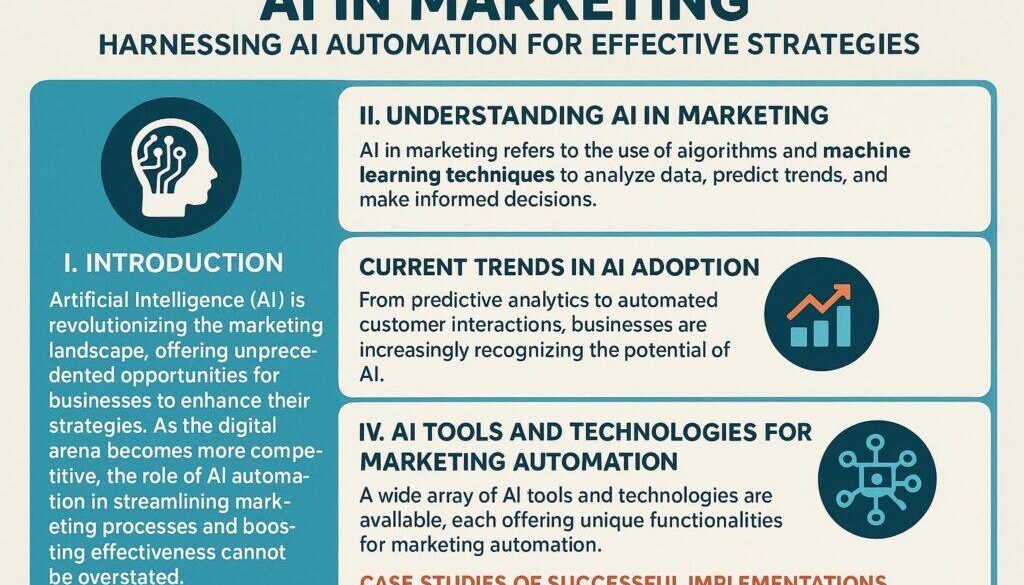
AI in Marketing: Harnessing AI Automation for Effective Strategies
I. Introduction
Artificial Intelligence (AI) is revolutionizing the marketing landscape, offering unprecedented opportunities for businesses to enhance their strategies. As the digital arena becomes more competitive, the role of AI automation in streamlining marketing processes and boosting effectiveness cannot be overstated. Integrating AI into marketing practices enables organizations to achieve greater efficiency while delivering personalized experiences to consumers.
II. Understanding AI in Marketing
AI in marketing refers to the use of algorithms and machine learning techniques to analyze data, predict trends, and make informed decisions. Key components of AI technology include machine learning, which allows systems to learn from data, and natural language processing, enabling them to understand and generate human language. Current trends indicate a growing adoption of AI tools among marketers, as they seek to leverage data-driven insights for improved decision-making.
Current Trends in AI Adoption
From predictive analytics to automated customer interactions, businesses are increasingly recognizing the potential of AI. Trends like hyper-personalization and enhanced user experience are at the forefront, showcasing how AI can shift the marketing paradigm. As organizations invest in these technologies, the push for innovative AI solutions continues to grow, shaping the future of marketing.
III. Benefits of AI Automation in Marketing
The benefits of AI automation in marketing are multi-faceted, driving significant improvements in efficiency and effectiveness. Increased efficiency through automation allows marketers to reduce manual workloads and focus on strategy and creativity. Moreover, AI enhances customer insights by analyzing vast amounts of data, providing a deeper understanding of consumer behavior and preferences.
Targeting and Personalization
Improved targeting and personalization heavily rely on AI algorithms that predict customer desires and behaviors. By utilizing these insights, businesses can tailor marketing campaigns that resonate with their audience on a personal level. Additionally, real-time decision-making capabilities empower marketers to optimize campaigns dynamically based on immediate feedback and changing market conditions.
IV. AI Tools and Technologies for Marketing Automation
A wide array of AI tools and technologies are available, each offering unique functionalities for marketing automation. Tools such as chatbots facilitate customer interaction, while predictive analytics enhance forecasting capabilities. Customer Relationship Management (CRM) systems also integrate AI features to manage customer data effectively and personalize outreach.
Case Studies of Successful Implementations
Examining case studies of successful AI tool implementations reveals how businesses have transformed their marketing efforts. For instance, a leading e-commerce company leveraged AI-driven personalization, resulting in a notable increase in conversion rates. By comparing various platforms, marketers can select the best AI solutions tailored to their needs.
V. Implementing AI Automation in Marketing Strategies
Incorporating AI into existing marketing strategies requires a thoughtful approach. The first step is to identify areas where automation can relieve manual tasks, such as customer segmentation and targeting. Next, businesses can integrate AI for content generation and curation, streamlining the creation of relevant materials for their audience.
AI for Social Media Management
Utilizing AI for social media management further enhances campaign efficiency. AI tools can analyze engagement metrics to optimize advertising efforts and content positioning, ensuring maximum visibility and impact. By developing a clear plan for AI integration, marketers can enhance their overall strategies and achieve better outcomes.
VI. Challenges and Considerations
Despite the advantages of AI automation, some challenges must be addressed. Common obstacles include high initial costs, the necessity for high-quality data, and the complexity of AI tools. Moreover, businesses must navigate ethical considerations to ensure transparency and build consumer trust in their AI practices.
The Importance of Human Oversight
Maintaining a balance between AI capabilities and human oversight is crucial. While AI can process data and make predictions, human creativity and intuition remain vital for effective marketing strategies. Emphasizing collaboration between AI and human marketers ensures that campaigns resonate authentically with audiences.
VII. Future of AI in Marketing
The future of AI in marketing holds exciting possibilities, with predictions indicating continued evolution of technology. As consumer behavior and expectations shift, businesses must adapt to emerging trends such as augmented reality and voice search. Staying ahead requires a proactive approach to adopting and integrating cutting-edge AI solutions.
Anticipating Shifts in Consumer Behavior
Marketers need to anticipate shifts in consumer behavior, driven by technological advancements and growing digital engagement. By preparing for these changes, businesses can position themselves as industry leaders in leveraging AI effectively. The integration of new technologies will further enhance marketing strategies, leading to innovative consumer interactions.
VIII. Conclusion
The transformative impact of AI automation in marketing is undeniable, reshaping the way businesses engage with their customers. Organizations are encouraged to adopt AI tools to enhance efficiency, improve customer insights, and drive personalized experiences. As the landscape of marketing continues to evolve, investing in AI solutions is crucial for future success and competitiveness.