AI in Marketing: Unlocking Competitive Advantage through Automation and Personalization
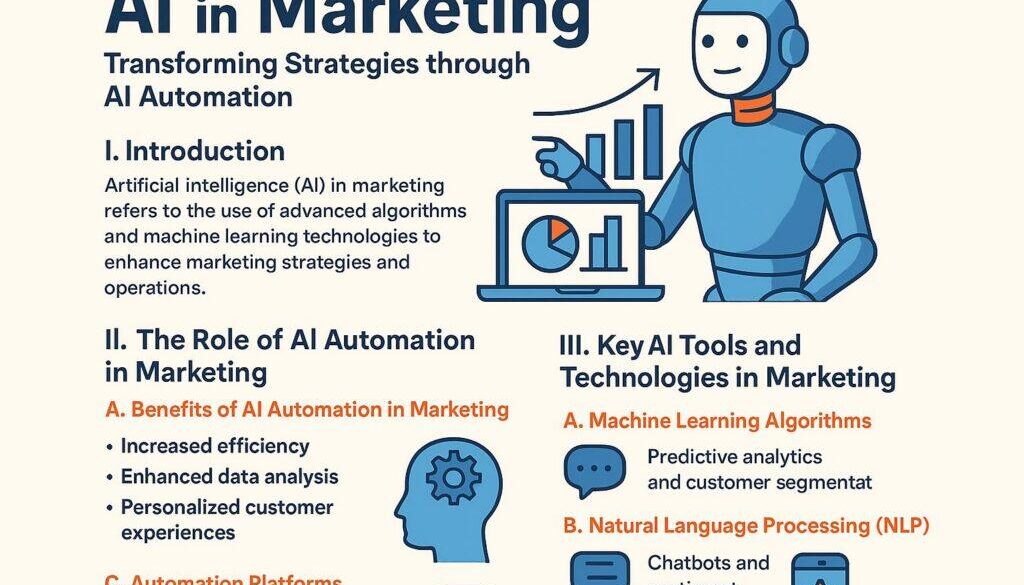
AI in Marketing: Transforming Strategies through AI Automation
I. Introduction
Artificial Intelligence (AI) in marketing refers to the use of advanced algorithms and machine learning technologies to enhance marketing strategies and operations. As businesses strive to remain competitive in an increasingly digital landscape, AI automation emerges as a vital component, streamlining processes while delivering meaningful insights into consumer behavior. Integrating AI into marketing strategies not only enhances operational efficiency but also enables brands to deliver more personalized interactions with their customers.
II. The Role of AI Automation in Marketing
AI automation revolutionizes traditional marketing approaches by addressing inefficiencies and enhancing the precision of marketing efforts. One of the significant benefits of this transformation is increased efficiency—automating repetitive tasks allows marketing teams to focus on strategic planning and creative endeavors. Additionally, AI enhances data analysis capabilities, enabling marketers to draw actionable insights that were previously unattainable, leading ultimately to more tailored and personalized customer experiences.
A. Benefits of AI Automation in Marketing
- Increased efficiency: By automating tedious tasks such as data entry and report generation, businesses can allocate their resources toward more impactful marketing strategies.
- Enhanced data analysis: AI tools can sift through vast amounts of data quickly, allowing marketers to identify trends, patterns, and customer preferences with ease.
- Personalized customer experiences: With the insights gained from AI, companies can deliver customized messages and offers that are more likely to resonate with individual consumers, increasing conversion rates.
III. Key AI Tools and Technologies in Marketing
To harness the power of AI, marketers utilize various tools and technologies that enable sophisticated data analysis and automation.
A. Machine Learning Algorithms
Machine learning algorithms play a pivotal role in predictive analytics, helping brands forecast customer behavior and demand patterns. Additionally, customer segmentation is refined through AI, allowing marketers to categorize audiences based on their interests and behaviors, leading to more effective targeting.
B. Natural Language Processing (NLP)
Natural Language Processing (NLP) empowers the creation of chatbots and virtual assistants that provide real-time customer support. Moreover, NLP is critical for sentiment analysis, enabling brands to gauge public perception of their products and services by analyzing online conversations and feedback.
C. Automation Platforms
Email marketing automation platforms and social media management tools exemplify how businesses can streamline outreach efforts. These platforms allow for timely communication with consumers and can adapt content based on analytics, ensuring that messaging remains relevant and engaging.
IV. Applications of AI in Marketing Automation
AI is applied across various facets of marketing automation, enhancing these areas significantly.
A. Content Generation and Curation
AI can assist in generating content and curating recommendations, which is particularly useful for blog writing. By analyzing trending topics and consumer interests, AI tools can suggest compelling subjects and even draft articles, freeing up valuable time for content creators.
B. Targeted Advertising
In the realm of targeted advertising, programmatic advertising leverages AI to optimize ad placements by analyzing data in real-time. Dynamic ad placements ensure that consumers receive messages that are tailored to their interests, greatly increasing engagement and conversion rates.
C. Customer Relationship Management (CRM)
AI-driven insights in Customer Relationship Management (CRM) help businesses foster better interactions with clients. By utilizing AI analytics, marketers can better understand customer journeys and personalize communications, leading to improved customer satisfaction and loyalty.
V. Challenges and Considerations
Despite the advancements that AI brings to marketing, several challenges warrant consideration.
A. Ethical Considerations in AI Marketing
The application of AI in marketing raises ethical questions regarding consumer manipulation and the authenticity of brand messaging. Responsible AI use ensures that marketing efforts remain transparent and respectful of consumer rights.
B. Data Privacy and Security Issues
Data privacy and security concerns continue to grow as businesses collect more personal data for targeted marketing campaigns. Adhering to regulations such as GDPR is vital for maintaining consumer trust.
C. Over-reliance on AI and the Need for Human Oversight
While AI can optimize marketing processes, over-reliance on technology may lead to missed nuances in consumer behavior. Human oversight remains crucial to balance automated processes with emotional intelligence and creativity.
VI. Future Trends of AI in Marketing
The future of AI in marketing promises to be dynamic and transformative.
A. Evolution of AI Technologies in Marketing
As AI technologies continue to evolve, marketing strategies will become more sophisticated, leveraging advanced algorithms for even deeper insights. This evolution will foster a competitive marketplace where agility and personalization are paramount.
B. The Impact of AI on Customer Experience
AI will further streamline interactions, making customer experiences more seamless. From personalized recommendations to instantaneous support, AI is set to enhance every touchpoint in the customer journey.
C. Predictions for the Future of AI Automation in Marketing
Predictions suggest that businesses adopting AI automation early will gain significant advantages in market share. As consumers demand more personalized experiences, brands that can leverage AI tools effectively to meet these needs will thrive.
VII. Conclusion
In conclusion, the significance of AI in marketing and automation cannot be overstated. By adopting AI technologies, businesses can streamline operations, enhance customer experiences, and remain agile in a fast-changing landscape. Embracing this ongoing evolution will be key to succeeding in the future of marketing. Companies must take the initiative to incorporate AI solutions today to unlock their full potential tomorrow.