AI in Marketing: How Automation is Revolutionizing Strategies and Consumer Engagement
AI in Marketing: Transforming Strategies Through AI Automation
Introduction
Artificial Intelligence (AI) in marketing refers to the use of algorithms and machine learning techniques to analyze consumer behavior, segment audiences, and personalize marketing efforts. As businesses increasingly rely on digital platforms, AI automation has become a cornerstone of the modern marketing landscape. Adopting AI and automation is essential for marketers aiming to stay competitive and effectively engage with their target audience.
1. The Role of AI in Modern Marketing
1.1. Understanding AI Technologies
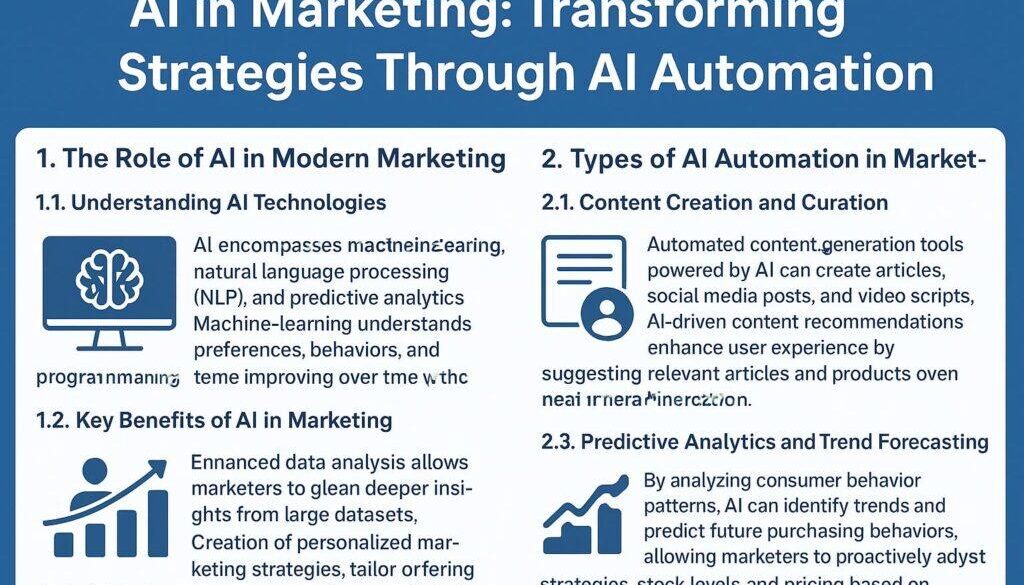
AI encompasses various technologies, including machine learning, natural language processing (NLP), and predictive analytics. Machine learning allows systems to learn from data, improving their performance over time without explicit programming. NLP enables machines to understand and process human language, facilitating better interactions with customers, while predictive analytics utilizes historical data to forecast future trends and consumer behavior.
1.2. Key Benefits of AI in Marketing
The integration of AI in marketing offers numerous advantages. Enhanced data analysis enables marketers to glean deeper insights from large datasets, helping them understand customer preferences and behaviors. Furthermore, AI facilitates the creation of personalized marketing strategies, tailoring offerings to individual consumers and significantly improving engagement rates and customer satisfaction.
2. Types of AI Automation in Marketing
2.1. Content Creation and Curation
Automated content generation tools powered by AI can create articles, social media posts, and even video scripts, saving marketers significant time. AI-driven content recommendations enhance user experience by suggesting relevant articles and products based on past interactions. This promotes a more engaged audience and improves content effectiveness by delivering what consumers are genuinely interested in.
2.2. Customer Segmentation and Targeting
AI algorithms are instrumental in data segmentation, allowing marketers to categorize their audience based on demographics, behavior, and preferences. This level of segmentation enables dynamic ad targeting, delivering tailored messages to specific audience segments in real time. As a result, companies can achieve higher conversion rates and make more efficient use of their advertising budgets.
2.3. Predictive Analytics and Trend Forecasting
By analyzing consumer behavior patterns, AI can identify trends and predict future purchasing behaviors. This capability allows marketers to proactively adjust strategies, stock levels, and even pricing based on anticipated market changes. Anticipating market trends before they emerge gives businesses a competitive edge, allowing them to capitalize on opportunities and mitigate potential risks.
2.4. Chatbots and Customer Service Automation
Chatbots have revolutionized customer service by providing instant responses to queries around the clock. These AI-driven tools enhance customer interactions by offering personalized assistance and guiding users through the sales funnel. As a result, businesses can improve customer satisfaction while reducing the workload on human agents.
3. Implementing AI Automation in Marketing Strategies
3.1. Identifying Marketing Objectives
To successfully implement AI, marketers need to start by identifying clear objectives for AI integration. This includes establishing what they hope to achieve, whether it be improved customer engagement or streamlined processes. Measuring success metrics is also critical to ascertain whether the AI initiatives yield the desired outcome and ROI.
3.2. Selecting the Right Tools and Technologies
Choosing the right AI tools and technologies is essential for effective implementation. There are numerous AI marketing tools available, each with unique functionalities, so understanding the specific needs of the business is crucial. Factors such as ease of integration, scalability, and support should be considered when making decisions.
3.3. Ensuring Data Quality and Compliance
For AI systems to function effectively, data quality is paramount. Ensuring the data is accurate and relevant can significantly impact the success of marketing campaigns. Additionally, compliance with regulations such as the General Data Protection Regulation (GDPR) is vital to protect consumer privacy and maintain trust in the brand.
4. Case Studies on Successful AI Marketing Automation
4.1. Industry Leaders Leveraging AI
Several industry leaders have successfully integrated AI into their marketing strategies, demonstrating its immense potential. Companies like Amazon and Netflix use AI algorithms to recommend products and content to users, thus enhancing user experience and driving sales. Their strategies highlight the importance of personalized experiences in winning consumer loyalty.
4.2. Performance Metrics and Results
The impact of AI implementation on performance metrics can be staggering. Businesses that effectively utilize AI report measurable outcomes, including increased ROI and enhanced customer engagement. These results showcase not only the financial benefits of AI marketing but also its role in fostering long-term customer relationships.
5. Challenges and Limitations of AI in Marketing
5.1. Data Privacy and Security Concerns
With the rise of AI comes the responsibility of handling consumer data securely. Risks associated with data breaches can severely damage a brand's reputation. Marketers must implement strategies to mitigate these risks, such as adopting robust cybersecurity measures and ensuring transparency in data usage.
5.2. The Human Element in Marketing
While AI offers remarkable efficiencies, the human element remains critical in marketing. Balancing AI automation with human creativity ensures that marketing efforts resonate deeply with audiences. Marketers should always maintain oversight to harness AI's capabilities while preserving the emotional connection that only humans can provide.
6. The Future of AI in Marketing
6.1. Emerging Trends in AI Automation
The future of AI in marketing is promising, with predictions of increasingly sophisticated capabilities. As technology evolves, we can expect even more advanced AI tools capable of hyper-personalization and better understanding complex consumer behaviors. These advancements will further transform how businesses interact with their customers.
6.2. Preparing for Changes in the Marketing Landscape
Marketers must stay ahead of trends to harness the full potential of AI in their strategies. Continuous learning and adaptation are vital, as the marketing landscape will continue to evolve rapidly. Embracing training opportunities and staying informed about new AI developments will position marketers for future success.
Conclusion
Embracing AI and automation in marketing is no longer optional; it is a necessity for brands aiming to thrive in today's competitive landscape. By leveraging AI technologies effectively, marketers can enhance their strategies and cultivate deeper connections with consumers. As the marketing landscape evolves, those who integrate AI into their practices will likely lead the way to future success.