AI in Marketing: How AI Automation is Revolutionizing Strategies and Enhancing Customer Engagement
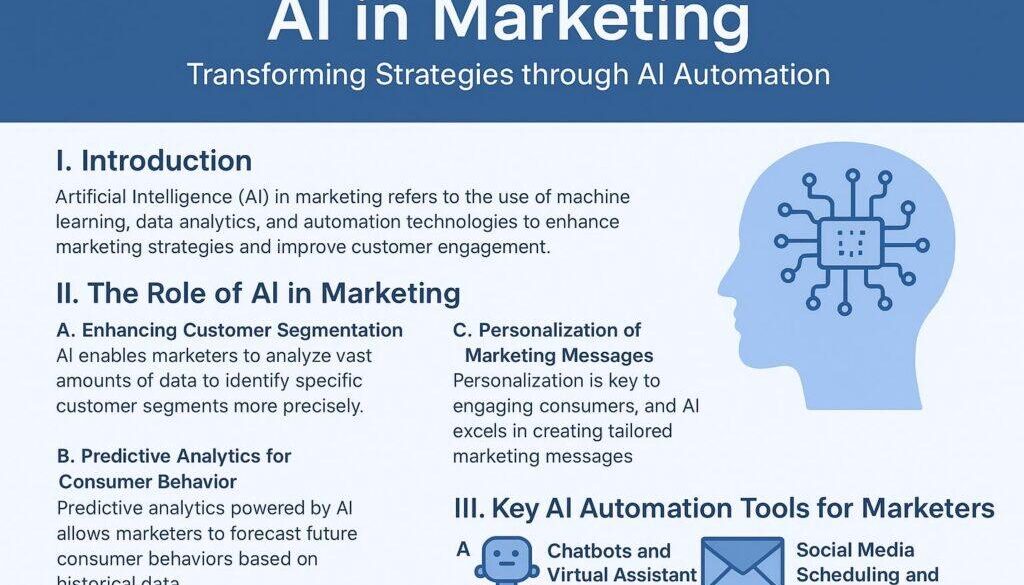
AI in Marketing: Transforming Strategies through AI Automation
I. Introduction
Artificial Intelligence (AI) in marketing refers to the use of machine learning, data analytics, and automation technologies to enhance marketing strategies and improve customer engagement. In today's fast-paced digital landscape, AI automation is crucial for marketers seeking to gain a competitive edge. This article will explore the transformative role of AI in marketing, highlighting its impact on strategies, tools, and future trends.
II. The Role of AI in Marketing
A. Enhancing Customer Segmentation
AI enables marketers to analyze vast amounts of data to identify specific customer segments more precisely. This enhanced customer segmentation helps brands target their messaging and offers more effectively. By understanding consumer behavior and preferences, marketers can tailor their strategies to meet the needs of different audience segments.
B. Predictive Analytics for Consumer Behavior
Predictive analytics powered by AI allows marketers to forecast future consumer behaviors based on historical data. This capability helps businesses allocate resources more effectively and create marketing campaigns that resonate with potential customers. By anticipating trends and preferences, companies can stay ahead of the competition.
C. Personalization of Marketing Messages
Personalization is key to engaging consumers, and AI excels in creating tailored marketing messages. By leveraging data-driven insights, marketers can craft individualized emails, advertisements, and offers that align with customer interests. This level of personalization enhances customer experiences and fosters loyalty, ultimately driving conversions.
III. Key AI Automation Tools for Marketers
A. Chatbots and Virtual Assistants
AI chatbots and virtual assistants have revolutionized customer interactions. They provide instant responses to customer queries, improving engagement and satisfaction while reducing operational costs. Companies like Sephora and H&M have successfully implemented AI chatbots, showing significant improvements in their customer service and sales.
B. Email Marketing Automation
Email marketing automation is another area where AI makes a significant impact. AI enables marketers to create targeted campaigns that resonate with specific customer segments based on their behavior and preferences. Tools such as Mailchimp and HubSpot utilize AI algorithms to optimize email content, sending times, and audience targeting, resulting in higher open and click-through rates.
C. Social Media Scheduling and Analytics
AI plays a vital role in social media marketing by automating content curation and scheduling. Marketers can use AI-driven tools to analyze engagement metrics and optimize posting times for maximum visibility. These insights allow brands to refine their social media strategies and enhance audience engagement, driving better results.
IV. Impact of AI Automation on Marketing Strategies
A. Improved Efficiency and Productivity
The implementation of AI automation in marketing significantly boosts efficiency and productivity. Routine tasks such as data analysis, customer segmentation, and content scheduling are streamlined, allowing marketers to focus on strategy and creativity. This increased efficiency translates into faster campaign launches and improved time management.
B. Enhanced Customer Experience
AI automation enhances the overall customer experience by providing timely and relevant information. With personalized messaging and instant support through chatbots, customers feel more valued and understood. This positive experience fosters brand loyalty and encourages repeat business, ultimately contributing to long-term growth.
C. Cost-Effectiveness in Marketing Campaigns
AI-driven marketing strategies can lead to significant cost savings. By automating repetitive tasks and leveraging data analytics, companies can reduce labor costs and minimize wasted resources. Furthermore, targeted campaigns result in better ROI, making AI automation a financially savvy approach for modern marketers.
V. Challenges in Implementing AI in Marketing
A. Data Privacy and Ethical Considerations
While AI offers numerous benefits, it also raises concerns about data privacy and ethical usage. Marketers must prioritize transparency and ensure that customer data is handled responsibly. Compliance with regulations like GDPR is essential to build trust with consumers and avoid potential legal repercussions.
B. Integration with Existing Marketing Systems
Integrating AI tools with existing marketing systems can present challenges. Companies need to ensure that new technologies work seamlessly with current platforms to optimize functionality. It may require additional resources and training to facilitate a smooth transition to AI-based solutions.
C. Dependence on Data Quality
The effectiveness of AI relies heavily on the quality of data inputted into systems. Poor quality or incomplete data can lead to inaccurate outcomes and misguided strategies. Marketers must invest time in cleaning and maintaining their data to fully leverage the advantages of AI automation.
VI. Future Trends of AI in Marketing
A. Evolution of AI Algorithms
As technology advances, AI algorithms will continue to evolve, becoming more sophisticated and effective in analyzing consumer behavior. Future developments may lead to even greater personalization and predictive capabilities. This continuous evolution will enable marketers to harness AI's full potential in creating targeted campaigns.
B. Increased Adoption of AI in Small Businesses
As AI tools become more affordable and user-friendly, increased adoption among small businesses is expected. This democratization of AI technology will empower smaller brands to compete with larger counterparts by leveraging data-driven insights and automation. The result will be a more level playing field in the marketing landscape.
C. The Role of Machine Learning in Future Marketing Strategies
Machine learning, a branch of AI, will play a pivotal role in the future of marketing. By continuously learning from data patterns, machine learning algorithms will enable marketers to refine their strategies on-the-fly. This adaptive approach ensures that marketing efforts resonate with evolving consumer preferences.
VII. Conclusion
The transformative potential of AI in marketing is clear. From enhancing customer segmentation to improving campaign efficiency, AI automation offers numerous advantages that can significantly impact marketing strategies. As marketers embrace AI solutions, they position themselves for greater success and a competitive advantage in an increasingly digital world. Now is the time to explore AI-powered tools and strategies to stay ahead in the evolving marketing landscape.