AI in Marketing: Harnessing Automation for Enhanced Customer Engagement and ROI
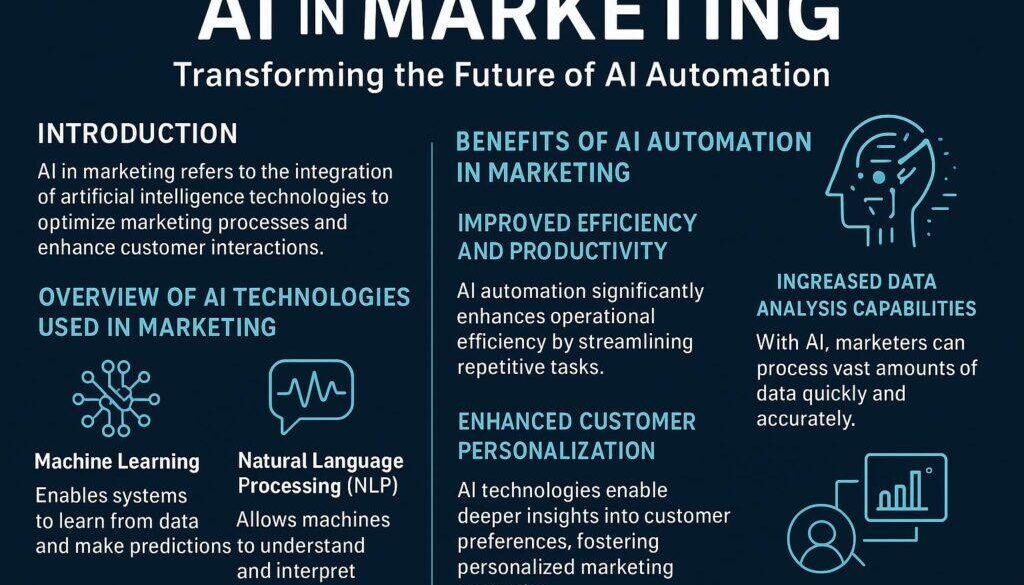
AI in Marketing: Transforming the Future of AI Automation
Introduction
AI in marketing refers to the integration of artificial intelligence technologies to optimize marketing processes and enhance customer interactions. As businesses increasingly adopt digital strategies, the role of AI automation becomes paramount, allowing for real-time data analysis and better decision-making. The importance of AI lies not just in streamlining operations but also in creating more personalized experiences that resonate with consumers.
Overview of AI Technologies Used in Marketing
Machine Learning
Machine learning is a core component of AI that enables systems to learn from data and make predictions. This technology analyzes consumer behavior patterns, helping marketers anticipate future actions. By continually improving algorithms, businesses can refine their marketing strategies based on vast amounts of data.
Natural Language Processing (NLP)
Natural Language Processing allows machines to understand and interpret human language. In marketing, NLP is used to analyze customer feedback, enabling businesses to gauge sentiment and improve their communication. By harnessing NLP, marketers can create more effective and relatable content that aligns with consumer expectations.
Predictive Analytics
Predictive analytics uses historical data to forecast future trends, empowering marketers to make data-driven decisions. It helps identify potential leads and optimize campaign strategies by predicting customer responses. This technology is invaluable in resource allocation and strategic planning, minimizing risks and maximizing returns.
Chatbots and Virtual Assistants
Chatbots and virtual assistants have revolutionized customer service by providing real-time responses to inquiries. These AI-driven tools enhance user experience by offering instant support and personalized recommendations. Additionally, they reduce operational costs while maintaining high levels of customer engagement.
Benefits of AI Automation in Marketing
Improved Efficiency and Productivity
AI automation significantly enhances operational efficiency by streamlining repetitive tasks. Marketers can focus on strategic planning and creative activities, knowing that data entry and analysis are being handled automatically. This shift in focus leads to increased productivity and innovative campaign development.
Enhanced Customer Personalization
AI technologies enable deeper insights into customer preferences, fostering personalized marketing strategies. By analyzing behavioral data, brands can tailor messaging and offers to individual consumers, boosting engagement and loyalty. Personalized experiences are crucial in today’s crowded marketplace, as they differentiate brands from competitors.
Increased Data Analysis Capabilities
With AI, marketers can process vast amounts of data quickly and accurately. Enhanced data analysis capabilities translate into better understanding customer journeys and modifying strategies accordingly. This analytical prowess allows companies to react faster to market changes and improve overall performance.
Cost Reduction
Ultimately, AI automation leads to significant cost savings by optimizing resource allocation and minimizing human error. Automated systems can perform tasks at a fraction of the cost and time of manual processes. This efficiency allows companies to invest more in innovative marketing strategies and technologies.
AI Applications in Marketing Automation
Email Marketing Automation
Audience Segmentation
AI enables marketers to segment audiences based on behavior, demographics, and preferences, ensuring that the right message reaches the right people. This targeted approach not only improves engagement rates but also enhances the overall customer experience. By leveraging AI for audience segmentation, businesses can increase their conversion rates significantly.
Personalized Content Delivery
With AI-driven insights, marketers can deliver personalized content that resonates with each segment. Automated systems can curate and deliver messages tailored to individual behaviors, improving relevance and impact. This strategy fosters a stronger connection between brands and their customers.
Social Media Management
Content Scheduling
AI tools streamline social media management through automated content scheduling, allowing brands to maintain a consistent online presence. By analyzing engagement patterns, these systems optimize posting times, ensuring maximum visibility. This efficiency frees up valuable time for marketers to focus on strategy rather than logistics.
Sentiment Analysis
AI-powered sentiment analysis tools assess public perception of a brand across social media platforms. By understanding customer sentiment, businesses can pivot their marketing strategies to address concerns or capitalize on positive feedback. This real-time insight is crucial in maintaining a strong brand reputation.
Lead Scoring and Management
AI enhances lead scoring by evaluating potential customers based on their behavior and engagement levels. Automated systems prioritize leads that are most likely to convert, enabling sales teams to focus their efforts where they matter most. This strategic approach improves sales efficiency and outcome.
Ad Targeting and Optimization
AI technologies enhance ad targeting, ensuring that ads are shown to the most relevant audiences. Automated bidding systems optimize ad placements in real-time, maximizing ROI. This targeted approach minimizes wasted ad spend while increasing conversion rates.
Case Studies of Successful AI Implementation in Marketing
Company A: Boosting Engagement through AI-Powered Campaigns
Company A successfully integrated AI-powered campaigns into their marketing strategy to increase customer engagement. By utilizing machine learning algorithms, they tailored their messaging based on user behavior, leading to a significant uptick in interaction rates. The implementation of AI not only drove engagement but also contributed to a measurable increase in sales.
Company B: Utilizing Chatbots for Customer Service
Company B deployed chatbots to streamline their customer service operations, resulting in improved response times and customer satisfaction. By automating common inquiries, they freed human representatives to tackle more complex issues. The result was a better overall customer experience and reduced operational costs.
Company C: Personalized Experiences via Predictive Analytics
Company C harnessed predictive analytics to provide personalized experiences for its customers, directly influencing their retention rates. By accurately forecasting customer needs and behavior, they were able to implement targeted marketing strategies that increased loyalty and repeat business. This case highlights the impact of data-driven decision-making in enhancing customer focused marketing.
Challenges and Considerations
Data Privacy and Ethical Implications
As companies leverage AI in marketing, data privacy and ethical concerns need to be addressed. With increasing regulations like GDPR, businesses must ensure that they are collecting data responsibly. Transparency with customers regarding how their data is used is essential in building trust.
Dependence on Technology
A heavy reliance on AI automation may lead to over-dependence on technology, potentially diminishing the role of human insight. While AI can enhance processes, it is crucial to maintain a balance between automation and creativity. Marketers should not lose sight of human judgment and emotional intelligence in marketing strategies.
Integration with Existing Systems
Integrating AI tools with existing marketing systems can pose challenges. Businesses may face difficulties in aligning new technologies with legacy systems, leading to implementation hurdles. A strategic approach to integration is necessary to ensure a seamless transition and maximum benefit from AI automation.
The Future of AI in Marketing
Trends Shaping AI Automation
As AI continues to evolve, trends such as hyper-personalization and real-time bidding will shape marketing strategies. The increasing significance of customer data will drive innovation in AI technologies, enabling businesses to enhance their marketing efforts further. Understanding these trends will offer businesses a competitive edge.
Predictions for AI Capabilities in Marketing
Future AI capabilities in marketing are expected to include even more advanced algorithms that can simulate human emotions and behaviors. The development of Emotion AI will transform how brands interact with consumers, providing a deeply personalized experience. As these capabilities emerge, marketers must adapt their strategies to leverage new possibilities.
Emerging Technologies to Watch
Emerging technologies like augmented reality (AR) and virtual reality (VR) are set to revolutionize AI in marketing. As these technologies become more mainstream, they will offer new avenues for immersive customer experiences. Staying informed about these advancements will be essential for marketers aiming to remain relevant in a fast-changing landscape.
Conclusion
AI automation is transforming the marketing landscape by enhancing efficiency, personalization, and data analysis. By understanding and adopting these technologies, businesses can not only stay ahead of the competition but also build stronger relationships with their customers. Embracing AI strategies in marketing is no longer optional; it’s essential for future success.