AI Automation in Marketing: Unlocking Competitive Advantage Through Intelligent Strategies
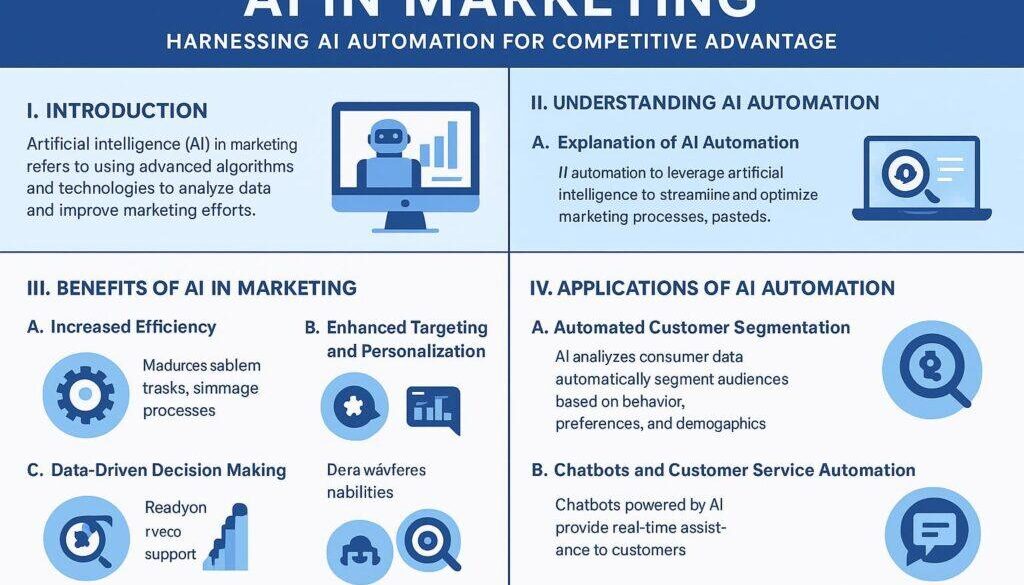
AI in Marketing: Harnessing AI Automation for Competitive Advantage
I. Introduction
Artificial Intelligence (AI) in marketing refers to the use of advanced algorithms and technologies to analyze data and improve marketing efforts. As businesses face growing competition and consumer expectations, AI automation has emerged as a crucial component in modern marketing strategies. This article delves into the various aspects of AI automation in marketing, exploring its benefits, applications, and the future of AI in this domain.
II. Understanding AI Automation
A. Explanation of AI Automation
AI automation involves leveraging artificial intelligence to streamline and optimize marketing processes. By automating repetitive tasks and utilizing data insights, marketers can focus on strategic initiatives that drive growth and engagement. The integration of AI technologies simplifies complex marketing functions, enhancing overall operational efficiency.
B. Key Technologies Driving AI Automation
Several key technologies are at the forefront of AI automation in marketing:
1. Machine Learning
Machine learning allows systems to improve their performance by learning from data patterns, enabling marketers to tailor campaigns based on consumer behavior and preferences.
2. Natural Language Processing (NLP)
NLP enables AI to understand and respond to human language, facilitating improved communication through chatbots and personalized messaging.
3. Predictive Analytics
Predictive analytics utilizes historical data to forecast future outcomes, guiding marketers in making informed decisions about strategies and resource allocation.
III. Benefits of AI in Marketing
A. Increased Efficiency
AI automation frees up valuable time by handling routine tasks, allowing marketing teams to focus on higher-level strategic work. This shift in labor helps companies respond swiftly to market changes and consumer demands.
B. Enhanced Targeting and Personalization
With AI, marketers can analyze vast amounts of data to identify specific consumer segments, enabling highly personalized marketing messages and improving engagement rates.
C. Data-Driven Decision Making
AI provides actionable insights derived from data analysis, empowering marketers to make decisions based on empirical evidence rather than intuition alone. This enhances the overall efficacy of marketing campaigns.
D. Cost Reduction
By automating various marketing processes, companies can minimize operational costs associated with manual labor and inefficiencies, ensuring a better return on investment (ROI).
IV. Applications of AI Automation in Marketing
A. Automated Customer Segmentation
AI can analyze consumer data to automatically segment audiences based on behavior, preferences, and demographics, leading to more targeted marketing strategies.
B. Chatbots and Customer Service Automation
Chatbots powered by AI provide real-time assistance to customers, improving satisfaction while reducing the need for human intervention. This automation allows brands to maintain a consistent presence online.
C. AI-Driven Content Creation
AI tools can generate content tailored to specific audiences, analyzing what resonates best and creating compelling copy that drives engagement across various channels.
D. Predictive Analytics for Campaign Optimization
By assessing past campaign performance, AI can help marketers refine their strategies and optimize future campaigns for increased effectiveness.
E. Dynamic Pricing Models
AI algorithms can analyze market conditions and consumer behavior to adjust pricing in real-time, ensuring businesses remain competitive and maximize revenue.
V. Case Studies
A. Successful Brands Using AI in Marketing
A variety of reputable brands have effectively integrated AI into their marketing strategies:
1. Example 1: Company A
Company A utilized AI-driven predictive analytics to tailor their marketing efforts, resulting in a significant increase in customer engagement and sales.
2. Example 2: Company B
Company B implemented chatbots to enhance their customer service experience, enabling quick responses to customer inquiries, thereby boosting overall satisfaction and loyalty.
B. Lessons Learned from Case Studies
These examples highlight the importance of adopting AI automation for achieving greater efficiency, improved customer interactions, and a more competitive edge in the market.
VI. Challenges and Considerations
A. Data Privacy Concerns
As businesses collect vast amounts of consumer data, they must adhere to strict privacy regulations to maintain consumer trust. Transparency in data usage is critical.
B. The Need for Quality Data
AI relies on high-quality data to deliver accurate insights. Companies must ensure their data collection methods are reliable and comprehensive to leverage AI effectively.
C. Integration with Existing Systems
Integrating AI tools with existing marketing systems can present challenges, necessitating strategic planning and resources to facilitate a seamless transition.
D. Keeping Human Touch in Customer Interaction
While automation enhances efficiency, marketers must strike a balance to ensure that customer interactions remain personal and engaging, avoiding the risk of a robotic communication style.
VII. Future Trends of AI in Marketing Automation
A. Increased Adoption of AI Tools
As AI technology continues to improve, more businesses are expected to adopt AI tools to stay competitive, enhancing their marketing strategies with automation.
B. Evolution of AI Technologies
AI technologies will likely evolve, offering even greater capabilities in data analysis, personalization, and customer engagement, allowing brands to adapt to rapid market changes.
C. Anticipated Changes in Consumer Behavior
As consumers become accustomed to AI-driven interactions, their expectations will shift, demanding more personalized and immediate responses from brands.
VIII. Conclusion
AI in marketing, particularly with the integration of AI automation, presents significant benefits such as enhanced efficiency, improved targeting, and data-driven decision-making. The future of marketing lies in embracing AI, enabling businesses to innovate and adapt to ever-changing consumer behaviors. Marketers are encouraged to explore and implement AI tools to stay ahead in a competitive landscape.
IX. Additional Resources
A. Books and Articles on AI in Marketing
- "Artificial Intelligence in Marketing: How to Use AI in Digital Marketing" by Jim Sterne
- Online articles on trusted marketing and AI websites.
B. Online Courses and Webinars
- Courses from platforms like Coursera and Udemy that focus on AI in marketing.
C. Tools and Software Recommendations
- Recommended AI tools include HubSpot, Salesforce Einstein, and Hootsuite Insights for businesses looking to enhance their marketing strategies through automation.