Revolutionizing Marketing Strategies: The Impact of AI Automation on Customer Engagement and Insights
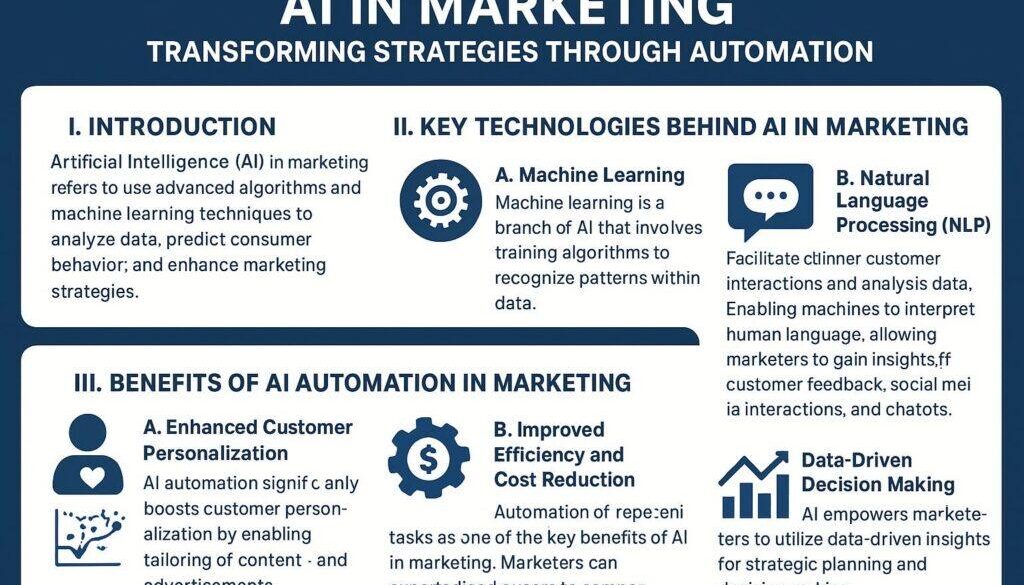
AI in Marketing: Transforming Strategies Through Automation
I. Introduction
Artificial Intelligence (AI) in marketing refers to the use of advanced algorithms and machine learning techniques to analyze data, predict consumer behavior, and enhance marketing strategies. The significance of AI automation in marketing lies in its ability to process vast amounts of data and provide actionable insights, which traditional methods cannot achieve. As businesses increasingly adopt AI, they'll find that it fundamentally transforms how they engage with customers and optimize marketing campaigns.
II. Key Technologies Behind AI in Marketing
A. Machine Learning
Machine learning is a branch of AI that involves training algorithms to recognize patterns within data. Its applications in marketing are vast, including customer segmentation, predictive analytics, and recommendation systems. By harnessing machine learning, marketers can better understand consumer preferences and personalize offerings accordingly.
B. Natural Language Processing (NLP)
Natural Language Processing (NLP) plays a crucial role in facilitating customer interactions and analyzing data. It enables machines to interpret human language, allowing marketers to gain insights from customer feedback, social media interactions, and chatbots. NLP enhances communication by making it more seamless and effective, improving customer satisfaction and engagement.
C. Predictive Analytics
Predictive analytics uses historical data and statistical algorithms to forecast future customer behavior and trends. By analyzing past purchase patterns and interactions, marketers can anticipate what products or services may appeal to individual customers. This foresight allows businesses to tailor their marketing strategies, improving conversion rates and customer retention.
III. Benefits of AI Automation in Marketing
A. Enhanced Customer Personalization
AI automation significantly boosts customer personalization by enabling the tailoring of content and advertisements. Marketers can create targeted campaigns that cater to specific audience segments, improving relevancy and engagement. Personalized experiences enhance customer loyalty, as consumers feel understood and valued by brands.
B. Improved Efficiency and Cost Reduction
Automation of repetitive tasks is one of the key benefits of AI in marketing. By automating processes such as data entry, reporting, and campaign management, businesses can free up valuable resources and focus on strategic initiatives. This efficiency not only reduces operational costs but also enhances overall productivity within marketing teams.
C. Data-Driven Decision Making
AI empowers marketers to utilize data-driven insights for strategic planning and decision making. Access to real-time analytics allows businesses to make informed adjustments to campaigns based on performance and market trends. Effective use of data leads to smarter marketing strategies that resonate better with targets, ultimately driving better results.
IV. AI Tools and Platforms for Marketing Automation
A. Chatbots and Virtual Assistants
Chatbots and virtual assistants are revolutionary tools for customer service applications. They engage consumers in real-time, providing instant responses to inquiries and assisting with purchases, thereby enhancing the customer experience. These AI-driven solutions alleviate the burden on human agents and ensure customers receive timely support.
B. Email Automation Software
Email automation software plays a vital role in improving personalization and segmentation in marketing campaigns. By automating the process of sending targeted emails based on user behavior, businesses can significantly increase engagement rates. This automation ensures that recipients receive relevant content that aligns with their interests and preferences.
C. Social Media Automation Tools
Social media automation tools streamline content scheduling and analytics on various platforms. These tools help marketers maintain a consistent online presence while providing insights on engagement metrics. By analyzing social media performance, businesses can refine their strategies to maximize reach and optimize audience interaction.
V. Case Studies: Successful Implementation of AI in Marketing
A. Example 1: Company A’s Use of AI for Personalized Marketing
Company A successfully leveraged AI to enhance its personalized marketing efforts. By analyzing customer data, the company created dynamic advertisements tailored to individual preferences, leading to a significant increase in engagement rates. This case exemplifies how AI can revolutionize targeted marketing approaches.
B. Example 2: Company B’s Automation of Customer Engagement
Company B implemented AI-driven chatbots to automate customer engagement, resulting in improved response times and customer satisfaction. The chatbot effectively addressed queries, allowing human agents to focus on more complex issues. This strategic decision showcased the efficiency and effectiveness of AI in customer interactions.
C. Example 3: Company C’s Predictive Analytics for Campaign Optimization
Company C utilized predictive analytics to optimize its marketing campaigns by identifying potential customer segments at risk of churning. By proactively targeting these consumers with personalized offers, the company successfully reduced churn rates and increased customer retention. This example highlights the power of predictive analytics in driving strategic marketing initiatives.
VI. Challenges and Considerations
A. Data Privacy and Security Concerns
As marketers harness AI technologies, they must navigate data privacy and security concerns. The implications of using customer data for personalization require strict adherence to regulations and ethical standards. Businesses need to assure customers that their data is secure and used responsibly to maintain trust.
B. Integration with Existing Marketing Systems
Integrating AI solutions with existing marketing systems can pose technical challenges. Businesses may face compatibility issues and require significant investment in infrastructure to facilitate seamless integration. A careful assessment of existing systems is essential to ensure that AI tools enhance rather than disrupt current processes.
C. Potential Job Displacement
The rise of AI in marketing raises concerns about potential job displacement within the industry. While automation can improve efficiency, it also leads to apprehension among marketing professionals about their future roles. It’s important for organizations to invest in retraining and upskilling to prepare employees for an evolving landscape where human creativity and AI technology collaborate.
VII. Future Trends in AI and Marketing Automation
A. Evolution of AI Technologies
The evolution of AI technologies is set to continue impacting the marketing landscape. Advancements in machine learning, NLP, and other AI applications will amplify marketers’ capabilities, leading to even more sophisticated personalized strategies. Staying abreast of these advancements will be crucial for businesses aiming to maintain a competitive edge.
B. Increasing Role of AI in Customer Experience
AI is expected to play an increasingly significant role in enhancing customer experiences. By providing real-time insights and personalized interactions, AI can foster deeper connections between brands and consumers. The integration of AI into customer experience strategies will redefine how businesses engage and retain their audiences.
C. Predictions for the Next 5-10 Years in AI Marketing
In the next 5-10 years, we anticipate AI marketing will become even more centered on data-driven personalization, with predictive analytics at its core. Companies will adopt increasingly sophisticated AI tools to streamline processes and enhance the customer journey. This trajectory suggests a marketing environment where AI not only supports decision-making but can also anticipate consumer needs before they arise.
VIII. Conclusion
The impact of AI in marketing automation is profound, enhancing personalization, efficiency, and decision-making capabilities. As businesses embrace AI technologies, they will be better equipped to engage their customers and refine their marketing strategies. In conclusion, the future of marketing will be undeniably shaped by AI, offering new possibilities for innovation and customer engagement.