AI Automation in Marketing: Transforming Strategies for Enhanced Engagement and ROI
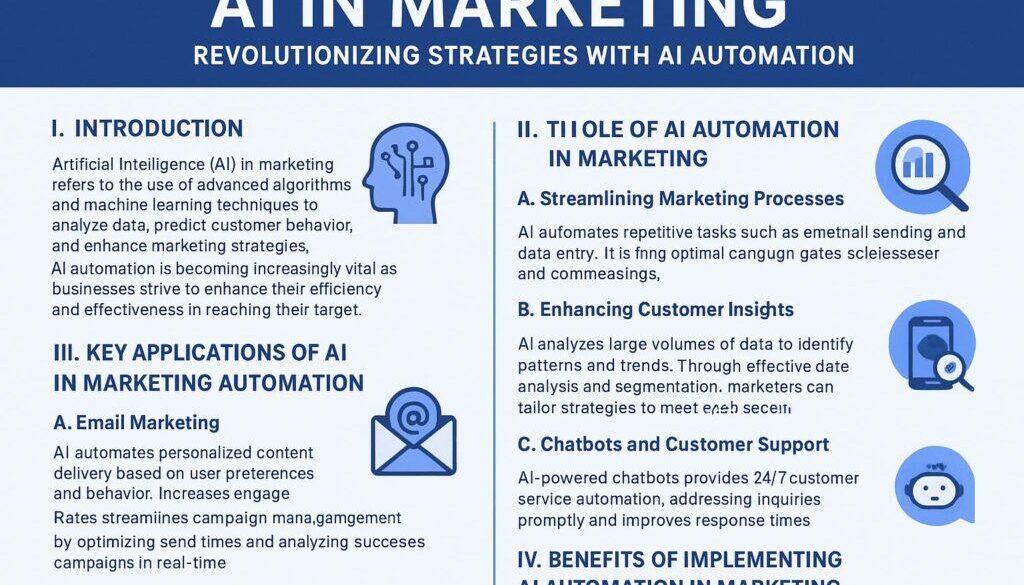
AI in Marketing: Revolutionizing Strategies with AI Automation
I. Introduction
Artificial Intelligence (AI) in marketing refers to the use of advanced algorithms and machine learning techniques to analyze data, predict customer behavior, and enhance marketing strategies. AI automation is becoming increasingly vital as businesses strive to enhance their efficiency and effectiveness in reaching their target audience. This article aims to explore the integral role of AI automation in marketing, its applications, benefits, challenges, and future trends.
II. The Role of AI Automation in Marketing
A. Streamlining Marketing Processes
AI automation significantly streamlines marketing processes by automating repetitive tasks, such as email sending and data entry. This not only reduces the workload for marketing teams but also minimizes the risk of human error. Furthermore, AI tools can seamlessly integrate with existing marketing platforms, allowing businesses to enhance their processes without overhauls.
B. Enhancing Customer Insights
AI plays a crucial role in enhancing customer insights by analyzing large volumes of data to identify patterns and trends. Through effective data analysis and segmentation, marketers can tailor their strategies to meet specific customer needs. Predictive analytics powered by AI gives businesses the ability to anticipate customer behaviors, leading to more effective targeting and messaging.
III. Key Applications of AI in Marketing Automation
A. Email Marketing
In email marketing, AI automates personalized content delivery based on user preferences and behavior. This means that customers receive messages relevant to their interests and needs, increasing engagement rates. Additionally, AI streamlines campaign management by optimizing send times and analyzing the success of various campaigns in real-time.
B. Social Media Management
AI is revolutionizing social media management through intelligent content scheduling and automated posting. By analyzing optimal times for engagement, AI tools help marketers ensure that their content reaches the maximum audience possible. Furthermore, AI-driven engagement analysis provides insights into audience interaction, enabling businesses to refine their social strategies effectively.
C. Chatbots and Customer Support
Chatbots powered by AI provide 24/7 customer service automation, addressing inquiries promptly and improving response times. They can handle a wide range of queries, which enhances customer satisfaction and frees up human agents for more complex issues. Additionally, chatbots serve as effective lead generation tools by engaging visitors and collecting user data for future marketing efforts.
IV. Benefits of Implementing AI Automation in Marketing
A. Increased Efficiency and Productivity
Implementing AI automation in marketing results in increased efficiency and productivity as it handles mundane tasks that consume valuable time. By enabling teams to focus on strategic planning and creative processes, businesses can streamline their overall operations. This productivity boost directly contributes to achieving marketing objectives more effectively.
B. Improved ROI on Marketing Campaigns
With AI’s data-driven insights, businesses can refine their marketing efforts to improve the return on investment (ROI) for their campaigns. The ability to analyze data in real-time allows for quick adjustments to strategies, ensuring that marketing budgets are utilized optimally. As a result, companies experience better performance metrics and higher profitability from their marketing efforts.
C. Enhanced Customer Experience and Satisfaction
AI automation tailors customer experiences by delivering personalized content and timely interactions. When customers feel valued and understood, their overall satisfaction and loyalty to the brand increase significantly. Enhanced customer experiences contribute to brand advocacy, ultimately driving growth and repeat business.
V. Challenges and Considerations
A. Data Privacy and Security Issues
As AI relies heavily on data, concerns around data privacy and security are prevalent. Businesses must ensure compliance with regulations and protect customers’ sensitive information as they implement AI solutions. Addressing these concerns is crucial to maintaining trust and integrity in marketing practices.
B. The Need for Human Oversight
While AI can enhance marketing efforts, the need for human oversight remains essential. AI systems can sometimes make decisions based on flawed data or algorithms. Human marketers need to oversee AI-powered strategies to ensure that they align with brand values and ethical standards.
C. Understanding AI Limitations
Understanding the limitations of AI is critical for businesses. While AI can analyze data and predict trends, it lacks the capacity for emotional intelligence and creativity that humans possess. A blend of AI capabilities and human intuition can lead to more holistic marketing strategies that truly resonate with audiences.
VI. Future Trends in AI Automation and Marketing
A. The Rise of Voice Search and Conversational AI
The increasing prevalence of voice search necessitates marketers to adapt their strategies accordingly. Conversational AI, which enables natural language processing, is set to play a significant role in enhancing user interactions. Businesses must invest in voice-optimized content to capitalize on this growing trend.
B. Integration of AI with Multichannel Marketing
As consumers interact across multiple channels, integrating AI with multichannel marketing becomes pivotal. AI can help analyze customer behaviors across various platforms, providing valuable insights that inform cohesive marketing strategies. This integration ensures a seamless experience for customers and enhances brand loyalty.
C. Ethical AI in Marketing Practices
The future of AI in marketing will involve a growing focus on ethical practices. Transparency in data usage and accountability in AI-generated decisions will become key priorities for businesses. Ethical AI will not only build trust with consumers but also foster a sustainable marketing environment.
VII. Conclusion
AI automation in marketing presents an array of benefits, from enhancing efficiency and productivity to improving customer experiences. As businesses strive to harness AI solutions, understanding the implications of its applications is crucial for success. Companies are encouraged to explore AI tools and adopt innovative strategies that drive growth and maintain a competitive advantage in the ever-evolving marketing landscape.