Harnessing AI Automation for Strategic Marketing Success: Boost Efficiency, Personalization, and Engagement
AI in Marketing within AI Automation
Introduction
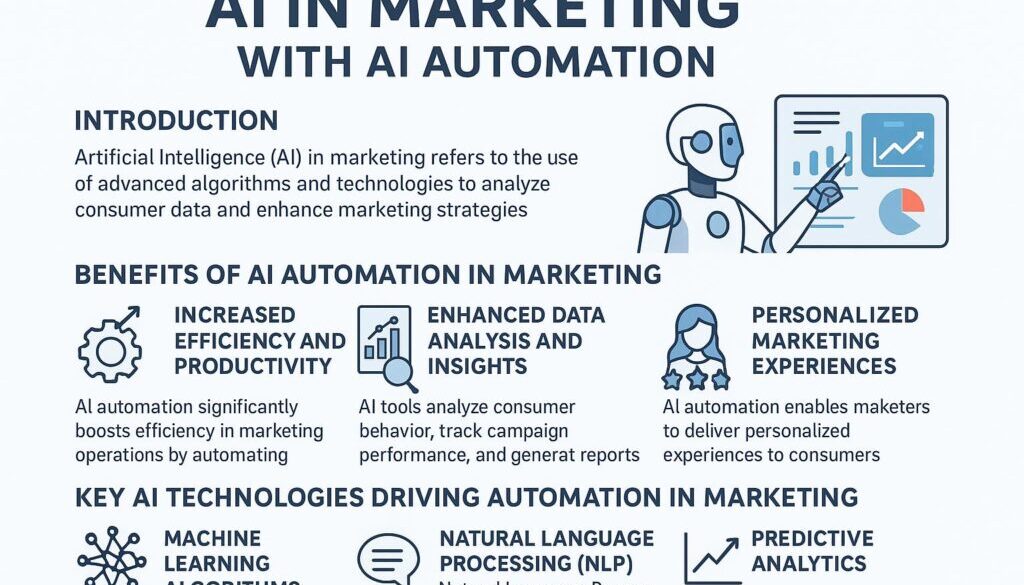
Artificial Intelligence (AI) in marketing refers to the use of advanced algorithms and technologies to analyze consumer data and enhance marketing strategies. AI automation streamlines these processes, enabling marketers to optimize their campaigns efficiently and effectively. Integrating AI into marketing strategies is crucial as it allows businesses to stay competitive and responsive to consumer needs in a rapidly changing market landscape.
Benefits of AI Automation in Marketing
Increased Efficiency and Productivity
AI automation significantly boosts efficiency in marketing operations by automating repetitive tasks. This allows marketing teams to focus on strategic initiatives rather than mundane activities, leading to higher productivity. Moreover, automation minimizes human error, ensuring that data-driven decisions are based on accurate information.
Enhanced Data Analysis and Insights
One of the key advantages of AI in marketing is its ability to process vast amounts of data quickly and provide actionable insights. AI tools analyze consumer behavior, track campaign performance, and generate reports that inform marketing strategies. By leveraging these insights, businesses can make informed decisions that enhance their marketing effectiveness.
Personalized Marketing Experiences
AI automation enables marketers to deliver personalized experiences to consumers by tailoring content and offers based on individual preferences. Through sophisticated algorithms, businesses can segment their audience and provide customized messages that resonate with each customer. This level of personalization not only improves engagement rates but also fosters brand loyalty.
Key AI Technologies Driving Automation in Marketing
Machine Learning Algorithms
Machine learning algorithms are at the heart of AI marketing automation, enabling systems to learn from data and improve over time. These algorithms analyze historical data to predict future outcomes, allowing marketers to anticipate customer behaviors and preferences. As a result, businesses can craft targeted strategies that enhance customer satisfaction.
Natural Language Processing (NLP)
Natural Language Processing (NLP) facilitates the understanding of human language by AI systems, making it invaluable for marketing applications. NLP is used in chatbots, voice assistants, and sentiment analysis tools, enabling brands to engage with customers in more meaningful ways. By deciphering customer inquiries and feedback, NLP helps businesses refine their marketing communications.
Predictive Analytics
Predictive analytics harnesses the power of historical data to forecast future trends and behaviors, providing marketers with a strategic advantage. By identifying potential customer segments and buying patterns, businesses can allocate resources more effectively. This foresight equips marketers to develop campaigns that align with projected consumer interests.
Applications of AI in Marketing Automation
Customer Segmentation
AI automates the process of customer segmentation by analyzing customer data to identify distinct groups within a target audience. This targeted segmentation enables marketers to create tailored campaigns that address the specific needs and preferences of various customer categories. Effective segmentation leads to higher engagement and conversion rates.
Content Creation and Curation
AI tools are increasingly being utilized for content creation and curation, providing marketers with the ability to generate relevant content efficiently. These tools can analyze trending topics and generate articles, posts, and marketing copy that resonate with the audience. This capability not only saves time but also ensures that content remains aligned with consumer interests.
Chatbots and Virtual Assistants
The rise of chatbots and virtual assistants powered by AI has transformed customer service in marketing. These AI-driven tools provide immediate responses to customer inquiries, enhancing user experience and satisfaction. By automating communication, businesses can handle a higher volume of customer interactions without compromising on quality.
Email Marketing Automation
AI automation in email marketing allows for the personalization and optimization of email campaigns. AI tools analyze subscriber behavior to determine the best times to send emails, as well as the content that will be most engaging. This not only boosts open and click-through rates but also enhances overall email marketing ROI.
Social Media Management
AI plays a pivotal role in social media management by automating content scheduling, engagement tracking, and sentiment analysis. These tools let marketers understand the performance of their social media campaigns in real-time, enabling quick adjustments to enhance effectiveness. AI automation allows marketers to maintain a consistent online presence while freeing up time for strategic planning.
Case Studies: Successful Implementation of AI in Marketing
Examples from Leading Companies
Numerous companies have successfully integrated AI into their marketing strategies, yielding impressive results. For instance, Coca-Cola implemented AI-driven algorithms to analyze consumer data and predict beverage preferences, enhancing its product placement and targeting. Similarly, Netflix utilizes AI to recommend content based on viewer behavior, significantly improving user retention.
Analysis of Results and Impact on Business Growth
The impact of AI in marketing extends beyond operational efficiency; it drives substantial business growth. Companies that have adopted AI technologies report higher engagement rates, improved customer satisfaction, and increased revenue. By leveraging AI, businesses can not only streamline processes but also create more meaningful connections with their customers.
Challenges and Considerations
Data Privacy and Ethical Concerns
As AI continues to revolutionize marketing, data privacy and ethical concerns arise. Marketers must ensure they comply with regulations such as GDPR when handling consumer data. Balancing personalization with privacy is essential for maintaining consumer trust.
Integration with Existing Systems
Integrating AI technologies with existing marketing systems can pose challenges. Businesses must evaluate their current infrastructure and determine how to seamlessly incorporate AI tools. A well-planned integration strategy is crucial for maximizing the benefits of AI automation.
Skills Gap and Workforce Training
The implementation of AI in marketing requires a skilled workforce adept at using these advanced technologies. There is often a gap between the skills required and those possessed by current marketing teams. Companies must invest in training and development to equip their staff with the necessary competencies for utilizing AI effectively.
Future Trends of AI in Marketing Automation
Advancements in AI Technology
The future of AI in marketing automation looks promising, with advancements in technology continually emerging. Next-generation algorithms and improved data analysis capabilities will enable more sophisticated marketing strategies. As AI technologies continue to evolve, they will foster greater innovation within the marketing sector.
The Role of AI in Evolving Consumer Behaviors
AI will play a crucial role in understanding and predicting changes in consumer behavior. As consumers become more tech-savvy, their expectations for personalized and interactive marketing experiences will rise. Marketers who harness AI effectively will be better positioned to adapt to these evolving preferences.
Predictions for the Future Landscape of Marketing
Looking ahead, AI is expected to dominate the marketing landscape, driving operational efficiencies and enhancing customer engagement. Businesses that embrace AI automation will likely gain a competitive edge and experience significant growth. The integration of AI into marketing strategies is not just a trend; it is becoming essential for future success.
Conclusion
In conclusion, the integration of AI in marketing is proving to be transformative, significantly enhancing efficiency, personalization, and overall effectiveness. Embracing AI automation is crucial for businesses aiming to remain competitive in today's fast-paced market. By leveraging AI technologies, organizations can optimize their marketing strategies and achieve sustained success.