AI in Marketing Automation: Transforming Strategies for Enhanced Engagement and Efficiency
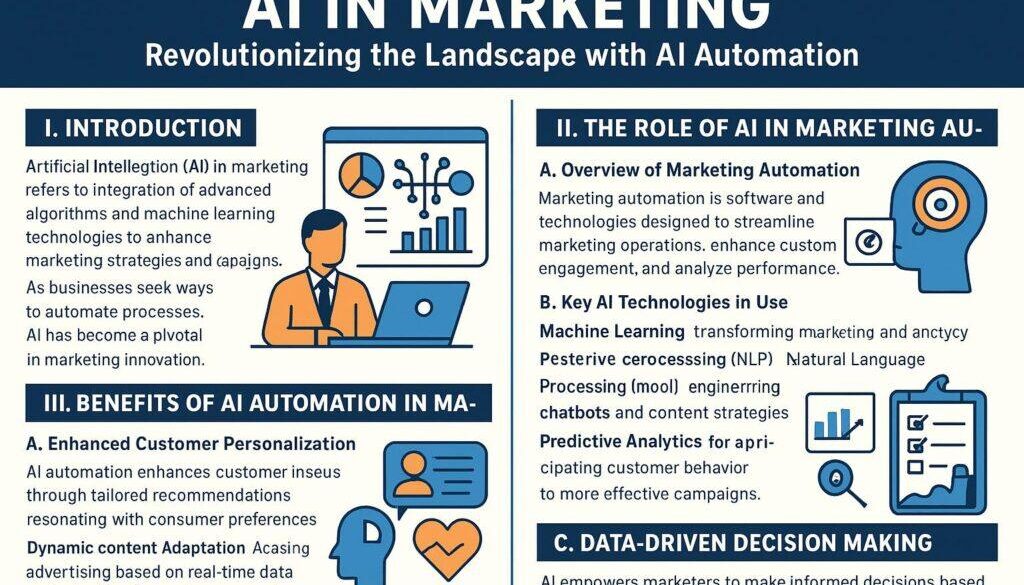
AI in Marketing: Revolutionizing the Landscape with AI Automation
I. Introduction
Artificial Intelligence (AI) in marketing refers to the integration of advanced algorithms and machine learning technologies to enhance marketing strategies and campaigns. As businesses increasingly seek ways to automate processes, AI has become a pivotal element of marketing innovation. This article explores the various aspects of AI automation in marketing, its benefits, practical applications, challenges, and future trends.
II. The Role of AI in Marketing Automation
A. Overview of Marketing Automation
Marketing automation involves software and technologies designed to streamline marketing operations, enhance customer engagement, and analyze marketing performance. This approach has significantly evolved over the years, transitioning from basic email marketing tools to sophisticated systems that integrate various facets of marketing. Understanding this progression enables marketers to leverage advanced AI tools effectively.
B. Key AI Technologies in Use
Several key AI technologies are transforming marketing automation. Machine Learning is vital for analyzing vast datasets, enabling improved customer segmentation and personalized marketing campaigns. Natural Language Processing (NLP) facilitates better communication with customers by interpreting and generating human language, enhancing chatbots and content strategies. Moreover, Predictive Analytics allows marketers to anticipate customer behavior, leading to more effective campaign management and outcomes.
III. Benefits of AI Automation in Marketing
A. Enhanced Customer Personalization
AI automation significantly enhances customer personalization through tailored recommendations that resonate with individual consumer preferences. This targeted approach ensures that customers receive relevant content and offers, significantly improving engagement rates. Additionally, dynamic content adaptation allows marketers to alter advertising based on real-time data, optimizing the customer experience further.
B. Improved Efficiency and Productivity
One of the most profound impacts of AI automation in marketing is the improved efficiency and productivity it offers. Routine marketing tasks can be automated, freeing up valuable time for creative and strategic initiatives. Furthermore, streamlined campaign management through AI tools enables marketers to execute and monitor campaigns with greater accuracy and reduced manual input, enhancing overall productivity.
C. Data-Driven Decision Making
AI empowers marketers to make informed, data-driven decisions based on comprehensive analyses of consumer behavior. This insight allows for the identification of trends and preferences, leading to strategies that align closely with customer expectations. Additionally, real-time performance tracking means that marketers can adjust campaigns swiftly in response to changing market dynamics, thereby optimizing overall performance outcomes.
IV. Practical Applications of AI in Marketing
A. AI-Powered Chatbots
AI-powered chatbots have revolutionized customer service by providing immediate responses to inquiries, thus enhancing user experience. These systems are not only effective in resolving customer issues but also play a crucial role in lead generation by engaging prospects through conversation. By leveraging chatbots, businesses can ensure round-the-clock support, greatly improving customer satisfaction.
B. Targeted Advertising and Audience Segmentation
AI excels at conducting predictive behavior analysis, which significantly enhances targeted advertising efforts. This technology enables marketers to create highly specific audience segments, ensuring that promotional content reaches the most relevant viewers. Additionally, programmatic advertising powered by AI allows for real-time bidding and ad placements, optimizing ad spend and effectiveness.
C. Content Creation and Curation
AI is also making strides in content creation and curation. Automated systems can generate blog posts, articles, and social media content that resonate with audience interests. Furthermore, advancements in AI enable the creation of engaging video content, streamlining the visual storytelling process and allowing brands to connect with consumers across multiple platforms.
V. Key Challenges and Considerations
A. Data Privacy and Ethical Concerns
While AI automation offers numerous benefits, it also raises significant data privacy and ethical concerns. Adhering to regulations like GDPR and CCPA is crucial for maintaining compliance and protecting consumer data. Marketers must prioritize transparency and ethical practices to build and maintain consumer trust as they adopt AI technologies.
B. Integration with Existing Marketing Tools
Integrating AI with existing marketing tools can pose technical hurdles that require careful planning and execution. Businesses need to assess their current technology stack and ensure that new AI solutions are compatible and can be incorporated seamlessly. Additionally, the cost of implementing AI tools can be significant, necessitating a strategic approach to investment and resource allocation.
VI. Future Trends in AI Automation and Marketing
A. Increasing Adoption of AI Technologies
The adoption of AI technologies in marketing is expected to increase as companies recognize their potential to enhance effectiveness and customer engagement. As AI becomes more accessible, businesses of all sizes will likely incorporate it into their marketing strategies. This trend will reshape the competitive landscape and push traditional marketers to adapt to the changing environment.
B. Predictions for AI Advancements in Marketing Strategies
Future advancements in AI are predicted to further transform marketing strategies. Innovations such as more sophisticated algorithms and the ability to analyze consumer behavior in real-time will enable marketers to create highly personalized experiences. These advancements will likely foster greater customer loyalty and drive revenue growth for brands adept at utilizing AI.
C. The Role of AI in Evolving Consumer Expectations
As AI-driven solutions continue to become commonplace, consumer expectations will evolve accordingly. Customers will increasingly demand personalized experiences, immediate responses, and seamless interactions across platforms. Marketers who can effectively leverage AI automation to meet these expectations are likely to outperform their competitors and establish a strong market presence.
VII. Conclusion
In summary, AI's impact on marketing automation is profound, facilitating enhanced customer experiences and streamlined operational efficiencies. Marketers are encouraged to embrace AI tools to navigate the future of marketing effectively. As the landscape continues to evolve, those who adapt to AI-driven solutions will set the standard for innovation and growth in the industry.